

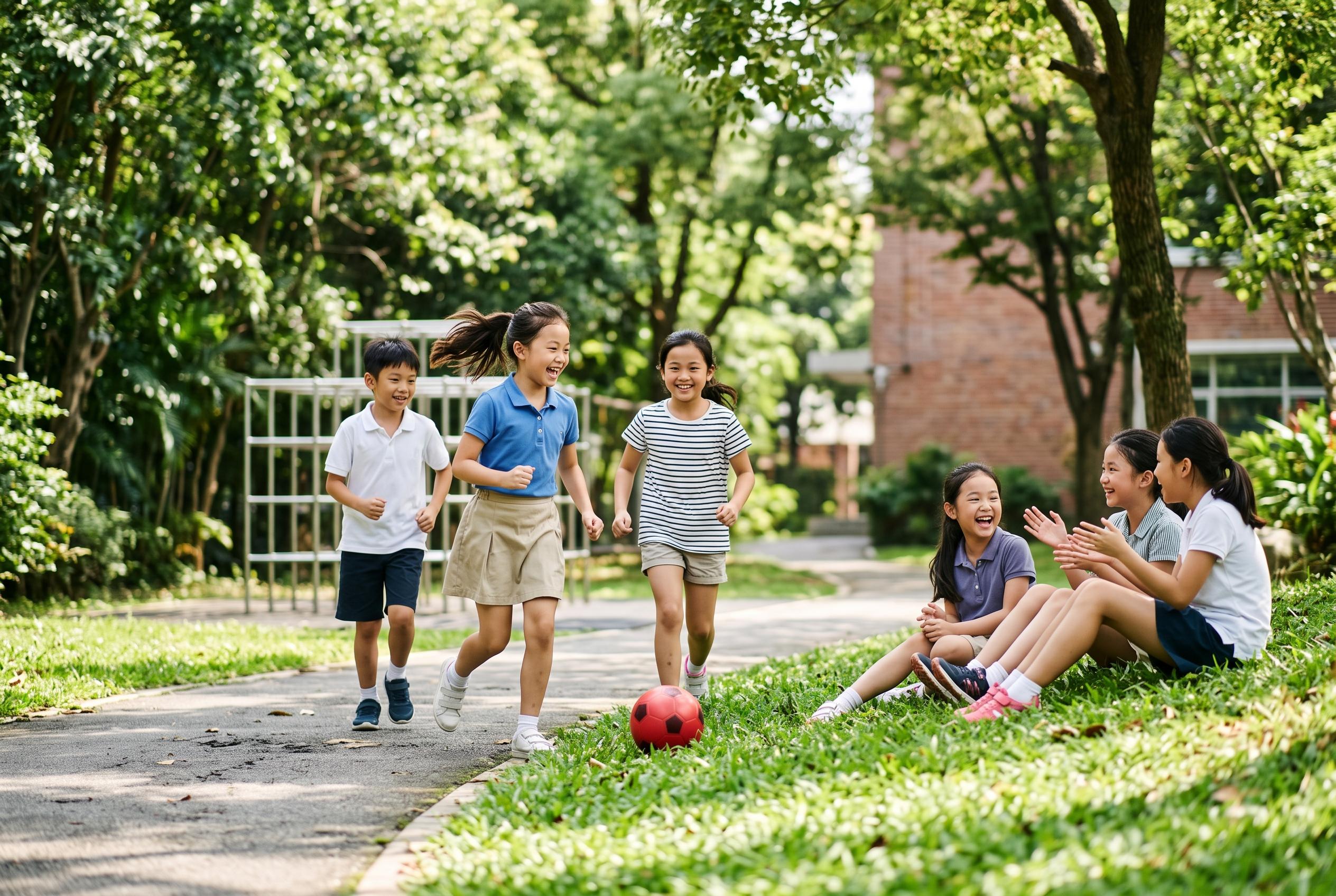

A study of nearly 8,800 pupils in south-west China links daily outdoor activity with lower odds of short-sightedness, while prolonged screen use and insufficient sleep are associated with higher risk.
A new study from south-west China suggests that the way children spend their days and nights may have a measurable effect on their risk of myopia, the short-sightedness that has become one of the fastest-growing vision problems worldwide. Researchers analysing nearly 8,800 pupils in Leshan, Sichuan Province, found that more than three-quarters were myopic, a prevalence that underlines how deeply the condition has taken hold in school populations across parts of China.
The study, published in BMC Public Health and led by Jian Yang and colleagues at Leshan Normal University, used a large multistage stratified cluster sample of students aged six to 18 collected between May and November 2025. That design gave the researchers a broader picture than the small, single-school surveys that often dominate eye-health research. They measured refractive error with non-cycloplegic autorefraction, a standard screening method, and defined myopia as a spherical equivalent of less than minus 0.50 dioptres in at least one eye.
What stood out most was that three everyday habits were linked to eyesight outcomes. Children who reported more than one hour of outdoor physical activity a day were less likely to be myopic, while screen use of more than two hours a day and insufficient sleep were each associated with higher odds of the condition. After adjustment for age, sex and other factors, the outdoor activity pattern appeared protective, whereas prolonged screen time and shorter sleep carried a modest but statistically significant increase in risk.
The findings fit with a broader body of research from China that has found myopia rates to be rising across different regions and age groups. A separate large cross-sectional study in Shihezi reported substantial prevalence among children and adolescents, while longitudinal work in Qingdao tracked increasing levels of both myopia and high myopia between 2022 and 2024. Research in Xi’an has likewise identified myopia as a major problem in school-aged children, and a systematic review on Chinese data projected further growth in prevalence without stronger prevention measures.
That wider evidence matters because the public-health burden is more than a matter of needing glasses. High myopia can raise the lifetime risk of serious eye disease, including retinal detachment, myopic macular degeneration, glaucoma and cataract. Previous work in China and elsewhere has also suggested that more time outdoors can help slow the onset of short-sightedness, probably because daylight may influence eye growth, although the exact biological pathways are still being studied.
The authors cautioned that their study was cross-sectional, meaning it can show associations but not prove that one behaviour caused the eye changes. Children who already struggle to see clearly may, for example, spend more time indoors on screens, and family background may affect both lifestyle and vision. Even so, the pattern they identified points towards practical steps schools and parents can act on now: more daylight, less time glued to screens and enough sleep.
Disclaimer: This content is for informational purposes only and is not intended to be a substitute for professional medical judgment, advice, diagnosis, or treatment.



