

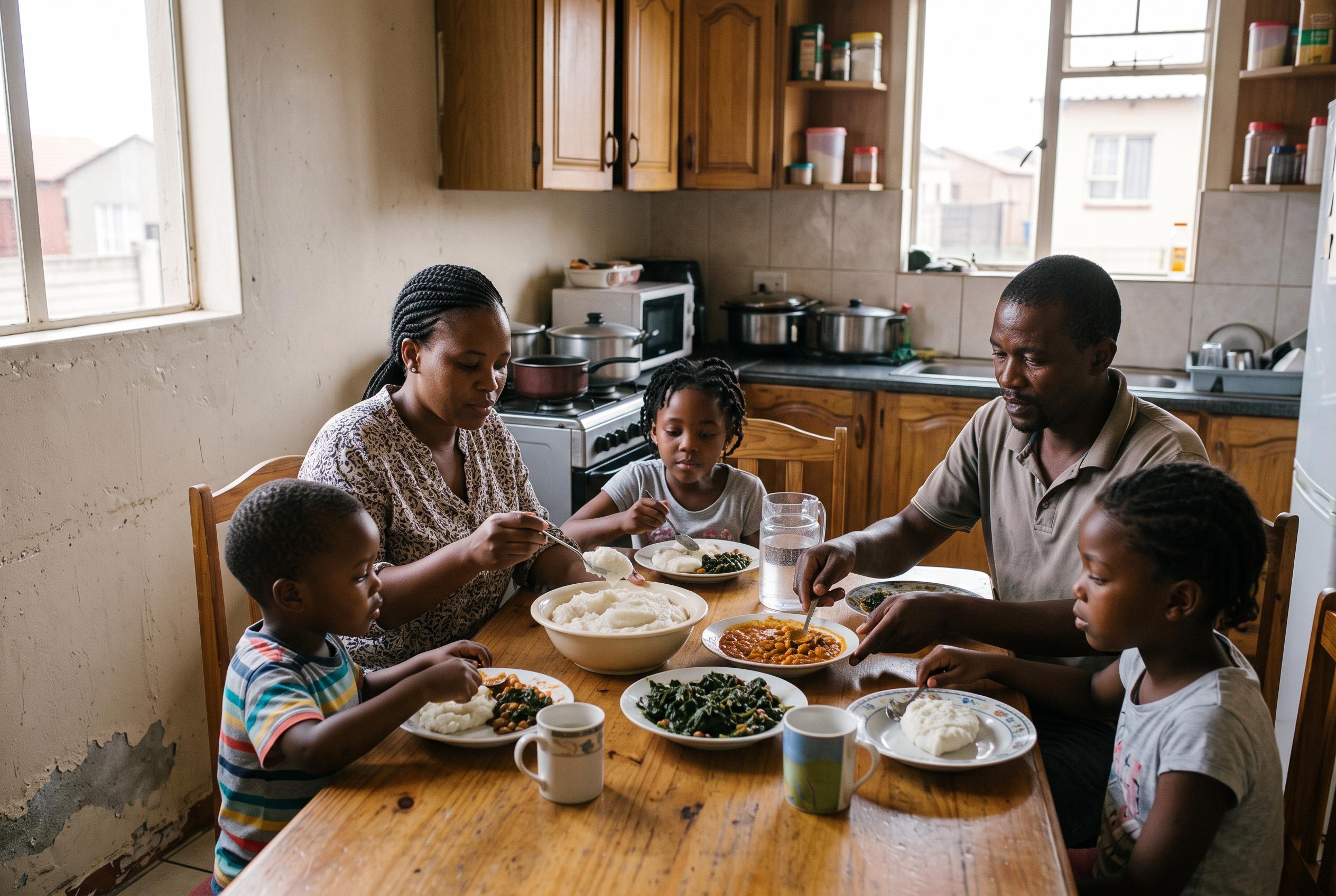

A new costing tool suggests that feeding older children to recommended nutritional standards can cost substantially more than the amount ring-fenced for meals in South Africa’s ECD subsidy.
A new tool set to be launched in October 2026 is aiming to put a hard number on a problem that has long been discussed in broad terms: what it actually costs to feed young children properly in early childhood development centres.
The ECD Nationally Costed Nutrition Basket, developed by the Zero2Five Trust, the Pietermaritzburg Economic Justice and Dignity Group and public health nutrition consultant Philippa Barnard, turns South Africa’s existing nutrition guidance into a practical food list that can be planned, bought, prepared, measured and tracked over time. According to Barnard, the purpose is not simply to fill stomachs, but to make sure the food offered in ECD settings is varied and nutritious, with vegetables, fruit, protein and other food groups represented.
That matters because the gap between policy and reality is already visible in the current subsidy model. The Department of Basic Education rings-fences 40% of its R24-a-child-a-day ECD subsidy for nutrition, which works out at R9.60 per child per day. Pilot costing carried out in August and September 2026 found estimated food costs of R7.35 a day for children aged nine to 23 months and R13.06 for those aged two to six years, suggesting that the older group in particular cannot be fed to the proposed standard within the nutrition allocation alone.
The basket is built around a one-week menu informed by the Department of Health’s ECD nutrition guidelines and by experience from early learning centres. It includes staple foods, vegetables, fruit, legumes, eggs, tinned fish, milk and maas. Barnard said younger children consume smaller portions and usually depend on a milk-feeding component, but the tool does not try to price breastmilk or infant formula.
In one illustrative example of a 20-child centre, with 20% of children aged nine to 23 months and 80% aged two to six years, the estimated food bill came to R11.92 per child per day, or R4,768.47 a month for 20 days of attendance. Even if every child at such a centre qualified for the subsidy, Barnard said there would still be a monthly shortfall of R928 just for food purchases, before other basic costs are added. Labour, fuel, cleaning materials and equipment are excluded from the basket’s current calculations.
Practitioners say those numbers reflect the pressures they face on the ground. Two ECD workers in Mkhambathini Local Municipality, near Pietermaritzburg in KwaZulu-Natal, told Daily Maverick anonymously that delayed subsidy payments and rising prices for food, electricity, gas and transport made it difficult to provide meals of the quality children need. They said meat, fruit, vegetables and milk were among the hardest items to afford, and called for both higher nutrition funding and more reliable payment schedules.
Barnard said the broader goal is to make the cost of good nutrition visible at a time when South Africa is paying growing attention to child nutrition and stunting. The basket, she argued, starts from what children require rather than from what can be delivered on the cheapest budget, and could give centres, civil society and policymakers a more transparent benchmark for planning and budget-setting. It may also show how vulnerable nutrition provision is when food prices move. Daily Maverick said it had sought comment from the departments of basic education and health but had not received a response by publication time.
Disclaimer: This content is for informational purposes only and is not intended to be a substitute for professional medical judgment, advice, diagnosis, or treatment.



