

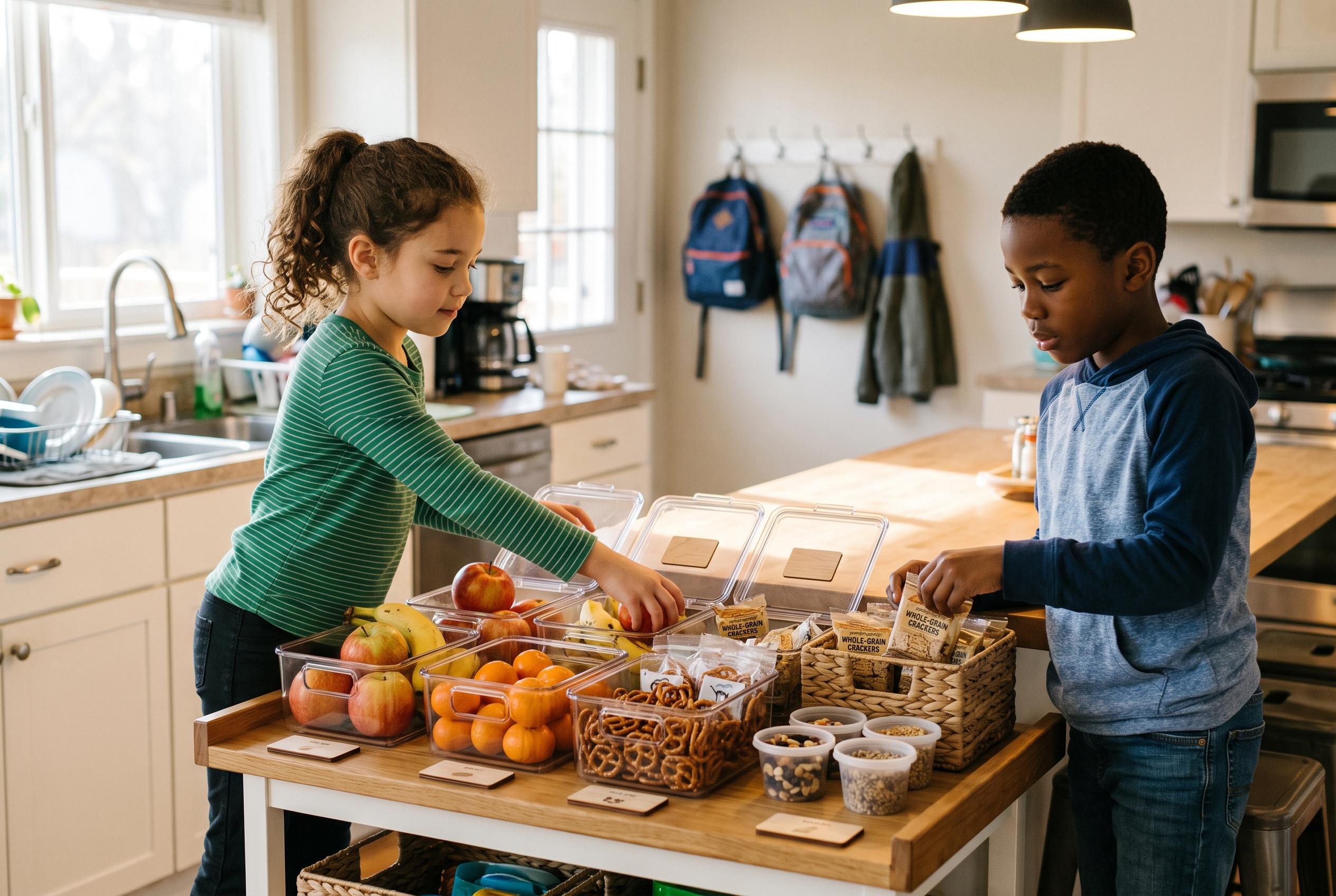

A small, clearly organised snack zone can give children more independence while making the daily transition from school to home calmer and more predictable.
The rush after school can quickly turn into a daily standoff: children arrive hungry, bags hit the floor and someone asks what there is to eat before the door has fully closed. A simple snack station can take one decision out of that chaos by giving children a small, familiar set of options they can reach on their own. It will not solve every busy-afternoon problem, but it can make the transition home feel far less fraught.
The most effective version is usually the least elaborate. Instead of aiming for a picture-perfect pantry, families can build a practical snack zone that fits their kitchen, budget, allergy rules and children’s level of independence. A single low shelf, a fridge bin or a pair of containers , one for chilled foods and one for shelf-stable items , is often enough to start. Industry guidance from school nutrition programmes also points to the wider value of predictable afternoon food access, noting that after-school snacks can help bridge the hunger gap that appears between lunch and dinner and support children’s attention and behaviour later in the day.
A useful way to organise the station is to make the choice structure simple. Many parents find it easier to offer one filling item and one add-on, rather than leaving children to sort through a whole kitchen’s worth of food. That might mean yogurt with fruit, crackers with cheese, or vegetables with a dip. Rady Children’s Health recommends building snacks around a mix of fruit, vegetables, whole grains and protein-rich foods, and suggests involving children in the selection process so they learn to recognise balanced options and appropriate portions.
The layout matters almost as much as the food. Ready-to-eat items can sit in the most visible spot, while shelf-stable snacks such as crackers, pretzels or dried fruit can go in a small basket. Foods that need one extra step, such as spreading or pouring, can be kept in a separate section if a child can manage them safely. Fred Meyer’s snack-station guidance also recommends making the best options the easiest ones to see and reach, so healthy choices become the default rather than the exception.
Any home version should reflect the family’s existing rules. That means using only foods that fit known allergy boundaries, swallowing needs or other individual considerations, and making those limits visible with labels, coloured bins or simple symbols. It also helps to decide in advance what happens when friends visit, so children are not left guessing about what they may share. The California Department of Education says organised after-school snack access can support learning, while Florida’s agriculture department notes that federally supported snack programmes are designed to fill the afternoon hunger gap for children in supervised after-school activities.
A weekly reset keeps the system from slipping into clutter. Parents can remove wrappers, move older items to the front, wash the bin and restock only what children actually used. That is also a good time to ask what was hard to open, what disappeared too quickly and what came home untouched. For younger children, fewer choices and picture cues can make the routine easier to follow; for older children, a small grab-and-go section can help on activity days. The goal is not a flawless food station, but one that makes a hectic part of the day a little calmer and more predictable.
Disclaimer: This content is for informational purposes only and is not intended to be a substitute for professional medical judgment, advice, diagnosis, or treatment.



