

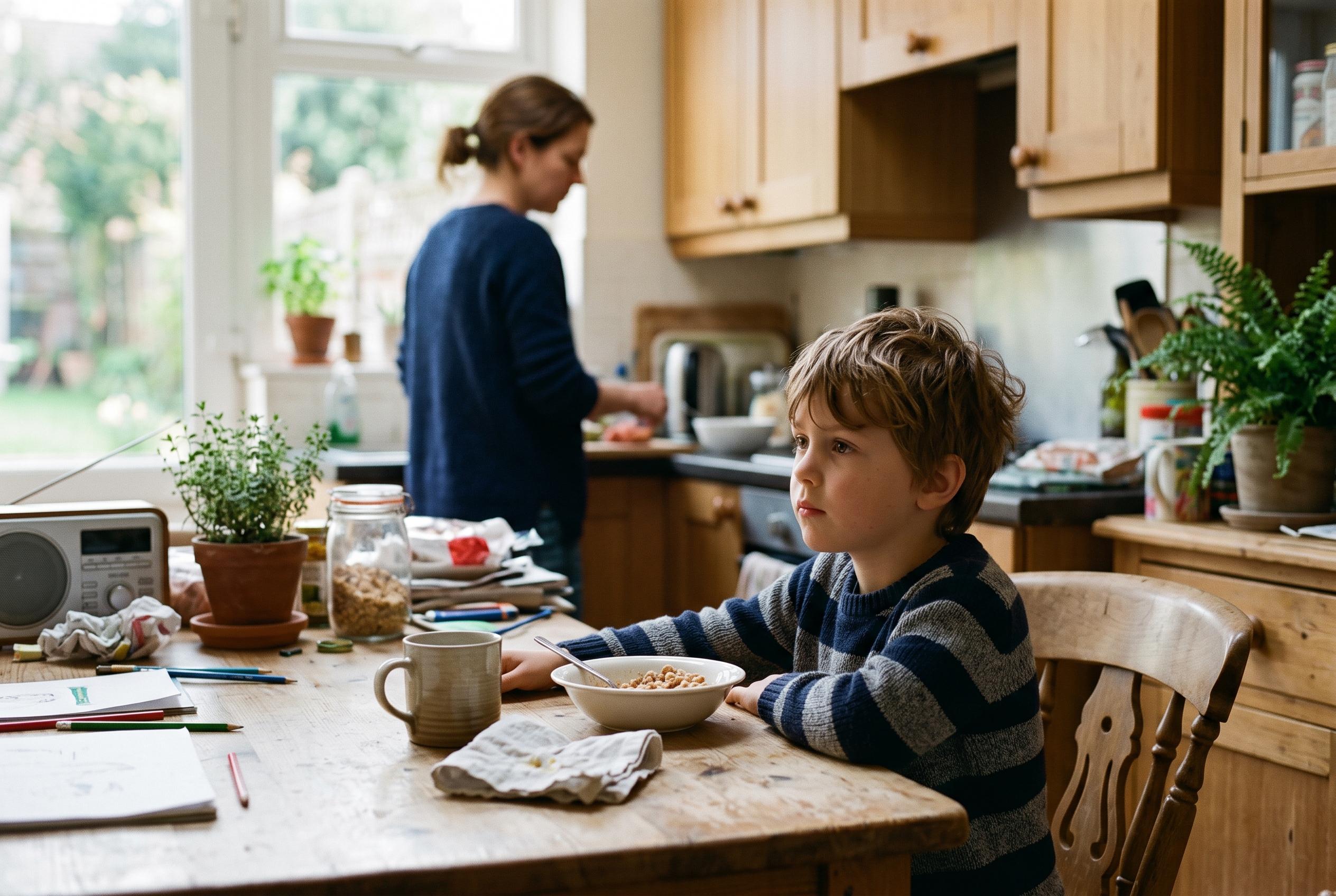

Growing up around volatile moods may make some children more alert to subtle emotional cues, but research suggests this heightened sensitivity is a limited adaptation rather than a universal social advantage.
Growing up in a home where arguments were common or adults’ moods changed without warning can shape how children read the emotions of others. Psychologists say some children become especially alert to facial expressions, changes in tone and small shifts in body language because those clues help them anticipate what might happen next. That does not mean every child develops exceptional social insight; rather, it reflects an adaptation to an unpredictable environment.
Research suggests that this heightened sensitivity can sometimes improve accuracy in spotting emotions, particularly when the signals are strong. A 2024 study found that heavier exposure to hostile parental conflict was linked to greater later precision in identifying specific emotions. But the effect was limited, and it did not amount to a broad advantage in understanding other people in every situation.
Other findings point to a more complicated picture. A large population study of more than 6,500 children did not find a general link between childhood adversity and poorer emotion recognition, reinforcing the idea that family experiences interact with many other influences. Earlier work has also shown that parental behaviour, including responsiveness and stimulation at home, can shape child development in different ways depending on age, background and circumstance.
In some children, the habit of scanning for danger can persist into later life. They may react quickly to silences, tense shoulders or subtle changes in voice, sometimes reading irritation before it is openly expressed. In trauma studies, that kind of watchfulness is often described as hypervigilance, a possible response to threat rather than proof of a person’s history on its own. Research on family conflict also shows that children’s responses to tension can affect behaviour, while studies of chaotic homes have linked disorder, noise and crowding with weaker cognitive performance and more behavioural problems. More recent work has suggested that positive parental interactions, such as shared laughter and gratitude, may offer a protective counterbalance.
Disclaimer: This content is for informational purposes only and is not intended to be a substitute for professional medical judgment, advice, diagnosis, or treatment.



