

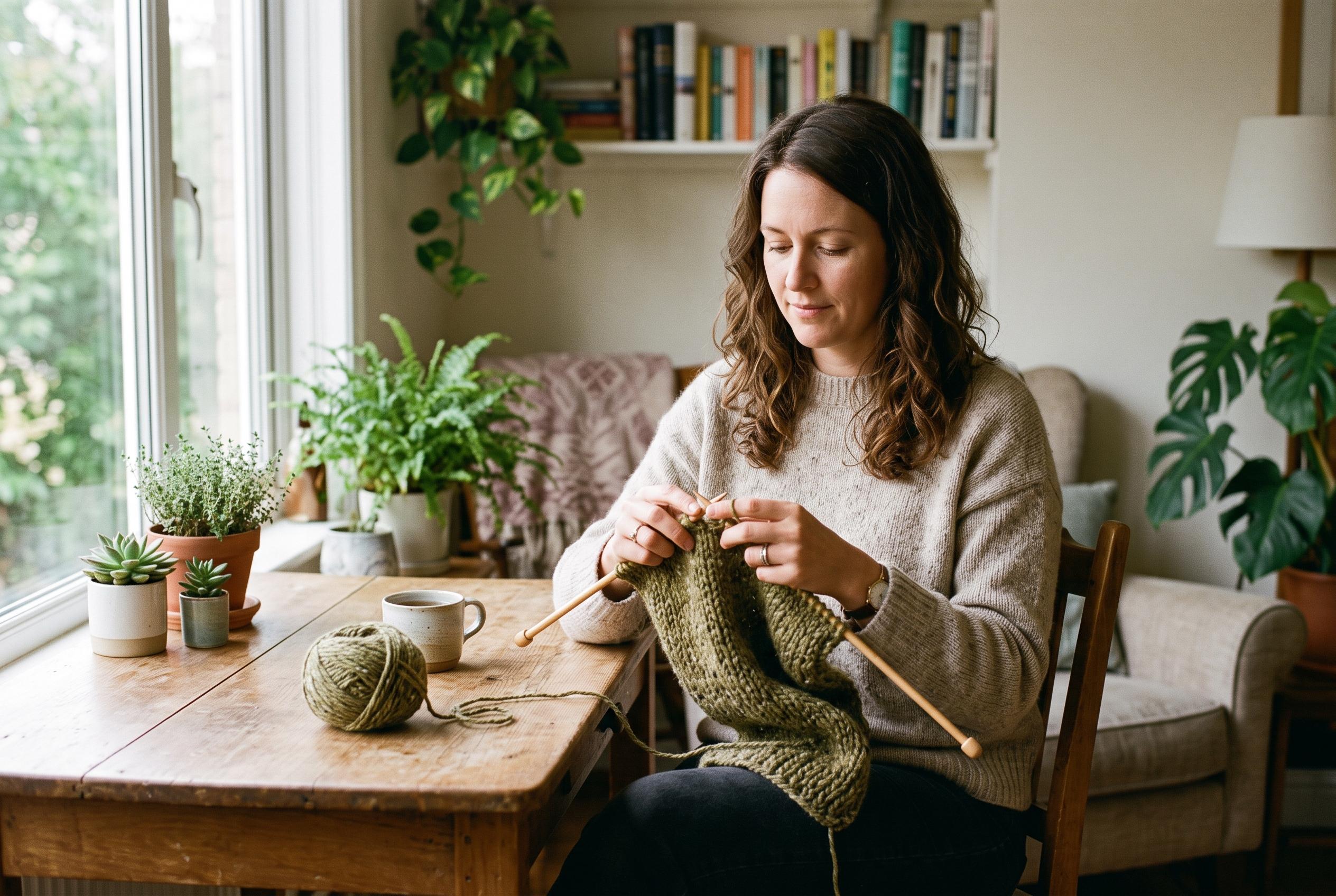

Studies suggest knitting, gardening, music and other creative pursuits can support wellbeing, while researchers caution that the evidence remains limited and uneven.
Researchers are taking a closer look at what people do when they step away from screens, and the evidence suggests that hands-on pastimes can support mental wellbeing in modest but meaningful ways. Knitting, gardening, pottery, baking and reading may look ordinary, yet recent studies indicate that activities requiring patience, concentration and practice can offer benefits that go beyond simple distraction.
A review published in the Australian Occupational Therapy Journal in February 2025 examined 19 studies of craft-based activities, including knitting, embroidery, pottery and woodworking. According to the review, every study found some short-term gain in at least one measure of wellbeing, from mood and stress to self-esteem and life satisfaction. The authors were cautious, however, noting that the studies differed widely in quality and that only one looked at whether the effects lasted after the activity ended.
That caution matters, because making something by hand is not the same as consuming entertainment. Crafts ask participants to learn, repeat and improve. A person trying pottery, for example, may spend as much time correcting mistakes and mastering tools as finishing a bowl or vase. The process itself appears to matter, not just the finished item.
Gardening has also drawn scientific attention. A systematic review and meta-analysis published in the International Journal of Nursing Studies in August 2025 looked at controlled trials involving horticultural activity among adults living in the community. The researchers focused on whether contact with plants could ease depressive symptoms, using more rigorous methods than self-reported enthusiasm alone. Their findings suggest gardening may help some people, but they do not amount to proof that it will lift everyone’s mood in every setting.
The appeal of gardening may lie partly in its structure. It combines movement, routine and visible change, while also teaching patience. Plants cannot be hurried, and that slow pace may itself be part of the benefit for people who spend much of their day in fast-moving digital environments.
Creative activities are not limited to traditional crafts. Research published in SSM – Population Health in September 2025 found a positive association between regular participation in arts and creative pursuits and better mental health among adolescents. The review placed particular emphasis on music, linking it to lower levels of internalising symptoms such as anxiety and depression. Even so, the authors called for more experimental and quasi-experimental research before stronger conclusions are drawn about cause and effect.
That broader picture helps explain why the discussion of offline hobbies now extends well beyond sewing circles and allotments. Playing an instrument, sketching, painting or taking photographs can all offer a disciplined focus that digital browsing often lacks. These activities may also build social connection through classes, clubs and collaborative projects.
Time-use figures from the US Bureau of Labour Statistics show that people who do take up hobbies may devote substantial stretches of time to them. In analysis published in January 2026 using 2024 data, the agency found that participants in arts and crafts spent an average of 125 minutes on those activities on the days they engaged in them, while people involved in other hobbies spent an average of 151 minutes. The numbers do not show that offline leisure is growing, but they do suggest that it remains an important part of many people’s routines.
Reading presents a more complicated picture. The bureau’s 2025 time-use data, published in 2026, found that people aged 15 and over spent an average of 16 minutes a day reading on an average day. That figure covers reading as a primary activity and does not reveal whether people are choosing printed books over digital material. Even so, it suggests that reading must compete with many other demands on attention.
Offline hobbies are not necessarily separate from technology. People often discover recipes through online videos, find knitting patterns on websites or join photography groups on social media. The screen may help start the activity, but the main task then happens in the physical world, whether that means kneading dough, tending a balcony garden or working through a chapter of a novel.
Access also shapes who can take part. Some hobbies require specialist tools, materials or classes, while others begin with very little. A library book, a pencil and notebook, or a few pots for herbs may be enough. What the latest research suggests is not a universal retreat from digital life, but a renewed appreciation for pastimes that ask for time, attention and practice in return for something tangible.
Disclaimer: This content is for informational purposes only and is not intended to be a substitute for professional medical judgment, advice, diagnosis, or treatment.



