

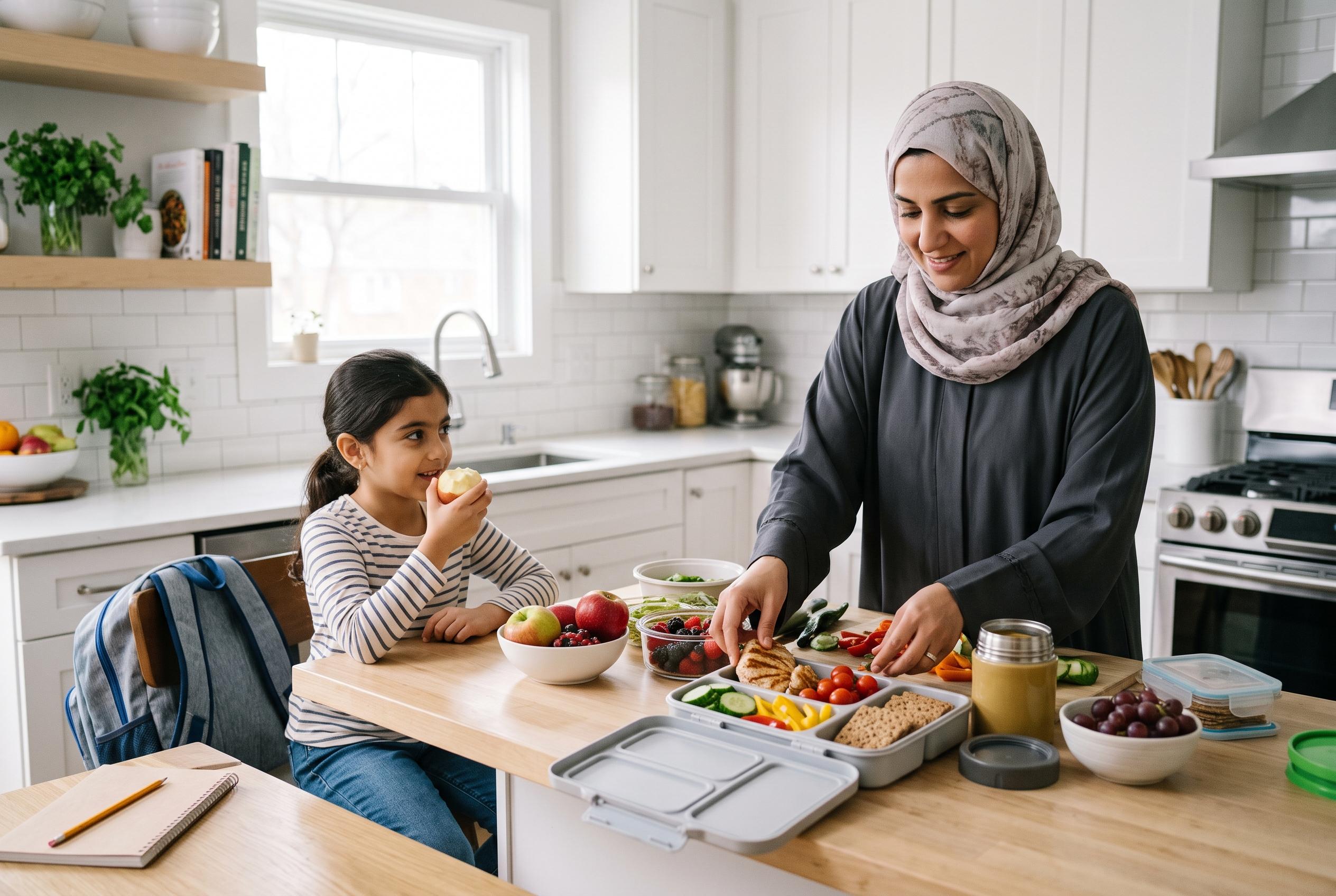

Government campaigns and school food restrictions are prompting Saudi parents to rethink what goes into lunchboxes, while ensuring children will actually eat it remains the daily challenge.
Saudi parents are spending more time thinking about what goes into school lunchboxes, as nutrition
and practicality increasingly shape the morning routine for families across the Kingdom.
What was once often a quick matter of packing whatever was on hand has become a more deliberate
exercise, with parents weighing protein, fruit, sugar content and whether a child will actually eat
what is packed before the school day is over. That shift has coincided with a broader public
push, led by the Ministry of Health and the Ministry of Education, to make school meals healthier
and easier for families to plan.
In January 2026, the Ministry of Health’s Live Well initiative, working with the Ministry of Education,
launched the “Live Well Lunchbox” campaign to encourage healthier food choices in schools and give
families practical guidance on balanced meals. According to the ministry, the campaign is part of the
Health Sector Transformation Programme under Saudi Vision 2030 and is designed to strengthen
nutrition awareness among parents, students and educators. The Live Well platform later unveiled a
lunchbox guide with recipes, ingredient suggestions and healthier alternatives intended to make
better choices more accessible in everyday life.
For parents, the challenge is not simply nutritional theory but the realities of getting children to eat
what has been prepared. Many families now aim for a small sandwich or wrap, fruit, vegetables and a
dairy item, sometimes with dates or another snack, but the best-planned box can still come home
largely untouched. That has pushed some parents to involve children in the process, letting them
choose between a limited number of options rather than handing them a fully assembled meal they
may reject.
The change reflects a wider awareness of childhood diet in Saudi Arabia. Government figures cited by
the General Authority for Statistics showed obesity among children aged 2 to 14 at 14.6% in 2024,
with a further 33.3% classified as overweight. Against that backdrop, school nutrition has become a
public-health issue, not just a household one. In early 2025, the Ministry of Education also began a
pilot school nutrition programme offering free daily servings of milk and dates to more than 212,000
students in 800 schools in Riyadh, Jeddah and Al-Ahsa, with more than 8 million servings planned
for the pilot phase.
The policy push has continued beyond lunchboxes. School canteens are subject to health rules on food
preparation, storage and handling, as well as the nutritional quality of items sold to students. In
September 2026, the Ministry of Education went further by banning the sale and marketing of 30 food
and drink items in school canteens, including fizzy drinks, energy drinks and several heavily
processed snacks, according to Okaz. The broader trend points in the same direction: towards schools
that are expected to support healthier habits, and parents who are being asked to think more carefully
about the everyday food they pack.
For families such as those described by Saudi parents, the lunchbox has become a small but revealing
test of balance between health guidance and real life. The goal is no longer simply to send children
off with food, but to send them with something nourishing, manageable and likely to be eaten. As one
mother put it, the simplest measure of success is whether the lunchbox comes home empty.
Disclaimer: This content is for informational purposes only and is not intended to be a substitute for professional medical judgment, advice, diagnosis, or treatment.



