

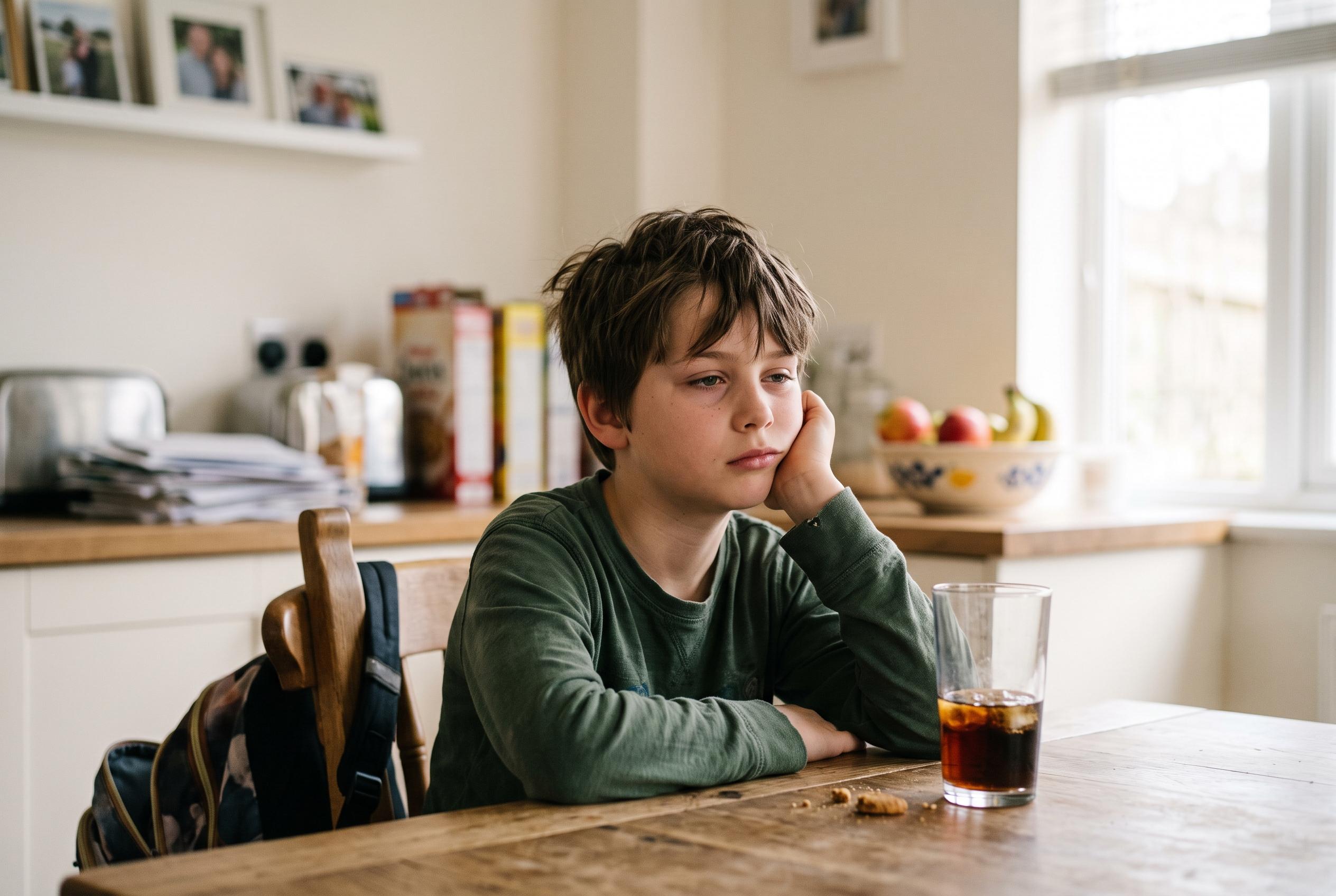

A study of more than 9,600 children found that consuming roughly two cans of cola a week was associated with shorter sleep, small brain differences and greater psychological distress, although it does not prove caffeine is the cause.
Children who regularly drink caffeinated soft drinks may face more than a short-lived energy boost, according to research from King’s College London that links even modest caffeine intake with later sleep loss, brain differences and worse mental health. The findings suggest that a habit as ordinary as a couple of cans of cola a week could be associated with measurable changes in developing children, although the researchers caution that the study shows correlation rather than proof of cause and effect.
The team analysed information on 9,632 children aged nine to 11 from the US-based Adolescent Brain Cognitive Development study, looking at weekly caffeine intake, sleep patterns and later emotional and behavioural symptoms. Their report found that youngsters who consumed as little as 90mg of caffeine a week, roughly the amount in one cup of coffee or about two cans of some colas, were more likely to show psychological distress 18 months later. Brain scans also showed small differences in areas involved in learning and reasoning among those with higher caffeine intake.
The researchers said the effects appeared to be linked in part to shorter sleep. Children who consumed more caffeine tended to sleep less, and sleep loss is already known to affect concentration, school performance and mental health. Divyangana Rakesh, the study’s lead author, said caffeine has become so routine that adults can overlook how much children are consuming. She argued that existing rules do not go far enough, particularly because many lower-caffeine soft drinks are not covered by the proposed restrictions on energy drinks.
The work adds to a broader body of evidence suggesting that caffeinated drinks can be a concern for children and teenagers, especially when they are consumed regularly. Johns Hopkins Medicine has warned that energy drinks can contribute to sleep disturbance, anxiety, stress and depression, while earlier research published in psychiatric journals has also found links between higher caffeine intake and greater anxiety and depressive symptoms in schoolchildren. At the same time, independent experts have urged caution in interpreting the new findings, saying the observed brain differences were small and may also reflect sugar intake, diet and other lifestyle factors rather than caffeine alone.
Disclaimer: This content is for informational purposes only and is not intended to be a substitute for professional medical judgment, advice, diagnosis, or treatment.



