

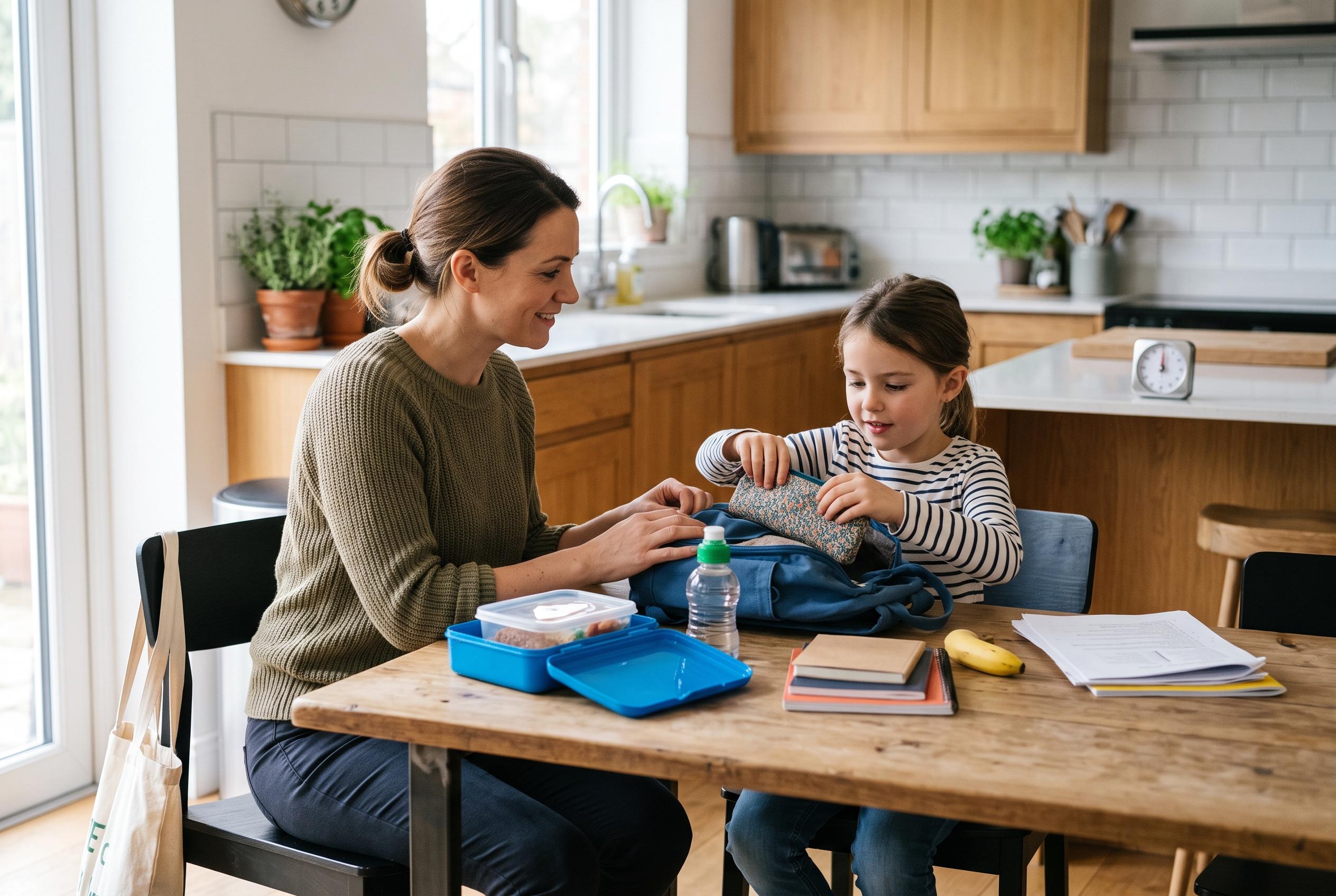

From preparing school bags the night before to using timers for screen time, Austrian ADHD trainer Anna-Maria Sanders recommends practical routines that make everyday transitions calmer.
Families raising a child with ADHD often discover that the hardest part of the day is not one major crisis but a chain of small ones: getting dressed, leaving the house, starting homework, turning off a game, brushing teeth and settling to sleep. According to Austrian ADHD parent trainer Anna-Maria Sanders, who spoke to Der Standard, the key is not a single miracle fix but a set of routines and responses that reduce friction before it starts. That approach is broadly consistent with guidance from Healthline, WebMD and other parenting resources, which stress structure, short instructions, fewer distractions and steady follow-through.
Sanders, who has worked with families for more than two decades and leads the Austrian ADHD association ADAPT, argues that parents are often looking for a quick answer to a problem that needs repeated practice. In her view, the most effective changes usually involve how adults communicate, how they guide transitions and how they react when a child becomes overwhelmed. Rather than trying to correct every difficult moment on the spot, she suggests building habits that make the difficult moments less likely in the first place.
Mornings are a common flashpoint. A child may know exactly what needs to happen but still struggle to organise the sequence: get dressed, eat, brush teeth, pack the school bag and leave on time. Sanders recommends doing as much preparation as possible the night before, including laying out clothes and packing school items, while also giving the child help in moving through the routine step by step. Healthline likewise advises parents to simplify the environment, reduce distractions and break tasks into smaller parts. If there is time at the end, Sanders says, play can still happen, but only after the essential tasks are complete.
Food can become another source of daily tension, especially when a child is not hungry in the morning or only accepts a narrow range of foods. Sanders recommends a practical rather than idealised approach: if a child reliably eats one specific breakfast, it is often better to offer that than to turn every morning into a negotiation. She also notes that some children with ADHD eat better later in the day, and that family members do not always need to sit together if the breakfast table has become too noisy or distracting. That emphasis on reducing conflict mirrors advice from other parenting guides, which encourage parents to match expectations to the child’s actual needs rather than to a perfect family routine.
Homework can be especially draining because the task begins long before the child opens a workbook. Finding the bag, locating the right exercise book, remembering the assignment and gathering materials can already use up much of the child’s mental energy. Sanders recommends turning the process into very small steps and staying nearby as a calm support rather than a supervisor. WebMD notes that children with ADHD often benefit from short directions, visual aids and repeated prompts, while other parenting advice stresses a dedicated study space with fewer distractions. Sanders also suggests estimating how long a task will take, so the child gradually learns to judge time more realistically.
Screen time often brings its own set of battles, particularly when a child has to stop playing or watching after school. Sanders advises families not to make screens the first form of decompression after a long day, especially if homework still needs to be done. She suggests alternatives such as reading, listening to music or an audiobook, moving around or simply taking a quiet break. When screens are allowed, she says rules should be agreed with the child in advance, including when the device may be used, for how long and what content is permitted. Visible timers, warnings before shutdown and the chance to save a game can make endings less explosive.
The same principle applies to bedtime. Sanders says many children with ADHD find it hard to switch off, stay in bed or fall asleep without a parent nearby. A predictable evening routine can help, whether that includes reading, a massage or a song. For parents who do not want to spend every night sitting silently beside the bed, she suggests staying in the room while doing something else, such as reading or listening to a podcast with headphones. Small preparations, such as a water bottle by the bed and a final toilet visit, can also prevent repeated call-backs once lights are out. In Sanders’s view, the aim is not to force independence on a fixed timetable, but to make evenings calmer for everyone involved.
Disclaimer: This content is for informational purposes only and is not intended to be a substitute for professional medical judgment, advice, diagnosis, or treatment.



