

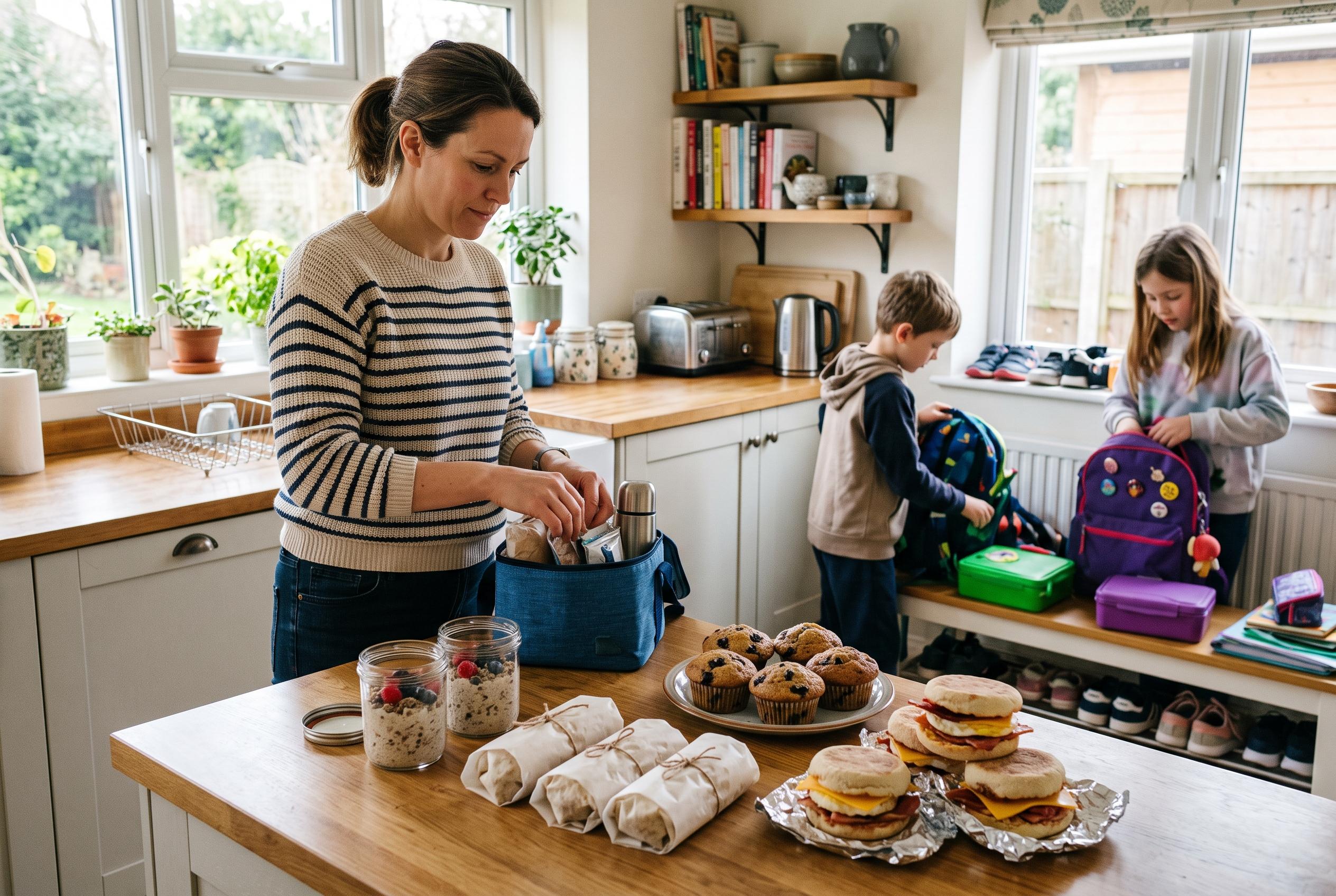

From overnight oats and freezer burritos to muffins and breakfast sandwiches, make-ahead recipes can save time and help families manage rising food costs.
Busy school mornings can make breakfast feel like one more task squeezed into an already crowded routine. Between shoes, bags and the race for the door, families often need food that is ready with minimal effort. The appeal of make-ahead breakfasts is simple: most of the work happens the night before or at the weekend, leaving only reheating, assembling or grabbing and going in the morning. The USDA Economic Research Service says food-at-home prices are forecast to rise by 2.4% in 2026, which makes low-cost homemade breakfasts even more practical for households trying to keep grocery bills under control.
One of the easiest options is overnight oats. Rolled oats mixed with milk in jars or containers can sit in the fridge until morning, when families can add bananas, berries, cinnamon, raisins or peanut butter. The same idea works well for yoghurt and fruit parfaits, which can be layered the night before and finished with granola just before eating so it stays crisp. Both breakfasts are easy to vary from day to day, which helps prevent weekday meals from feeling repetitive.
For families that want something more filling, freezer-friendly savoury options can save a great deal of time. Breakfast burritos can be assembled in batches with eggs, cheese, potatoes, beans or cooked sausage, then wrapped and frozen individually. Egg muffin cups follow the same logic: whisk eggs, pour them into a muffin tin and add fillings such as peppers, spinach, ham or bacon. The result is a portable breakfast that can be reheated quickly and eaten without plates or extra cleanup. As Business Upturn noted in a separate roundup of school-day breakfasts, batch cooking is what makes these meals work so well during busy weeks.
Classic favourites can also be made ahead without much trouble. Pancakes can be cooked in large batches, cooled and stored in the fridge or freezer with parchment between layers, then warmed in a toaster or microwave. Homemade muffins, whether banana, blueberry, apple-cinnamon or pumpkin, freeze well too and can be pulled out the night before. French toast sticks are another useful option: once cooked and frozen, they can be reheated in an oven, toaster oven or air fryer and eaten with fruit or syrup on the go.
Families with a little more morning planning can lean on baked dishes and sandwiches. Baked oatmeal can be prepared in one dish with oats, milk, eggs, cinnamon and fruit, then cut into squares for later in the week. Breakfast sandwiches, made with egg, cheese and meat on English muffins, biscuits or bagels, can be wrapped and frozen for a quick homemade alternative to a drive-thru stop. The USDA’s food outlook also shows food-away-from-home prices are expected to rise faster than food bought for home in 2026, which only strengthens the case for keeping a few of these meals in the freezer.
The common advantage across all nine ideas is flexibility. Families can use leftovers, adjust portions for children of different ages and build a routine around whatever they already have in the kitchen. That is especially useful when school mornings are unpredictable and appetite varies from one child to the next. A few hours of weekend prep can turn breakfast from a daily scramble into one less decision before the bell rings.
Disclaimer: This content is for informational purposes only and is not intended to be a substitute for professional medical judgment, advice, diagnosis, or treatment.



