

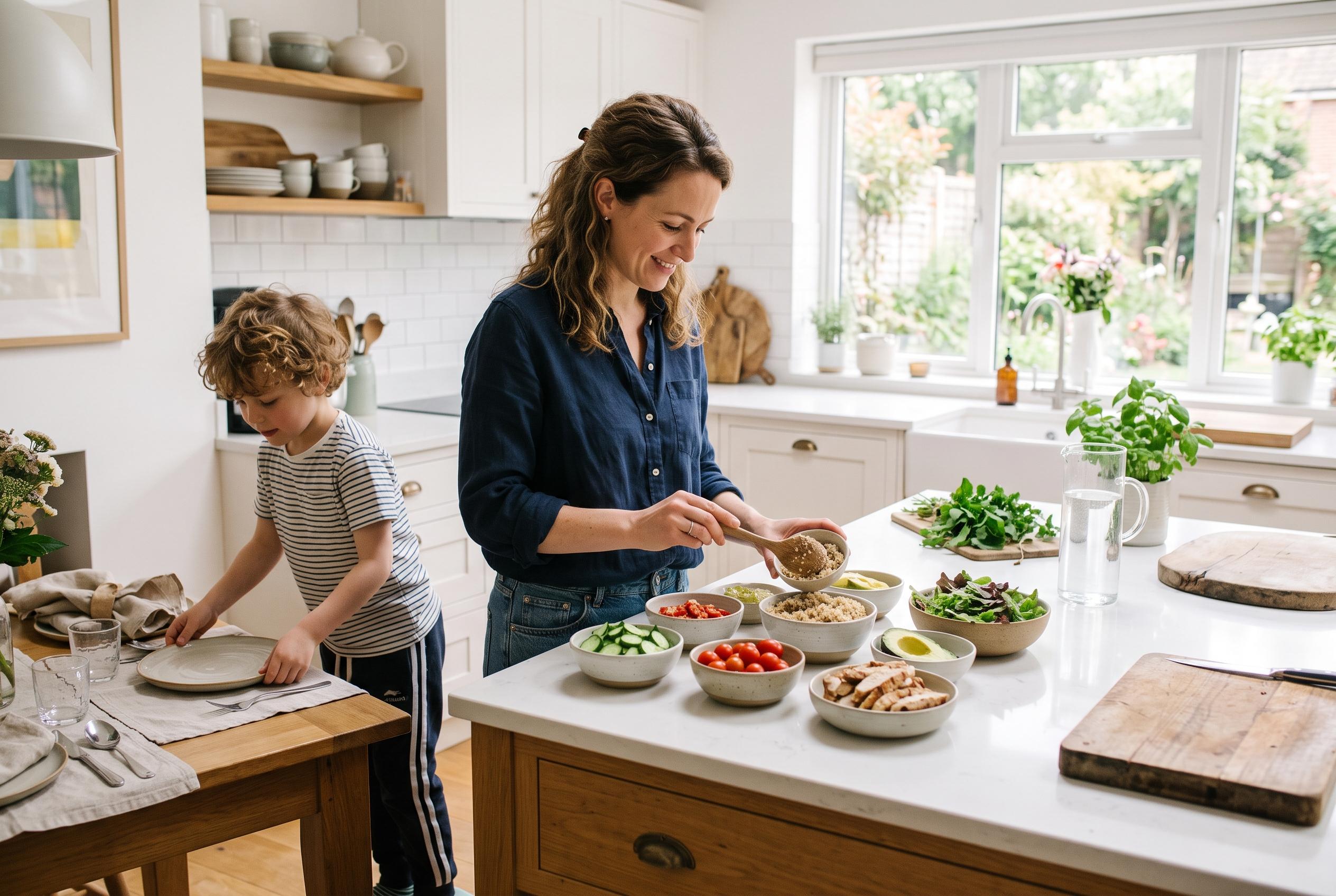

A simple weekly structure, a handful of reliable dishes and a few pre-prepared ingredients can make family lunches quicker, cheaper and less stressful.
Families do not need perfect recipes to make weekday lunches work; they need a repeatable routine. The most useful approach is often the simplest: decide meals in advance, keep a short list of dependable dishes, and prepare a few basics before the week begins. That way, lunch becomes something you assemble rather than invent every day.
Meal planning is the backbone of that system. Several family-focused guides on meal prep point to the same advantage: when grains are cooked ahead, vegetables are washed and chopped, and dips or sauces are ready in the fridge, the week feels less chaotic and food waste usually falls too. A realistic plan also helps households balance different tastes and dietary needs without making separate meals for everyone.
The best family lunch is usually the one that is filling, balanced and quick enough to repeat. That means a mix of protein, carbohydrates and vegetables, with a method that can be used again and again. For parents, that often translates into soups, pasta dishes, rice bowls, tray bakes and one-pot meals that can be adapted with whatever is already in the kitchen. According to the article’s guidance, about 30 minutes should be the upper limit on a busy weekday, and less if some components have been prepped earlier.
A weekly structure helps remove decision fatigue. One day might centre on pasta, another on soup, another on a tray bake, with a final day reserved for leftovers or a very fast dish. Families that work this way tend to shop more accurately, use what they buy more efficiently and avoid the last-minute panic that leads to expensive convenience food. The same principle also makes it easier to match meals to the family calendar, so a busy sports afternoon does not collide with an elaborate recipe.
Meal prep does not mean cooking every dish in full on a Sunday. The more practical version is to prepare the building blocks: batch-cook rice or lentils, roast vegetables, make a pot of tomato sauce, or portion out soup for later in the week. Those components can be turned into different lunches with small changes in seasoning, toppings or sides, which keeps meals from feeling repetitive even when the underlying ingredients are similar.
Children are more likely to eat what they have helped make, and that makes kitchen involvement useful as well as educational. Age-appropriate tasks such as washing vegetables, stirring mixtures or setting the table can make lunchtime easier later on. The same idea applies to picky eaters: it often works better to keep offering vegetables in different forms, rather than turning the table into a battleground. A carrot in a sauce, for example, may be accepted where a raw carrot stick is refused.
Budget and nutrition do not have to pull in opposite directions. The strongest staples are often the least expensive: lentils, beans, eggs, potatoes, rice, seasonal vegetables and frozen produce. Family meal prep guides also note that this approach reduces waste and makes it easier to keep lunches varied without overspending. For households with allergies or intolerances, the same framework still works: base meals on naturally gluten-free or dairy-free ingredients, then add substitutions where needed.
Disclaimer: This content is for informational purposes only and is not intended to be a substitute for professional medical judgment, advice, diagnosis, or treatment.



