

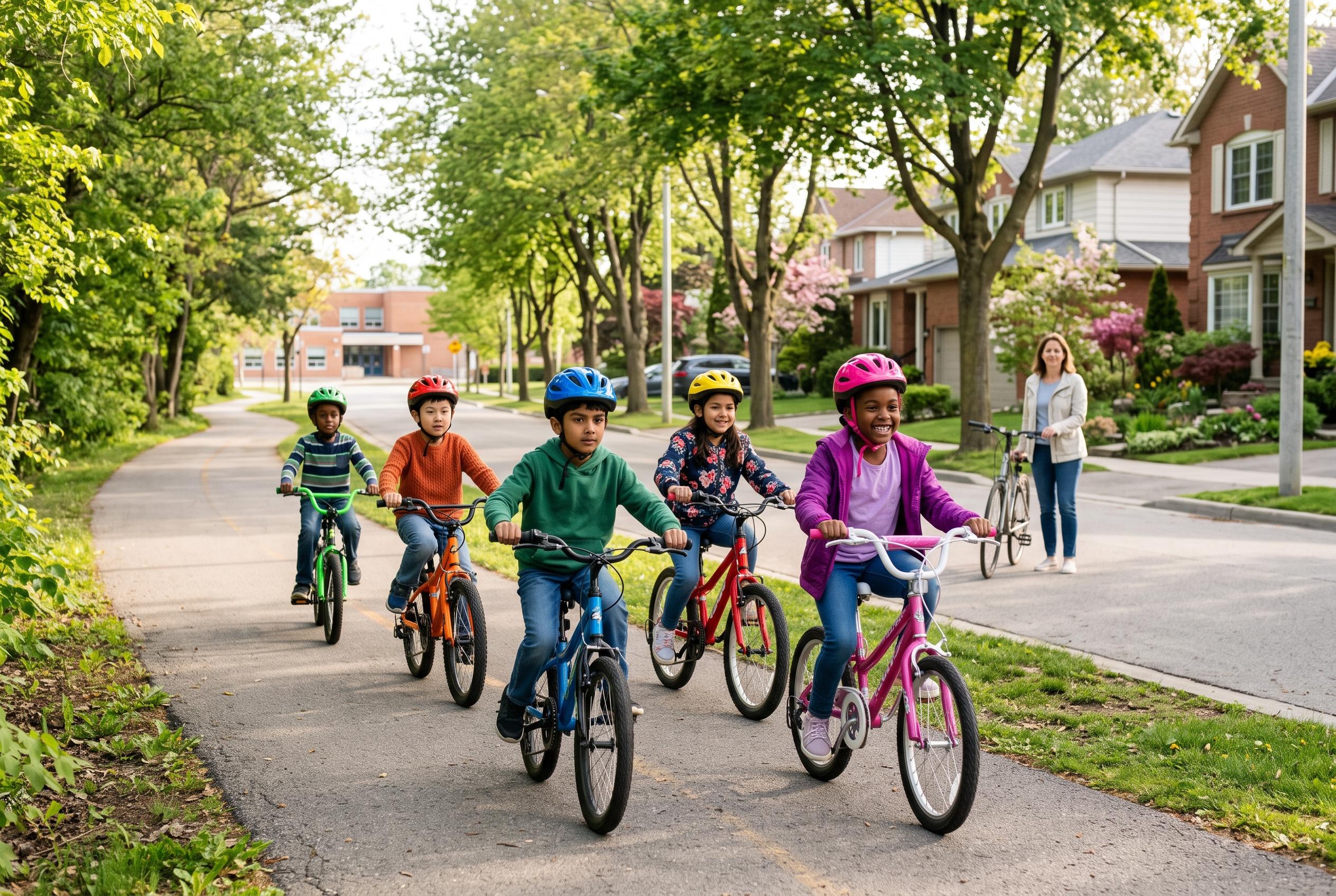

Research suggests regular physical activity can sharpen attention, strengthen memory and improve academic performance, making the school run an opportunity to support learning as well as fitness.
For parents looking for a simple way to support school success, the answer may begin before the first lesson of the day. A growing body of research suggests that regular physical activity can sharpen children’s attention, support memory and improve academic outcomes, with benefits that extend beyond fitness alone. Recent reviews have found that exercise interventions can improve performance at school, particularly in mathematics, while also strengthening the brain systems that help children focus, plan and retain information.
That evidence is especially relevant for families weighing the routine of biking to school. Although the research looks at physical activity more broadly rather than cycling alone, it points to a clear pattern: children who move more tend to do better cognitively and academically. A systematic review and meta-analysis published in 2023 found that physical activity incorporated into the school day was linked with better academic performance, with the clearest gains often seen in maths. Another review in the National Library of Medicine’s educational collection similarly concluded that physical activity and fitness can support academic achievement, in part by improving executive function, the mental skills that help children manage attention and behaviour.
The benefits do not appear to depend on long workouts or highly structured training. Research summarised in multiple reviews shows that even regular aerobic exercise can strengthen inhibitory control and working memory, two core parts of executive function, and that sustained programmes may have a positive effect on school performance over time. One meta-analysis published on PubMed Central found that physical activity was associated with better cognitive performance and academic achievement in children and adolescents, reinforcing the idea that movement can support learning rather than compete with it.
Cycling to school also offers advantages that go beyond test scores. The broader consensus in the exercise literature suggests that physical activity can support children’s self-esteem and improve relationships with peers and family members. That social dimension matters, especially as more children are driven everywhere and lose the daily opportunities for conversation, independence and shared routine that once came with walking or riding together. Biking to school can give children a chance to arrive more alert, build confidence in navigating their world and gain a small but meaningful sense of ownership over their day.
For parents worried that time spent on a bike might cut into study time, the evidence offers reassurance. Reviews of school-based activity programmes have found no meaningful trade-off between exercise and academic progress; in other words, time spent moving does not appear to come at the cost of learning. Taken together, the research suggests that a bicycle may be more than a practical way to get to class. It may also be one of the simplest tools families can use to support healthier bodies, steadier minds and stronger school performance.
Disclaimer: This content is for informational purposes only and is not intended to be a substitute for professional medical judgment, advice, diagnosis, or treatment.



