

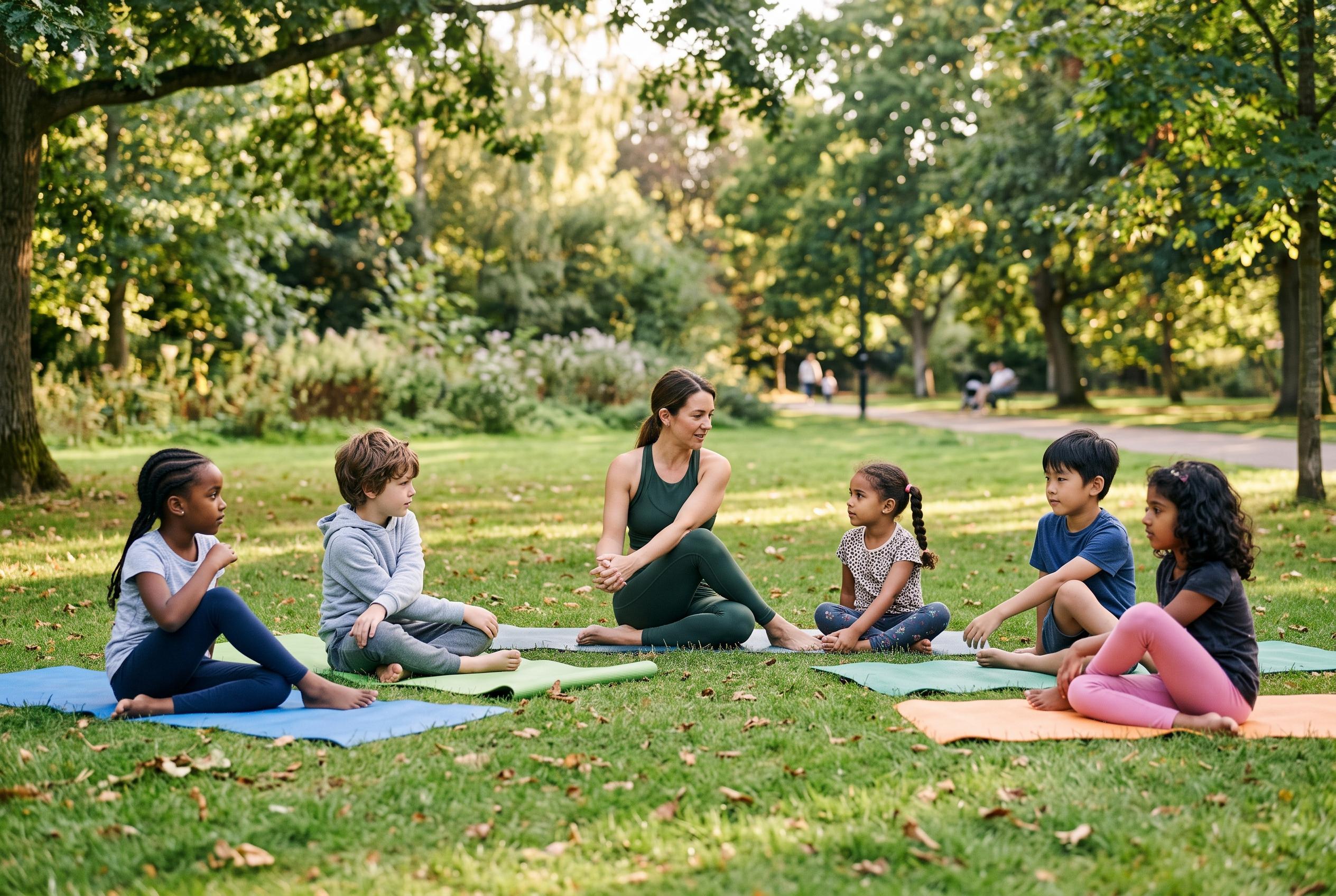

As families fill children’s after-school schedules, yoga is gaining attention as a gentle way to support focus, emotional regulation and body awareness, though researchers say stronger evidence is still needed.
As the school year gets under way, many families are once again weighing up after-class activities, from football and swimming to dance, basketball and martial arts. Yoga is less obvious than some of those choices, but it can offer children a gentle, play-based way to build calm, focus and body awareness at a time when many are overloaded with activity. Italian publication Il Fatto Quotidiano says the practice is increasingly being presented as a child-friendly option rather than something reserved for adults.
Yoga began in India and combines movement, breathing and relaxation. Health researchers say those elements can work together to support both physical and emotional development. The National Center for Complementary and Integrative Health says the American Academy of Pediatrics considers yoga a safe and potentially effective approach for some emotional, mental, physical and behavioural health needs in young people, provided children start slowly and the sessions are age-appropriate.
That growing interest is not based on enthusiasm alone. Reviews cited by the NCCIH and studies indexed in PubMed suggest yoga may help children and teenagers manage anxiety, depression and stress, although the quality of the underlying research has varied and more rigorous work is still needed. One systematic review of 27 studies found that 70% reported improvements in anxiety, while 58% found reductions in both anxiety and depression. Another review in the American Journal of Occupational Therapy said yoga’s structured, mindful movements can support attention, emotional regulation and self-knowledge.
For parents, the appeal lies in how practical the activity can be. Children are often drawn to yoga through games, animal poses and short breathing exercises, rather than through formal exercise routines. That can make it easier for them to learn how to settle themselves, listen to instructions, respect turns and practise stillness without pressure. Researchers also note possible gains in balance, strength and tension relief, all of which can matter when children are juggling homework, screen time and busy schedules. In schools and at home, yoga may be less about performance than about giving children a simple way to reset.
Disclaimer: This content is for informational purposes only and is not intended to be a substitute for professional medical judgment, advice, diagnosis, or treatment.



