

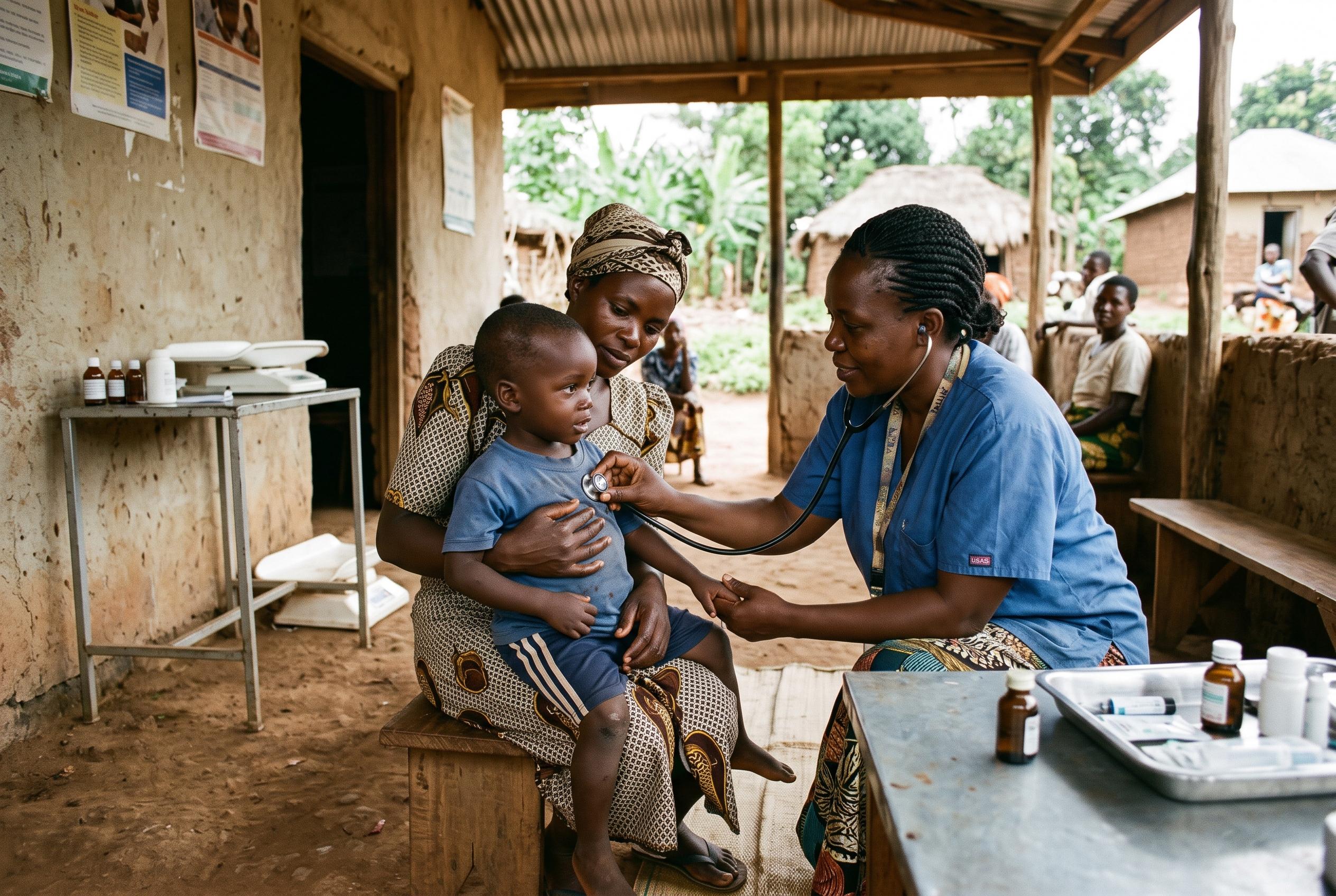

A study of 5,755 Ugandan children finds malaria and anaemia are linked more closely than separate statistical analyses suggest, strengthening the case for integrated health programmes.
A new analysis from Uganda suggests that anaemia and malaria in young children are more tightly connected than standard statistical methods often allow. Writing in PLOS Global Public Health, researchers examined data from 5,755 children under five and found that 13.8 per cent were living with both conditions at the same time, a level of overlap that points to more than coincidence and raises questions about how childhood illness is being measured and interpreted.
The study used a joint modelling approach rather than the usual method of analysing each condition separately. According to the paper and the accompanying PubMed record, the researchers applied a bivariate probit model within a Gaussian copula framework, a technique that allows two related outcomes to be estimated together while accounting for hidden dependence between them. In practical terms, that means the model can capture the extent to which malaria and anaemia move together even after the measured factors have been taken into account.
The results showed a modest but clear positive correlation between the two illnesses, with a correlation coefficient of 0.191. That finding suggests the conditions are not independent, and that separate analyses may miss part of the picture. The authors also reported that some risk-factor estimates changed once the interdependence between the diseases was modelled properly, including a reversal in the apparent relationship between maternal anaemia and a child’s malaria risk. That kind of shift matters because it can alter how policymakers interpret risk and where they direct interventions.
The study adds to a growing body of work linking the two diseases across sub-Saharan Africa. Research published in Frontiers in Tropical Diseases has used copula geoadditive modelling to examine anaemia and malaria together in Ghana, The Gambia, Rwanda and Uganda, while earlier work in the Journal of Health, Population and Nutrition explored the relationship in Kenya, Malawi, Tanzania and Uganda. A separate study in Malaria Journal also highlighted the burden of the two conditions in Ugandan children, and another analysis on PubMed estimated the causal effect of malaria infection on anaemia using propensity score matching. Together, these studies suggest that the overlap between the illnesses is both persistent and epidemiologically important.
For child health programmes, the message is straightforward: treating anaemia and malaria as separate problems may overlook the way they interact in the same child and the same household. The Ugandan researchers argue that integrated approaches, rather than stand-alone disease programmes, are more likely to reflect the realities on the ground. That could mean combining malaria prevention, nutritional support and maternal health measures more deliberately, particularly in settings where both conditions remain common.
Disclaimer: This content is for informational purposes only and is not intended to be a substitute for professional medical judgment, advice, diagnosis, or treatment.



