

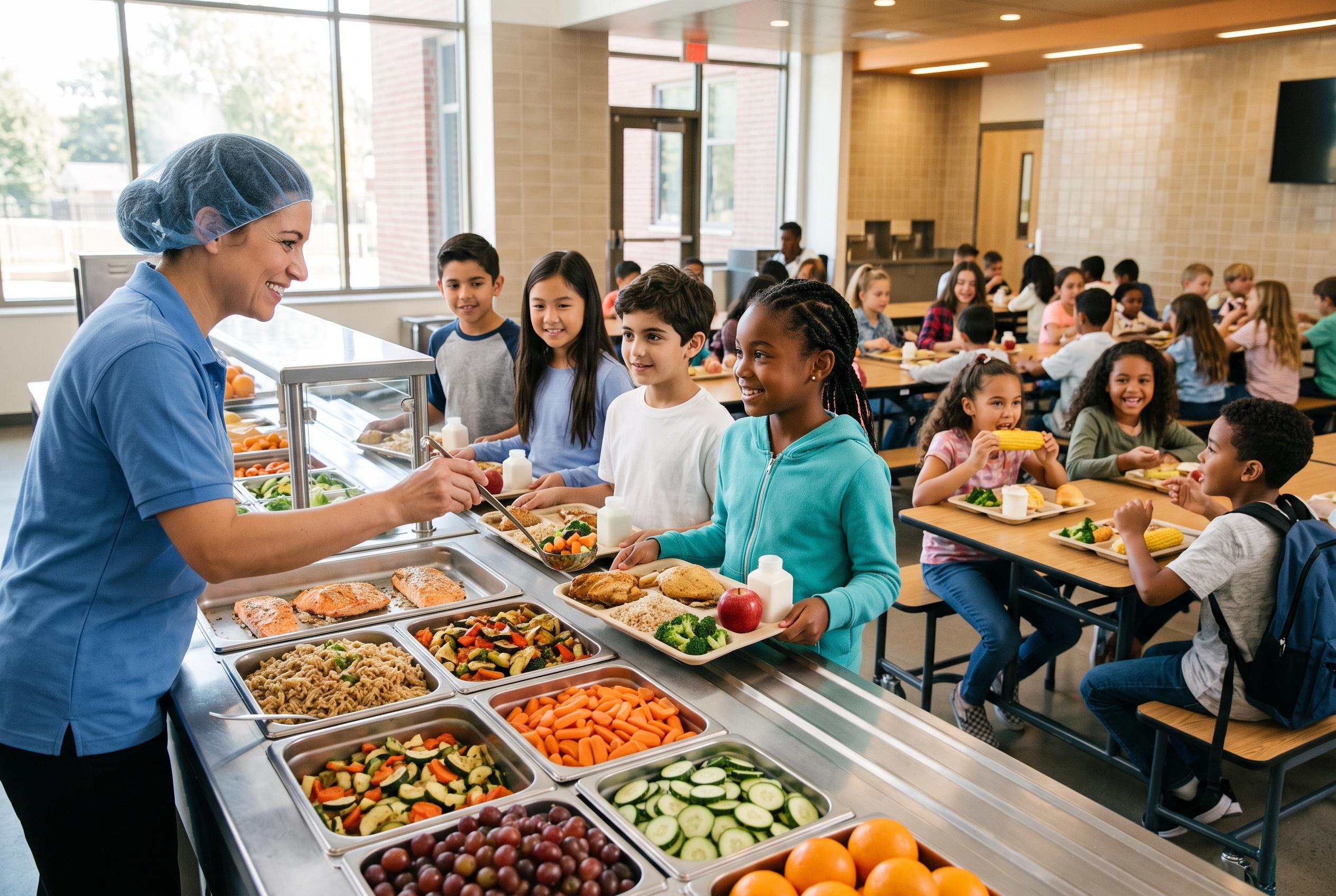

Jordan’s 2026–2030 school nutrition strategy introduces digital supply systems, stronger oversight and healthier meal options for about 500,000 public-school pupils.
Jordan’s Ministry of Education and Human Resources Development has set out a new national school nutrition strategy for 2026-2030, aiming to reshape how meals are planned, delivered and monitored in public schools. Speaking on Kingdom TV, education director Ahmed Al-Masaafah said the plan is intended as a roadmap for improving programme delivery and adds areas that were not covered in the previous version, including governance, digital supply systems and formal monitoring and evaluation. According to Petra, the ministry says the strategy was launched on Sunday, October 11, 2026.
The programme is expected to reach about half a million students. Around 400,000 pupils will receive biscuit-based meals, while about 100,000 will be given a healthier option of a pastry, fruit and cucumber. The ministry says the meals are prepared in production kitchens that meet food-safety standards, working with the Jordan Food and Drug Administration, the Ministry of Health and other partners.
The new plan builds on Jordan’s wider nutrition policy. The Ministry of Health, with the World Health Organisation, launched a national nutrition strategy for 2023-2030 in 2022, setting out goals to tackle malnutrition, obesity, micronutrient deficiencies and diet-related diseases. Separately, the Cabinet approved the school nutrition programme for 2026-2030 in August 2026, underscoring the government’s intent to tie school feeding more closely to public-health targets and local economic benefits.
Jordan’s school feeding network has also attracted support from outside government. In January 2025, the education ministry and the United Nations World Food Programme signed agreements to provide food and technical assistance for the scheme, which was serving 520,000 students at the time. Tkiyet Um Ali also launched a date-bar initiative in August 2026 to support the programme with meals made from natural ingredients, reflecting the growing role of charitable and international partners in school nutrition.
Disclaimer: This content is for informational purposes only and is not intended to be a substitute for professional medical judgment, advice, diagnosis, or treatment.



