

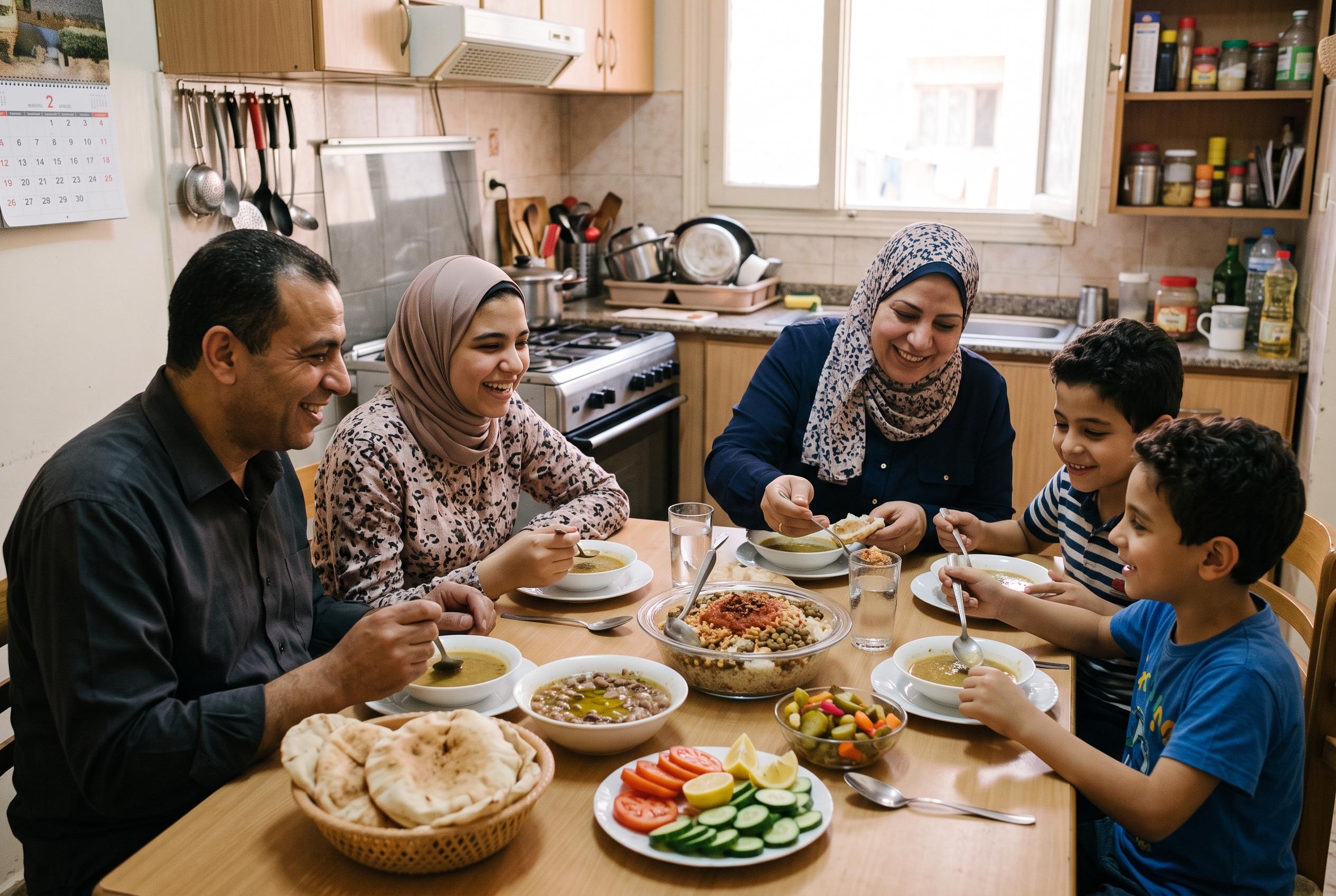

A Cairo University Hospital nutrition consultant says staples such as fava beans, lentils and koshari can form the basis of balanced, affordable meals when paired with vegetables and sensible portions.
A healthy diet does not have to be expensive, according to Nahla Abdel Wahab, a bacterial, immune and nutrition consultant at Cairo University Hospital, who said families can build balanced meals around familiar, low-cost staples. Speaking on the Egyptian television programme “Sabah el-Balad”, she pointed to foods such as fava beans, local cottage cheese, lentils and koshari as practical options that can fit into a household budget while still supporting better eating habits.
Abdel Wahab said the nutritional value of those foods improves when they are paired with fresh vegetables, particularly leafy options such as rocket and lettuce. In the case of koshari, she advised reducing the amounts of pasta and rice used, a reminder that even traditional dishes can become lighter and more balanced with simple adjustments. Her advice aligns with general nutrition guidance from WebMD, which says a balanced diet should include protein, vegetables, grains, dairy and healthy fats in sensible portions.
She also warned that foods often considered wholesome can still contribute to weight gain when eaten in excess. Nuts, chia seeds and flaxseed, she said, should be consumed in moderation despite their useful fats and nutrients. Wholemeal bread, she added, can remain part of a healthy eating pattern, reflecting broader advice from the American Heart Association and other nutrition specialists that healthier eating is often about portion control and smarter substitutions rather than strict deprivation.
Abdel Wahab urged families to buy groceries according to the number of people they are feeding and to compare prices between shops to keep spending under control. She also encouraged households to increase the share of vegetables on the plate and to offer moderate portions of protein. That approach is consistent with guidance from Harvard Health and Life Extension, which both emphasise the value of home cooking, legumes, whole grains and pantry staples such as beans and lentils as affordable building blocks for nutritious meals.
She further recommended varying protein sources between fish, poultry, meat and pulses, while using home-made alternatives to fast food where possible. For dessert, she said fruit is a better choice than sweets, and she advised moderation in the consumption of sugary foods. Health guidance from the American Heart Association and HealthHub also stresses cutting back on processed foods and excess salt, while relying more on fresh ingredients, herbs and spices to make everyday meals healthier without making them more costly.
Disclaimer: This content is for informational purposes only and is not intended to be a substitute for professional medical judgment, advice, diagnosis, or treatment.



