

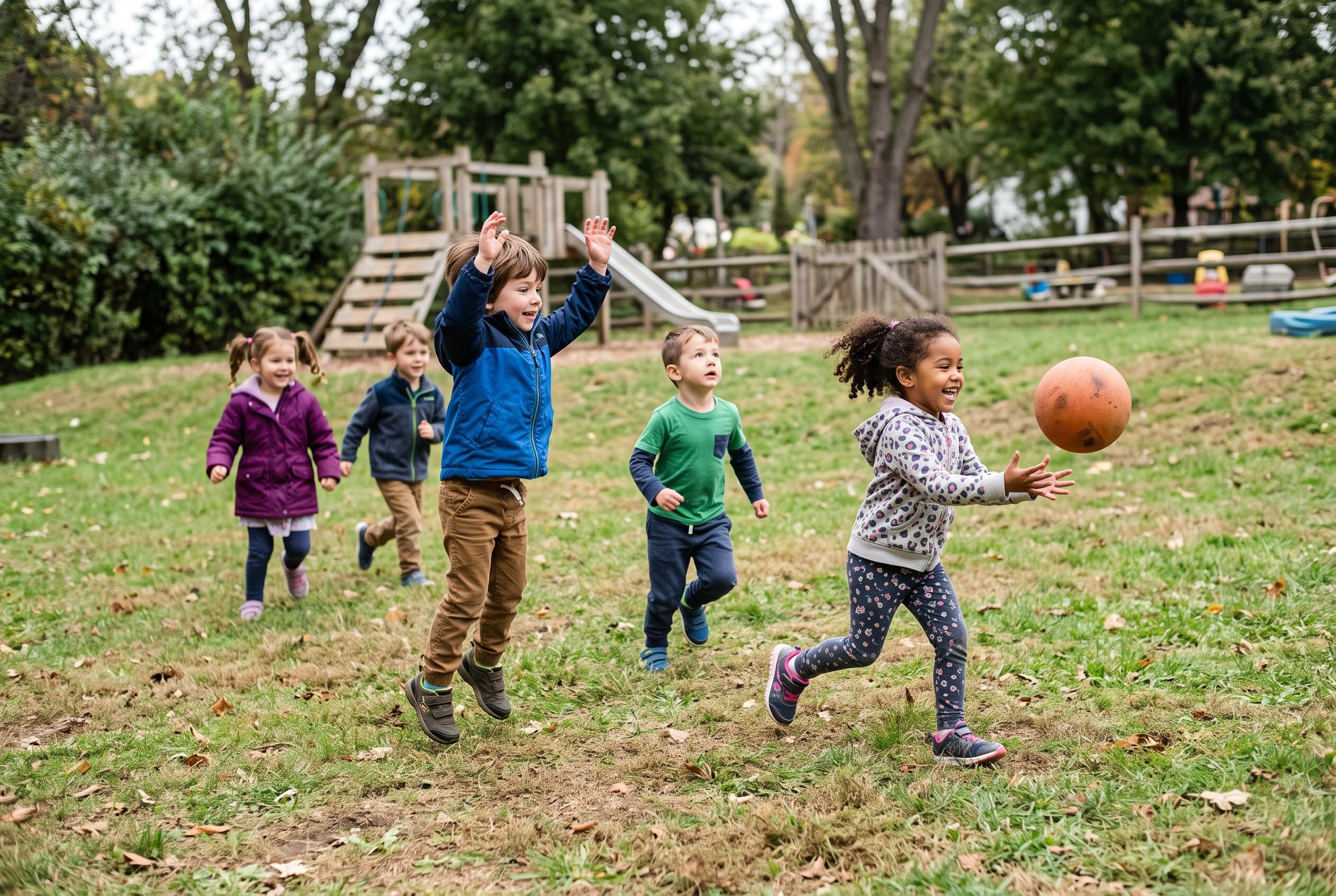

A study of 557 children in China found that limited or absent crawling was associated with substantially poorer running, jumping and ball-handling skills, although the researchers stressed that the finding does not prove causation.
A study in Frontiers in Psychology has found that preschool children who had less crawling experience as infants were more likely to score poorly on tests of fundamental movement skills, a broad category that includes running, jumping and ball handling. The researchers, working with 557 children aged three to six in Qufu, in China’s Shandong province, said the association remained after adjusting for age, sex, body mass index and several birth and family factors.
The team used a retrospective cross-sectional design, relying on guardian questionnaires to reconstruct infant crawling history and on-site testing with the Test of Gross Motor Development-Third Edition. Children whose total motor score fell below the study’s own 25th percentile were classed as having relatively insufficient development. Among the 195 children identified as having insufficient crawling experience, 51 had never crawled at all, while the rest had crawled but met at least one of the study’s criteria for limited or constrained crawling.
The gap in motor performance was sizeable. Children in the insufficient crawling group had lower median scores for locomotor skills, ball skills and the overall fundamental movement score than those with more crawling experience. In the fully adjusted model, insufficient crawling experience was linked with more than eight times the odds of being placed in the low-scoring category. The authors said the finding was stable in sensitivity analyses that removed outliers, although they also stressed that the results show statistical association, not causation.
The paper also points to patterns within crawling itself. Longer daily crawling time and greater diversity in crawling posture were both associated with better motor outcomes, while children who crawled in multiple postures were less likely to be classed as having relatively insufficient fundamental movement skills. Other features, including backward crawling and crawling while carrying objects, did not show clear links. A trend emerged for shorter daily crawling duration, but the authors noted that the dose-response pattern was not perfectly linear.
Related research helps explain why the topic has attracted interest. A longitudinal study indexed in PubMed found that infants’ postural practice over the first year is shaped more by motor skill status and the environment than by age alone, with open spaces encouraging more crawling and upright movement. Earlier work has also shown that most infants move through several crawling patterns rather than following a rigid sequence, and that experience with earlier crawling forms can support later hand-and-knee crawling. Together, those findings suggest that the amount, variety and setting of early floor movement may matter as much as the simple milestone of whether a child crawled.
Even so, the authors urged caution. Because infant crawling was reported years later by caregivers, the study is vulnerable to recall bias and misclassification. The sample came from one region of China, and the researchers did not measure several possible influences, including floor surface, clothing restrictions, home movement opportunities and broader child-rearing practices. For parents and clinicians, the practical message is not that crawling should be treated as a diagnostic test, but that early self-directed movement may be one piece of the wider picture of motor development.
Disclaimer: This content is for informational purposes only and is not intended to be a substitute for professional medical judgment, advice, diagnosis, or treatment.



