

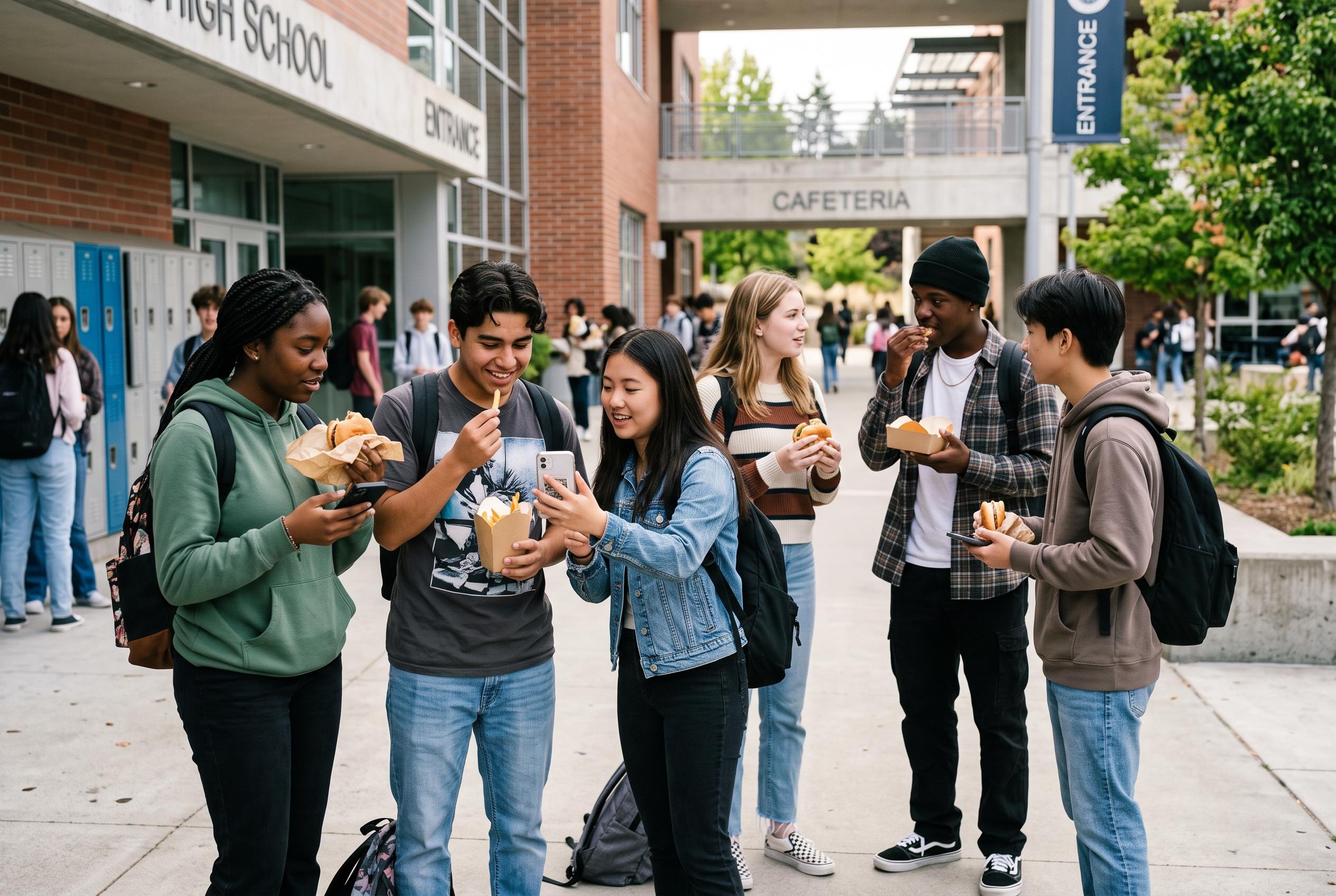

Nearly one in four US teenagers surveyed had ordered food during school hours, exposing a gap between school nutrition rules and smartphone-era eating habits.
A national survey of more than 1,000 American teenagers suggests that food delivery apps have become part of the school day for a sizeable minority of pupils, raising fresh questions about how schools manage nutrition in the smartphone era. The research, presented at NUTRITION 2026 and later published in the Journal of Medical Internet Research, found that nearly one in four respondents had used a delivery service during school hours, while almost half said they used one after school.
The study, led by Mika Matsuzaki, a public health researcher at the Johns Hopkins Bloomberg School of Public Health, points to a gap between longstanding school nutrition rules and the reality of modern adolescent life. Federal standards for school meals and vending machines were written for a setting in which schools largely controlled what students could buy or eat on campus. Matsuzaki said the spread of smartphones means that a food outlet many miles away can now arrive at the school gate within minutes.
What teenagers are ordering is likely to concern health experts. Among students who used delivery services, nearly 60% said they ordered fast food such as pizza and burgers, and more than a third bought sugary drinks. That pattern mirrors the very foods school nutrition policies have tried to limit for years, even as the rules have not been built to address an app-based market that sits outside the cafeteria and vending machine.
The survey also found uneven attitudes towards the practice. Teens in the western United States were more likely to attend schools that allowed delivery during school hours, but they were also more likely to say they avoided the services because they were too expensive. That suggests delivery fees and higher menu prices may be leaving some students out, even where the option exists, and adds an equity dimension to the debate.
Students themselves were divided on whether schools should permit app-based delivery. Nearly half backed allowing it, but many also expressed concern about disruption, fairness and even bullying. Researchers said the findings should prompt schools, parents and policymakers to rethink how they approach food access, campus safety and phone rules. They suggested schools could teach students to make more thoughtful choices, set limits on deliveries during the school day, encourage healthier orders through platform partnerships and use the topic as a starting point for conversations at home.
The findings remain preliminary. They come from self-reported data collected in summer 2025 and were presented as a conference abstract before full journal publication, meaning they have not gone through the full peer-review process associated with a completed paper. Even so, the study captures a change that many families and teachers will recognise: for some teenagers, lunch is no longer limited by what the school serves, but by what appears on a screen.
Disclaimer: This content is for informational purposes only and is not intended to be a substitute for professional medical judgment, advice, diagnosis, or treatment.



