

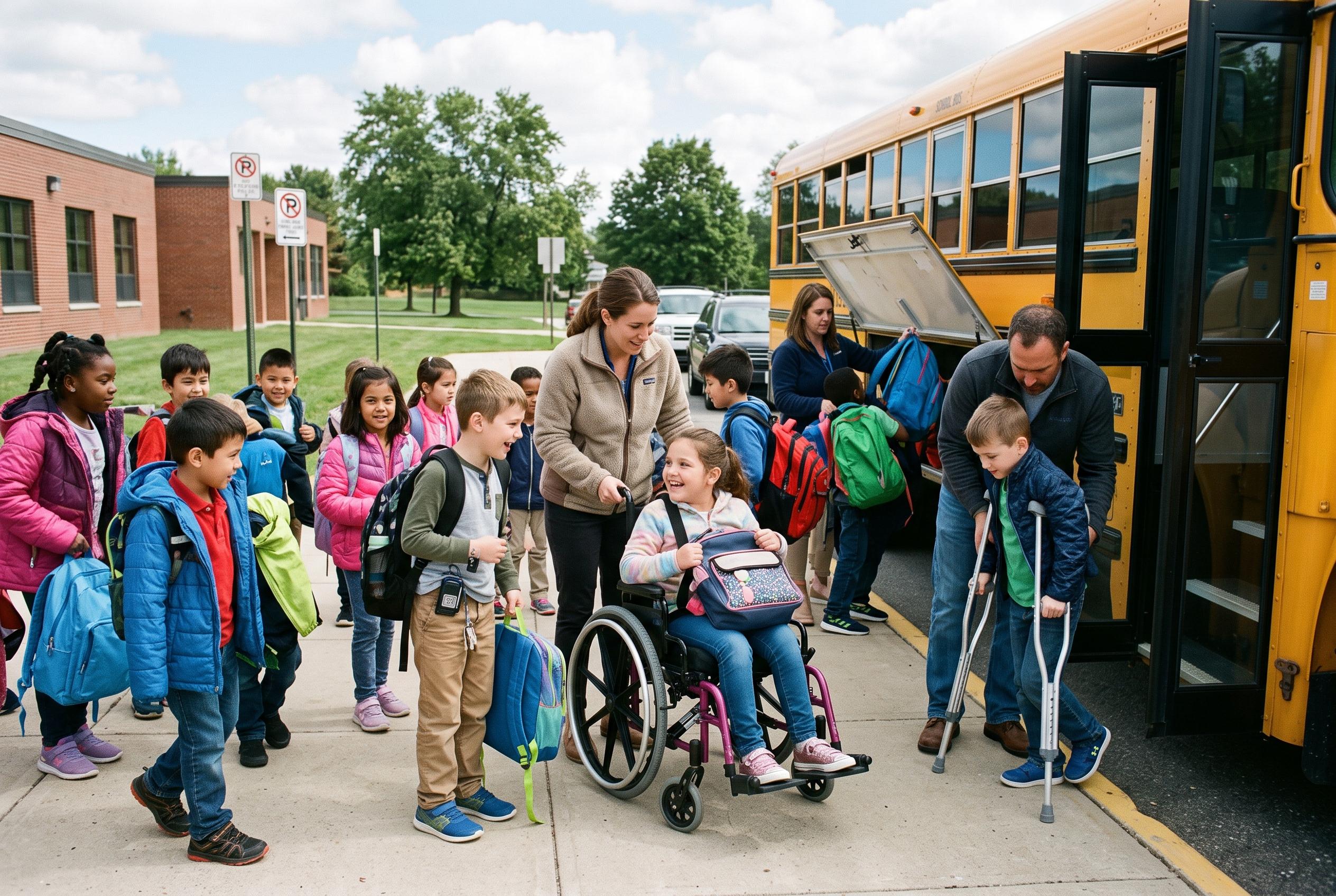

A Düsseldorf court has ruled that schools cannot keep children with disabilities or chronic illnesses off class trips based only on general safety concerns, placing the burden on schools to find workable arrangements.
A Düsseldorf court has reinforced that schools must do more than point to possible risks when they try to keep children with disabilities or chronic illnesses out of class trips. In a case involving a fourth-form pupil from Voerde on the Lower Rhine, who has an autism spectrum disorder and ADHD, the child was allowed to join a trip to Spiekeroog after the parents challenged the school’s refusal in court.
According to the Düsseldorf Administrative Court, the school had argued that the boy’s behaviour could not be controlled and might create dangers during the trip. The judges were not persuaded and ruled in an urgent decision that this was not a sufficient reason to exclude him. The court had already taken a similar view in September in a separate case involving a primary school pupil from Wuppertal with a heart condition, when it said the child should be able to travel despite safety concerns.
The ruling underlines a wider principle increasingly reflected in guidance from German education authorities: inclusion on school trips is not meant to depend on whether a child is easy to accommodate. The Bavarian Ministry of Education says schools have a binding duty to make trips accessible for pupils with special educational needs, disabilities or long-term illnesses, and should plan early with families, choose suitable accommodation and organise supervision and activities to fit the group’s needs.
That approach also matches advice on school excursions from insurance and legal specialists, who say teachers carry responsibility for supervision throughout the trip and must set clear rules to protect pupils. The Düsseldorf court’s message was more specific: where a school believes a trip cannot safely include a child, it must show a concrete and proportionate basis for that judgement. In both the Voerde and Wuppertal cases, the judges found that exclusion was not justified and that the school, not the family, had to find a workable way for the child to take part.
Disclaimer: This content is for informational purposes only and is not intended to be a substitute for professional medical judgment, advice, diagnosis, or treatment.



