

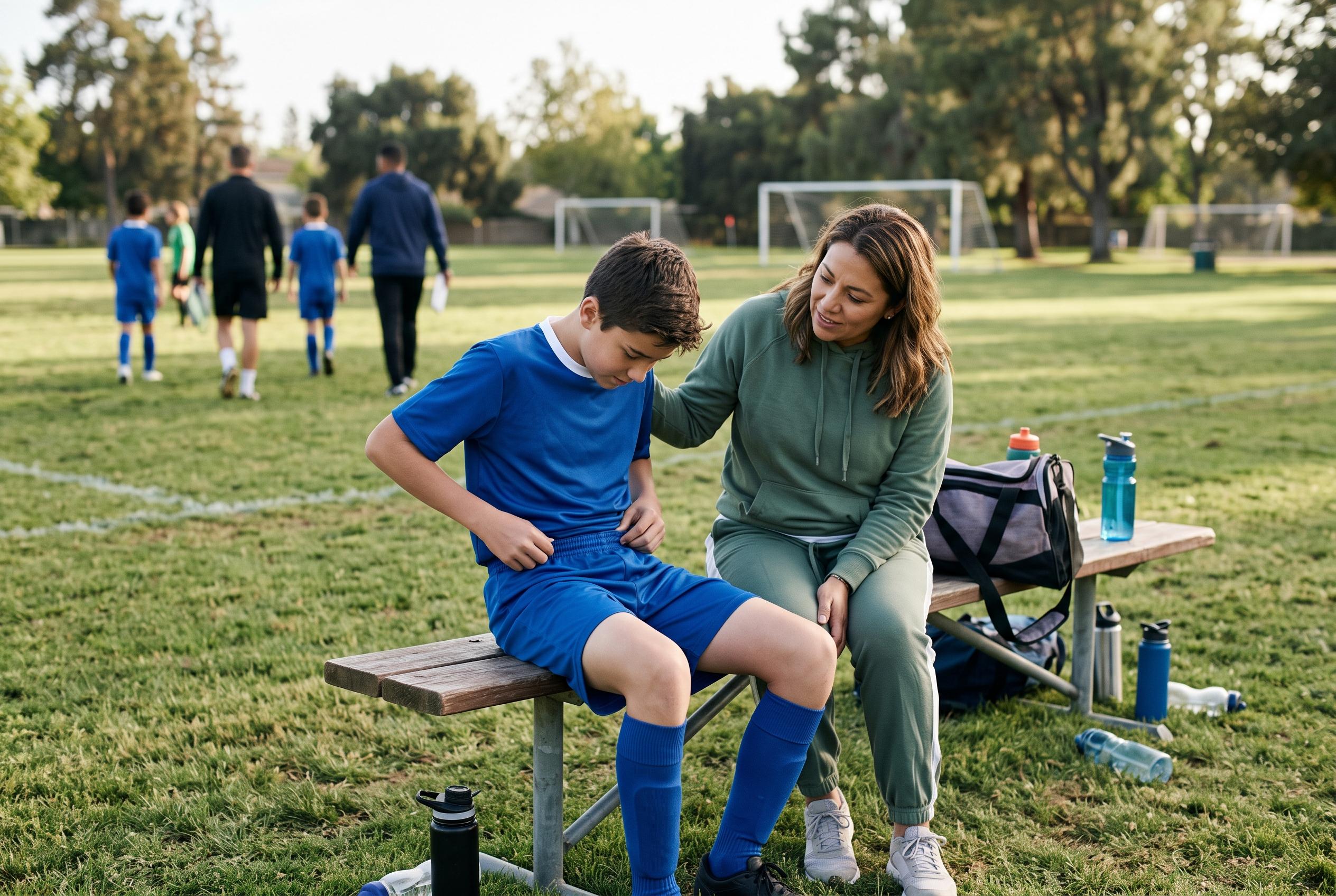

Growing concern over concussion and CTE is prompting families to rethink sports equipment, but experts say a properly fitted athletic cup is also essential protection in many youth sports.
Parents are paying closer attention to sports safety, and that shift is sensible. A national poll cited by the Deseret News and the Hinckley Institute found support for tackle football fell after respondents read about research linking repeated head hits to chronic traumatic encephalopathy, or CTE, a degenerative brain condition. At the same time, some high school teams in south-west Washington have begun using Guardian Caps, the padded helmet covers designed to reduce impact in practice. That broader concern about protection, however, should not stop at the head. The rest of the athlete still needs attention.
One area that is often overlooked is groin protection. Helmets and mouthguards tend to get all the focus, while athletic cups are more likely to be left out of the kit bag, often because children say they are uncomfortable or because parents are uneasy bringing up the subject. Yet experts quoted by the Cleveland Clinic, Geisinger and the Urology Care Foundation all stress that a cup has an important role in shielding the groin from impact injuries during sport.
The sports that call for a cup are easy enough to identify: any activity involving hard balls, sticks, kicks or close contact. Baseball and softball players, especially catchers and infielders, face fast-moving balls and awkward bounces. Football, hockey and lacrosse all bring collisions, sticks or pucks into the equation. Wrestling and martial arts also carry a clear risk because of knees, kicks and constant body contact. Some leagues make cups mandatory, particularly for baseball catchers and hockey players, so families should check team rules before the season begins.
Fit matters as much as the cup itself. Health guidance from Cleveland Clinic and Geisinger says a youth athlete should wear the correct size and use a supporter or compression shorts that keep the cup in place. A cup that is too large can shift, while one that is too small can pinch and discourage a child from wearing it at all. The safest approach is to treat it like any other piece of essential kit: choose a youth-sized hard cup, make sure it sits securely, and recheck the fit at least once a season because children grow quickly.
For parents, the simplest way to win the argument is to make the cup part of the ordinary gear routine. Let children choose between compression shorts and a jock strap, explain that comfort usually comes down to fit, and have them wear it in practice before game day so it feels normal. No piece of equipment removes every risk, but doctors and equipment guides agree that a properly fitted cup is one practical step towards safer, more confident play.
Disclaimer: This content is for informational purposes only and is not intended to be a substitute for professional medical judgment, advice, diagnosis, or treatment.



