

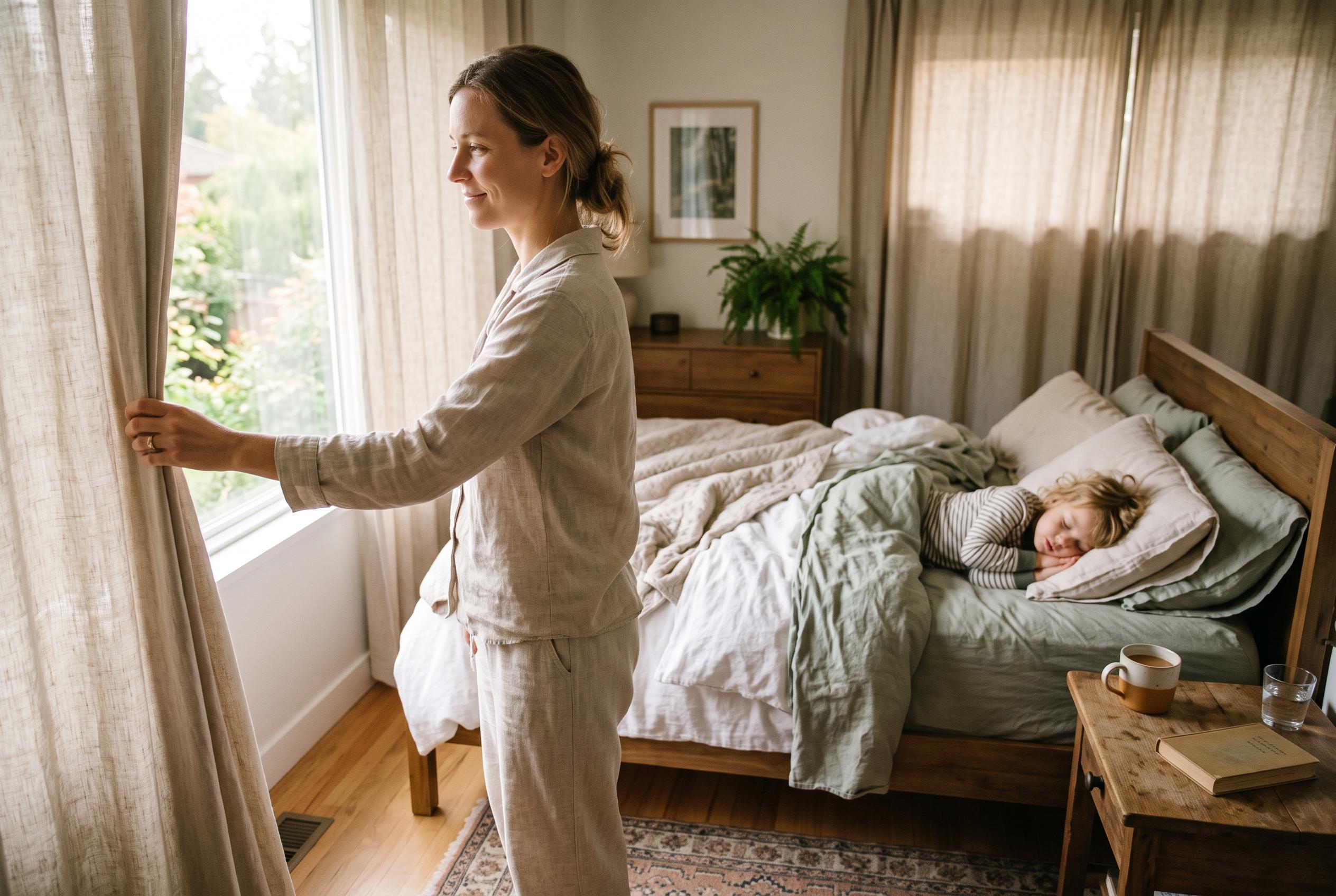

A consistent wake-up time, earlier caffeine cut-offs and less screen stimulation can help reset disrupted sleep patterns without relying on medication.
Difficulty falling asleep, waking in the night and feeling drained in the morning do not always call for medication. In many cases, the problem lies in everyday habits that quietly disturb the body’s sleep-wake rhythm, from late caffeine to scrolling on a phone in bed. Health and sleep guides from Healthline, the Sleep Foundation and the Mayo Clinic all point to the same broad conclusion: better sleep often starts with routine rather than pills.
For most adults, seven to nine hours of sleep is the usual target, but time in bed is not the same as restorative rest. If someone regularly wakes during the night or feels heavily sleepy through the day, the issue may be less about how long they stay in bed and more about how fragmented that sleep has become. Sleep experts say a consistent wake-up time is one of the most effective ways to steady the body’s internal clock and make it easier to drift off at night.
That rhythm works best when it is kept steady. Rather than forcing an abrupt change in bedtime, specialists recommend adjusting gradually and following natural drowsiness where possible. The Sleep Foundation and the Mayo Clinic both advise building a predictable sleep schedule and pairing it with calming pre-bed habits, such as reading, taking a warm bath or spending a few quiet minutes unwinding.
Caffeine is another common culprit. It is not limited to coffee, but also appears in tea, energy drinks, cola and chocolate. Because its stimulating effects can last for hours, a late-afternoon drink may still interfere with sleep long after it has been consumed. The sources reviewed here recommend cutting off caffeine well before bedtime, with some people needing an even longer gap if they are especially sensitive.
What happens in the hour before bed matters too. Bright light, screen use and emotionally charged content can keep the brain alert when it should be winding down. The Sleep Foundation advises avoiding screens before sleep, while other guides suggest dimming the lights, muting notifications and steering clear of news or social media that may provoke stress. If phones cannot be put aside entirely, reducing brightness and limiting stimulation can still help.
The sleeping environment also plays a major role. A dark, quiet and slightly cool bedroom is more likely to support uninterrupted rest than a room that is bright, noisy or too warm. Sleep experts recommend practical changes such as blackout curtains, eye masks, earplugs and fresh air before bed. Some also stress that the bed should be associated with sleep, not with long periods of wakefulness and frustration.
Daily habits matter just as much. Regular physical activity, even if it is only walking or cycling, can improve sleep quality over time. At the same time, long daytime naps may make it harder to fall asleep at night, particularly if they happen later in the day. The Sleep Foundation also notes that if a person lies awake for too long, it can help to get out of bed briefly and do something quiet under low light before returning when sleepiness returns.
Alcohol and self-treatment deserve caution. Although alcohol may appear to help someone fall asleep at first, it can fragment sleep and increase waking later in the night. The same caution applies to over-the-counter sleep aids and supplements. Melatonin can be useful in some circadian rhythm problems, but it is not a universal cure for insomnia, and experts say its benefits for chronic sleep problems are not firmly established. The Mayo Clinic and the Sleep Foundation both point to cognitive behavioural therapy as a stronger long-term option for persistent insomnia, especially when sleep problems occur at least three nights a week for three months or more, or when they are accompanied by loud snoring, breathing pauses or severe daytime fatigue.
Disclaimer: This content is for informational purposes only and is not intended to be a substitute for professional medical judgment, advice, diagnosis, or treatment.



