

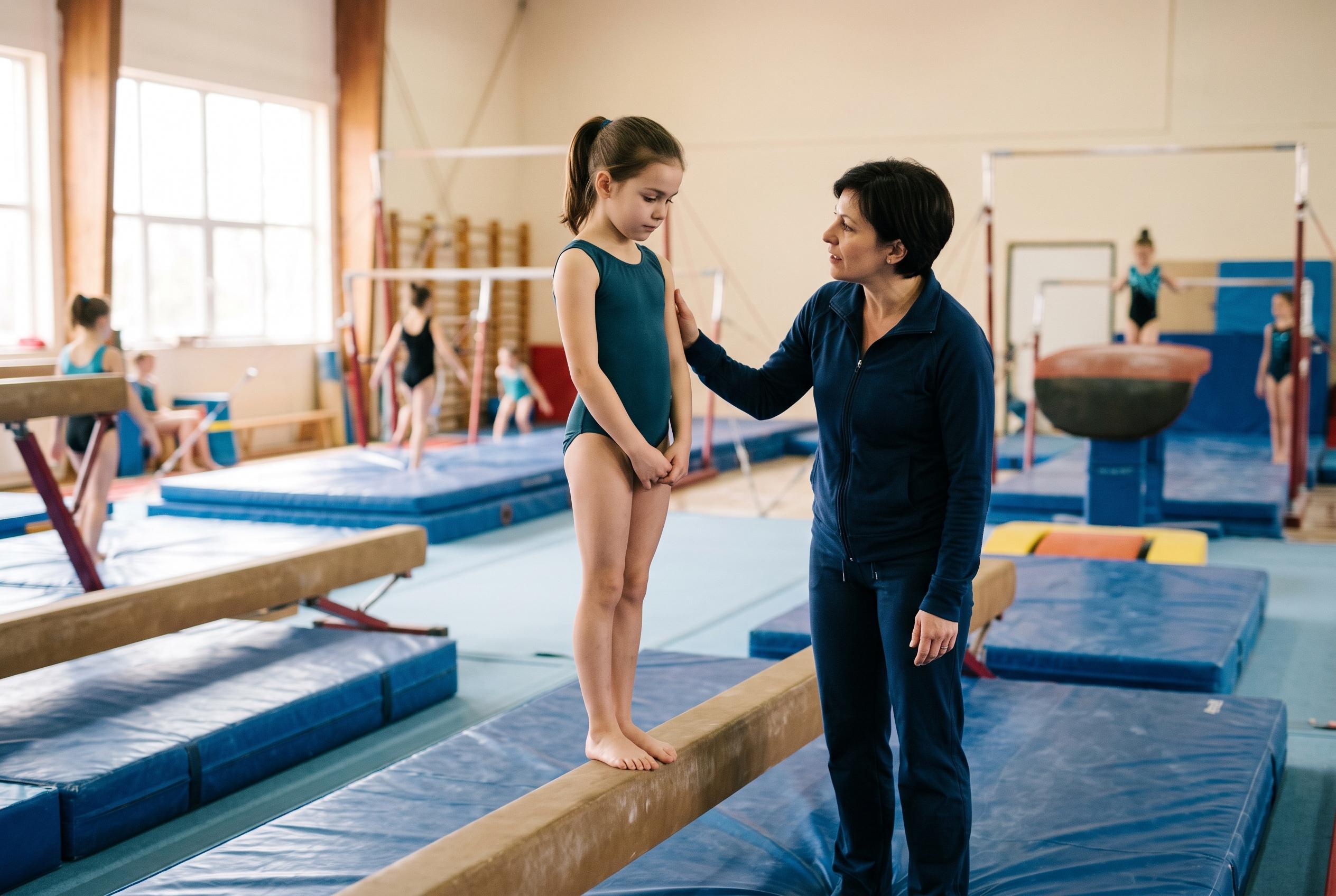

Experts urge parents to replace pressure with patience when young gymnasts lose confidence, saying smaller steps and supportive conversations can help rebuild trust in movement.
Parents of gymnasts are often told to stay positive, but that can be difficult when a child who once performed a skill with ease suddenly freezes, regresses or seems afraid to try again. In an episode of the Perform Happy Podcast published by Complete Performance Coaching, the focus is on what families can do when mental blocks, slow progress and frustration begin to shape life in the gym.
The central message is that panic and pressure rarely help. The episode argues that parental frustration often grows out of fear: fear that a child is losing confidence, fear that progress has stalled, or fear that the sport itself may no longer feel enjoyable. That idea is echoed by gymnastics specialists who say mental blocks are common and should not be mistaken for laziness or a lack of commitment. The Mindful Gymnast, which offers virtual mental performance coaching, says confidence in young athletes is strengthened not just by physical repetition but by learning to understand thoughts, manage emotions and stay resilient under pressure. Gymnastics Medicine similarly notes that blocks can follow injury scares, growth spurts, perfectionism or changes in the training environment.
Rather than urging a child to push harder, the episode encourages parents to respond with curiosity and patience. That approach aligns with other gymnastics resources that recommend breaking skills into smaller steps, using calming techniques and replacing harsh self-talk with language that feels safe and constructive. KT Coaching’s Mental Block Breakthrough Toolkit and its Mental Block Recovery System both frame these setbacks as something the brain and body can recover from gradually, through reassurance, visualisation and manageable progressions. Gymnastics Resources’ TRAIN with Confidence workbook also promotes staying focused on what the gymnast can control instead of fighting fear head-on.
The episode also makes a case for stepping back without treating it as failure. Returning to simpler drills or earlier progressions can help a gymnast rebuild trust in movement and recover a sense of control. That view matches broader coaching advice from gymnastics mental performance specialists, who say that trying to force a skill often increases tension, while smaller successes can restore confidence more effectively. Parents are urged to notice and celebrate those smaller gains, whether that means a calmer approach in practice, a braver first attempt or simply the willingness to keep going after a hard session.
Just as important is what parents say in the moment. Instead of asking whether the child “got it back”, the episode recommends questions that open space for reflection: what felt hard, what helped, and what might make the next attempt feel safer. The aim is not to erase disappointment, but to let young athletes experience it without rushing to solve everything for them. In the end, the message is less about recovering a single skill than about building a child’s belief that they are valued regardless of performance. For gymnasts, that kind of support can shape confidence and resilience long after the current block has passed.
Disclaimer: This content is for informational purposes only and is not intended to be a substitute for professional medical judgment, advice, diagnosis, or treatment.



