

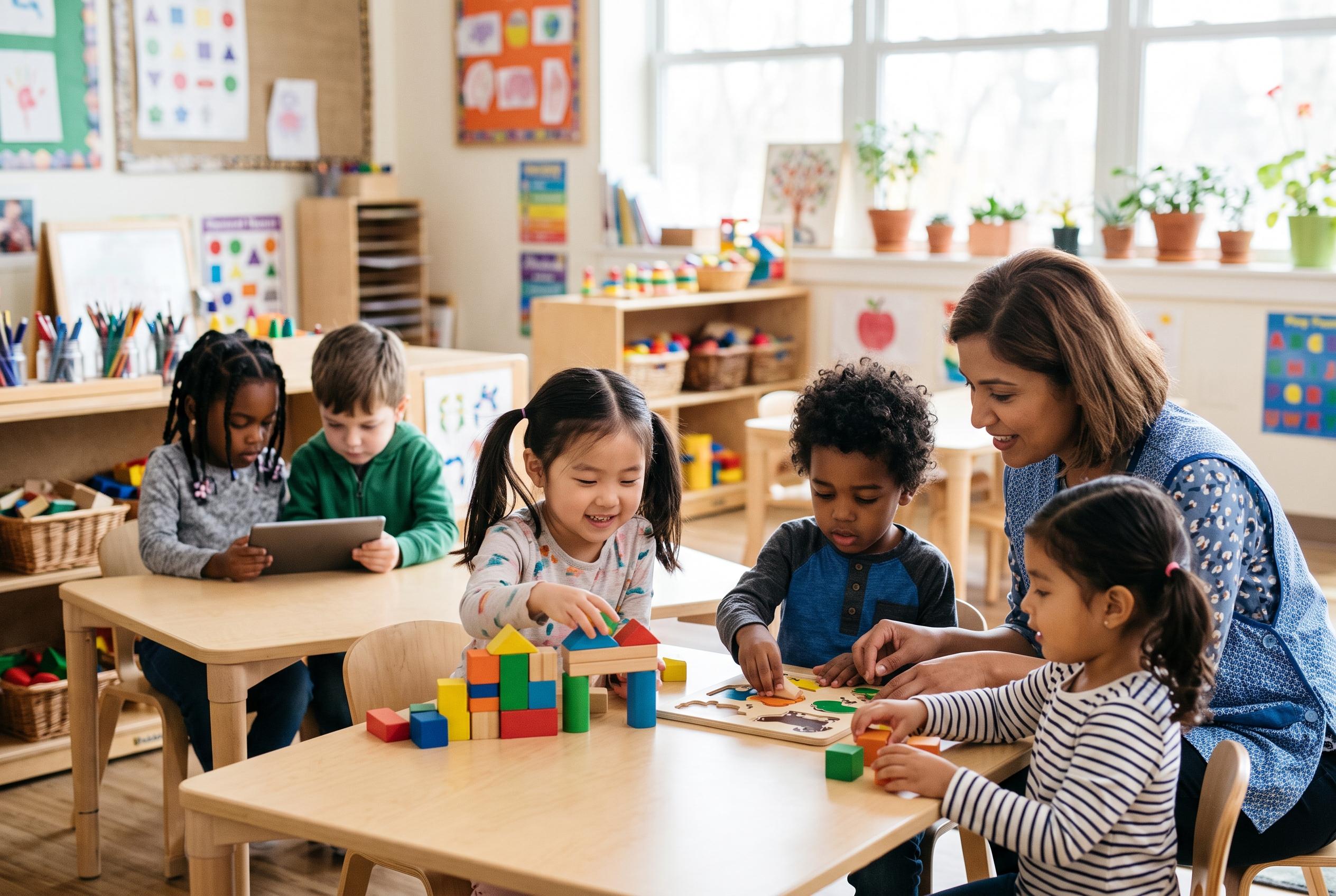

With more than half of 3- to 5-year-olds exceeding recommended screen limits, researchers and educators warn that device use may displace language development, play, movement and social skills.
More screen time among preschool children is increasingly being tied to concerns that stretch beyond simple distraction. Research cited by the Journal of the American Medical Association and related studies has linked heavier screen use with weaker academic performance, slower language development and more emotional, behavioural and peer-related difficulties. Other research has also associated early and frequent device use with attention problems, weaker executive function, problematic media habits and poorer emotional development.
That backdrop matters because screen habits among very young children are already widespread. The Centres for Disease Control and Prevention has reported that more than half of children aged 3 to 5 spend at least two hours a day on screens, which is well above the one-hour daily limit recommended by the American Academy of Pediatrics for children aged 2 to 5. A separate national parenting survey found that nearly half of American 3-year-olds use a tablet, iPad or Kindle, often with few or no limits.
The concern for parents is not only how much time children spend on devices, but what that time is replacing. In guidance for families, the American Academy of Pediatrics says screen exposure should be managed carefully and that the quality of content, the context in which it is used and the consistency of limits all matter. Its advice for toddlers and preschoolers is rooted in a broader goal: protecting the skills children need as they move towards school, including language, self-regulation, fine motor control and social interaction.
John Nix, regional director of operations at Archway Academy, said parents and preschool teachers should treat kindergarten readiness as a shared responsibility. “Work together on kindergarten readiness, and what does that cooperation look like day to day? What are you noticing among children in terms of social skills, fine motor skills, and independence? What are families telling you about your screen habits at home?” Nix said. He added that young children also need movement, outdoor exploration and play to build those abilities. “But the most important is getting parents and teachers on the same page to make sure the child is making progress, and what should they do when a child needs additional support before kindergarten,” he said.
Disclaimer: This content is for informational purposes only and is not intended to be a substitute for professional medical judgment, advice, diagnosis, or treatment.



