

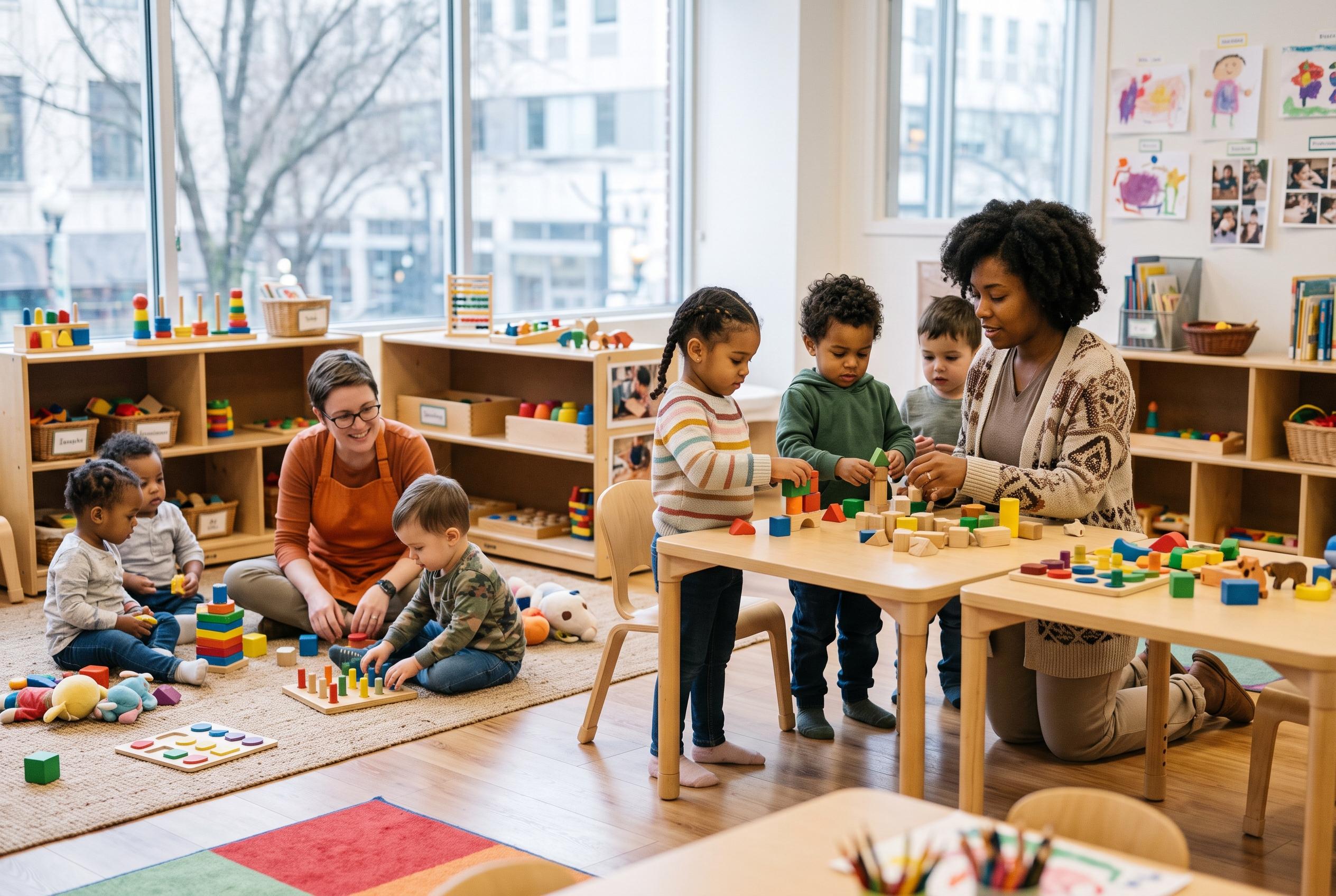

Taiwan has created 600 public preschool classes for two-year-olds between 2024 and 2026, far exceeding its original target as Taipei expands subsidised childcare for working families.
Taiwan has sharply expanded its network of affordable early-years places, with the Ministry of Education saying it has already created 600 public preschool classes for two-year-olds between 2024 and 2026, three times the original target of 200. The growth comes as more dual-income families seek low-cost childcare and as the government tries to ease pressure on parents of very young children. According to the latest figures cited by local media, the number of places in public and quasi-public preschools has risen to a scale that now gives many more families access to subsidised care for children aged two and above.
The expansion sits within a broader policy shift that began after childcare and kindergarten services were merged in 2012. Under that system, preschool care now covers children from the age of two until they enter primary school, although two-year-olds can only be enrolled in specially approved classes. The Ministry of Education said public preschool enrolment has been steadily increasing since 2017, with more than 4,100 additional public classes added and nearly 270,000 public childcare places created overall. Taiwan News reported that public preschools offered 267,000 places in the 2025 school year, while quasi-public preschools added another 253,000 places.
The ministry said the two-year-old classes, often known colloquially as baby classes, are tightly regulated. Each class may take no more than 16 children, with staffing requirements rising once the number of pupils passes eight. The curriculum is centred on daily care, self-help skills and play-based exploration, and it must not become formal drill in reading, writing or arithmetic. Officials have also pushed to place these classes where demand is strongest, rather than asking every preschool to add them. That has included a focus on districts with unmet demand and on primary schools that already host infant care facilities, making the transition from nursery care to preschool easier for families.
Government figures show that the policy is changing behaviour. The enrolment rate for two-year-olds climbed from 14.7 per cent in the 2016 academic year to 64.1 per cent in 2025, according to both the Ministry of Education and Taiwan News. For older preschool children, enrolment has reached 93 per cent. Families using public, non-profit or quasi-public places benefit from capped monthly fees, while lower-income households can be exempt. The government also provides childcare subsidies for children under two in some settings, and it has expanded extended-day care in public preschools, which the ministry says is now available in 95 per cent of public schools. Since 2021, it has also backed workplace childcare facilities, with about 166 sites created so far.
The latest push reflects a wider effort by Taipei to respond to the country’s low birth rate by making early childhood care cheaper and more accessible. In July 2024, the Executive Yuan approved further measures aimed at strengthening affordable preschool provision and family support, and the government has said more classes and places will be added again in 2026 where local demand justifies it. The scale of the expansion suggests the policy is becoming one of the central pillars of Taiwan’s attempt to reduce the cost of raising young children and make it easier for parents to stay in work.
Disclaimer: This content is for informational purposes only and is not intended to be a substitute for professional medical judgment, advice, diagnosis, or treatment.



