

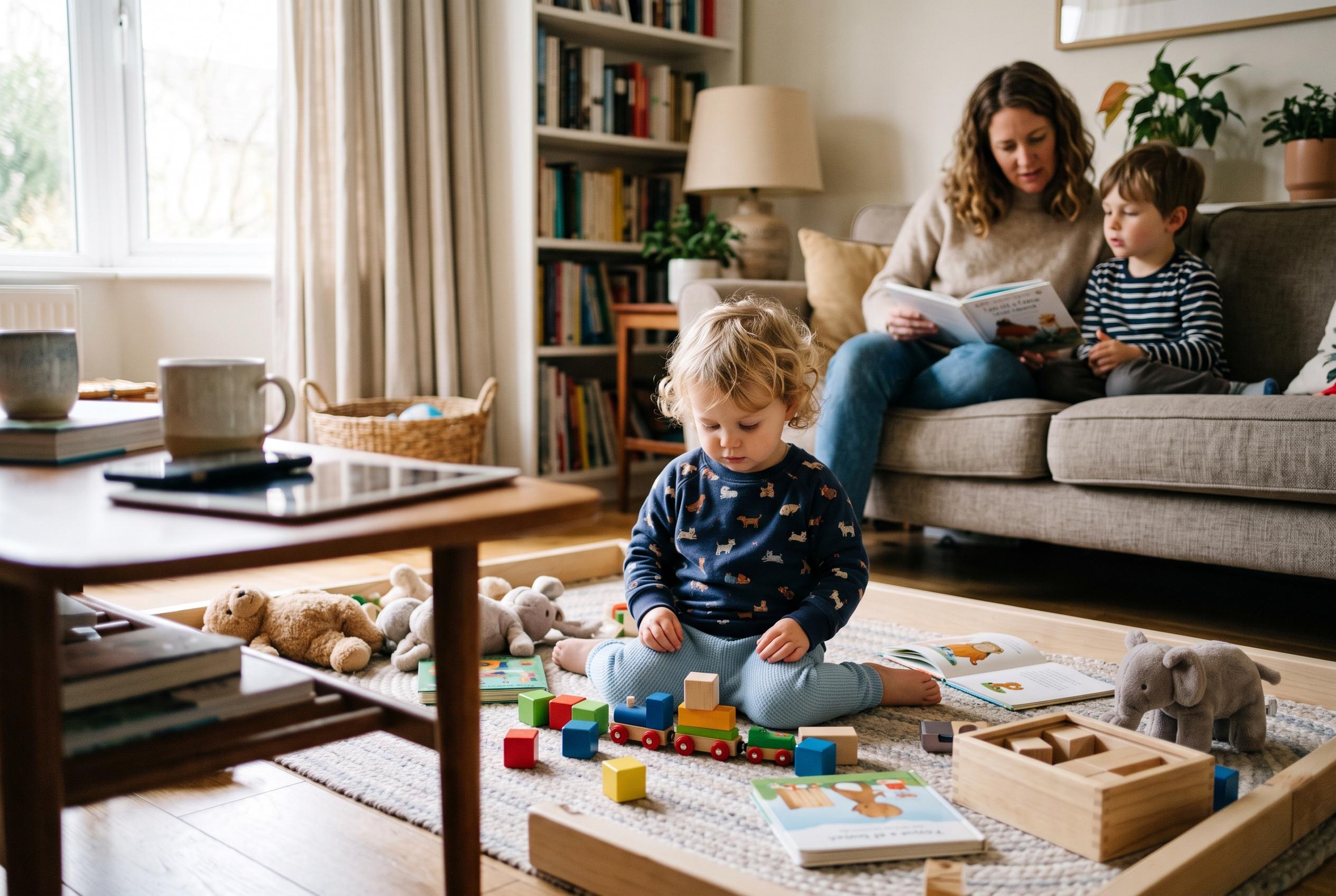

A new report warns that rising screen use among young children is displacing the talking, singing, reading and play that support early brain development.
At the age of two, a child is now spending an average of 53 minutes a day in front of a screen, according to a new report from Terra Nova that puts early exposure to digital media at the centre of France’s concerns about child development. By three and a half, that average rises to 1 hour and 20 minutes, and by five and a half it reaches 1 hour and 34 minutes. On days without school, the time spent in front of screens is roughly double. The figures have sharpened a debate that is already familiar to many parents: how much screen use is too much, and what, if anything, should replace it?
The report, written by Thomas Villemonteix, a lecturer in psychology at Paris-8, and Florent de Bodman, co-founder of the 1001mots association, argues that the issue is less about making families feel guilty than about giving them realistic alternatives. De Bodman says the problem is not simply that children are looking at screens, but that screen time can crowd out the everyday interactions that help young brains grow. Singing with a child or narrating what is happening on the street, he says, does far more for development than any video.
That concern is echoed by a growing body of medical research. A review published in Developmental Psychobiology found that heavier screen exposure in children aged 0 to 12 was associated with less favourable brain development, including changes linked to language, attention, executive function and emotional regulation. Other research, including work highlighted by New York Presbyterian and the National Institutes of Health, has linked longer daily screen use with weaker language and thinking scores, while very high levels of use have been associated with thinning in parts of the cortex involved in reasoning. Experts caution that not every screen activity is identical, but they continue to warn that recreational and unstructured use can displace sleep, conversation and play.
The findings arrive as French education officials and researchers are already worrying about falling reading levels, a trend often discussed alongside changing childhood habits and rising screen use. The broader message from child-development specialists is straightforward: the youngest children learn best through human exchange, not passive viewing. For parents, that means the most effective antidote to screen time is often not a ban, but more talking, singing, reading and shared attention in everyday life.
Disclaimer: This content is for informational purposes only and is not intended to be a substitute for professional medical judgment, advice, diagnosis, or treatment.



