

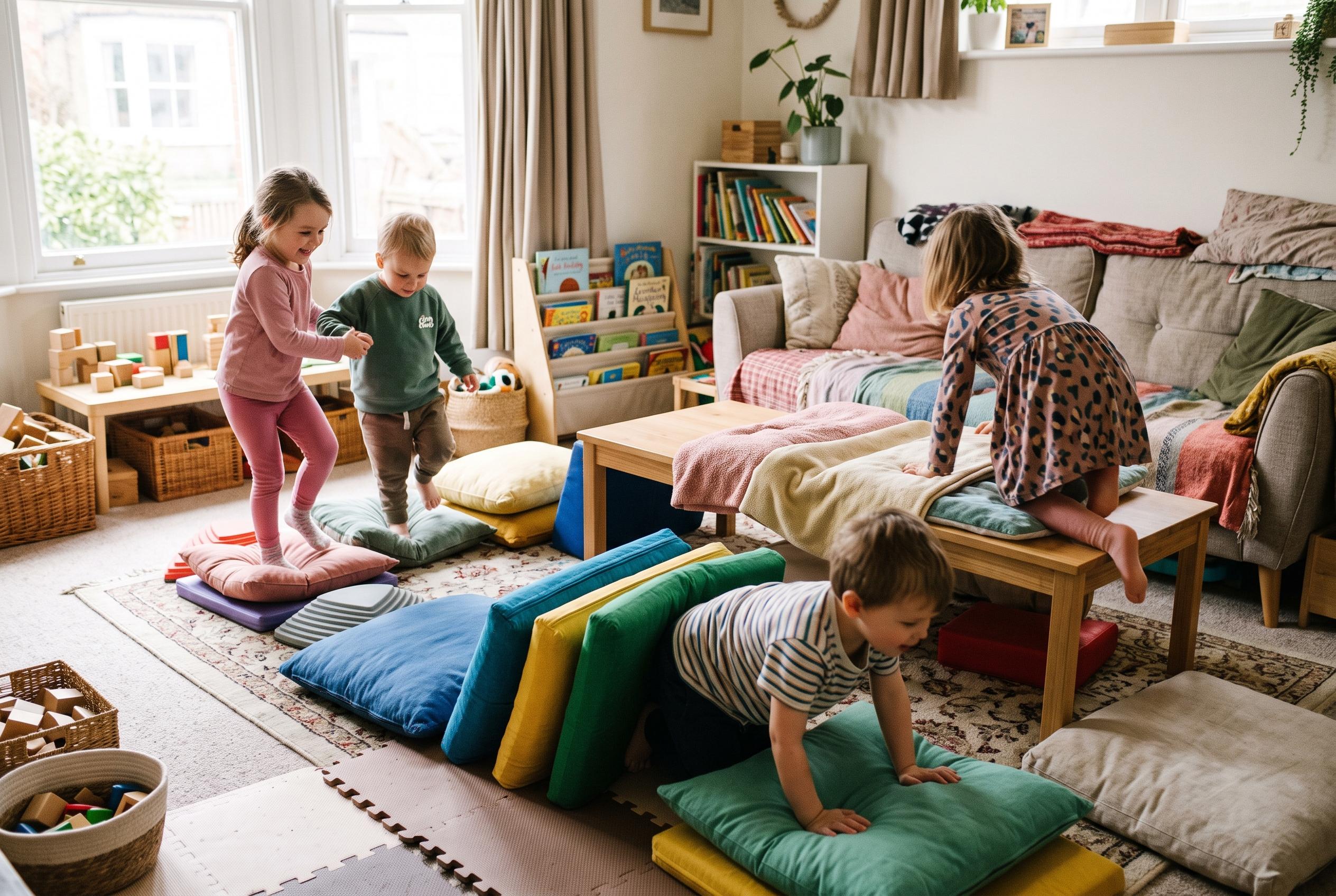

From catching a ball to crawling under a table, real-world movement helps children develop coordination, spatial awareness and social skills that digital play cannot fully replicate.
There is a familiar moment in many homes when a screen feels less like a problem and more like a lifeline. A tablet can buy a parent time to cook dinner, a phone can settle a restless child on a long journey and a programme can bring a brief patch of calm to an otherwise difficult day. The real question is not whether screens belong in family life, but what children still need beyond them.
The answer, increasingly, is movement in the real world. Balancing on a kerb, climbing over a low wall, jumping from one marker to another or catching a ball may look simple, but these activities give children information that no app can fully provide. Through physical movement, the body learns about gravity, speed, distance and control, and the brain uses that feedback to refine coordination and confidence.
That is why throwing, kicking, threading, building and catching matter so much. A child who misses a ball is not failing; they are learning. Each attempt helps the brain adjust for the next one. This kind of hands-on practice builds eye-hand coordination, timing and body control in a way that screen-based tapping cannot match, even when digital games are designed to be interactive.
Real-world play also helps children understand where they are in space. Crawling under a table, stepping over a cushion, squeezing through a gap or running around a chair teaches ideas such as under, over, through, near and far. UNESCO has warned that outdoor play and children’s independent movement have declined over recent generations, in part because of urban living, heavy screen use and more cautious parenting, even though daily outdoor play remains vital for healthy development.
The social lessons are just as important. When children play with others, they have to wait, share, negotiate and cope when the rules change. Research summarised in a recent systematic review found that active outdoor play is linked with more physical activity and less sedentary time, while children are generally more active outdoors than indoors. Even active video games can add movement, but South Dakota State University notes that they should complement, not replace, traditional play and time outside.
For families trying to strike a better balance, small swaps can make a difference. Ten minutes of screen time can become a short ball game in the garden, one song can turn into a dance break, and a lounge floor can become a cushion obstacle course. Guidance on children’s daily movement stresses the value of the whole day: active play, less sitting, limited recreational screen time and enough sleep. The aim is not to banish screens, but to make sure they do not crowd out the experiences children need most: real objects, real spaces, real people and real movement.
Disclaimer: This content is for informational purposes only and is not intended to be a substitute for professional medical judgment, advice, diagnosis, or treatment.



