

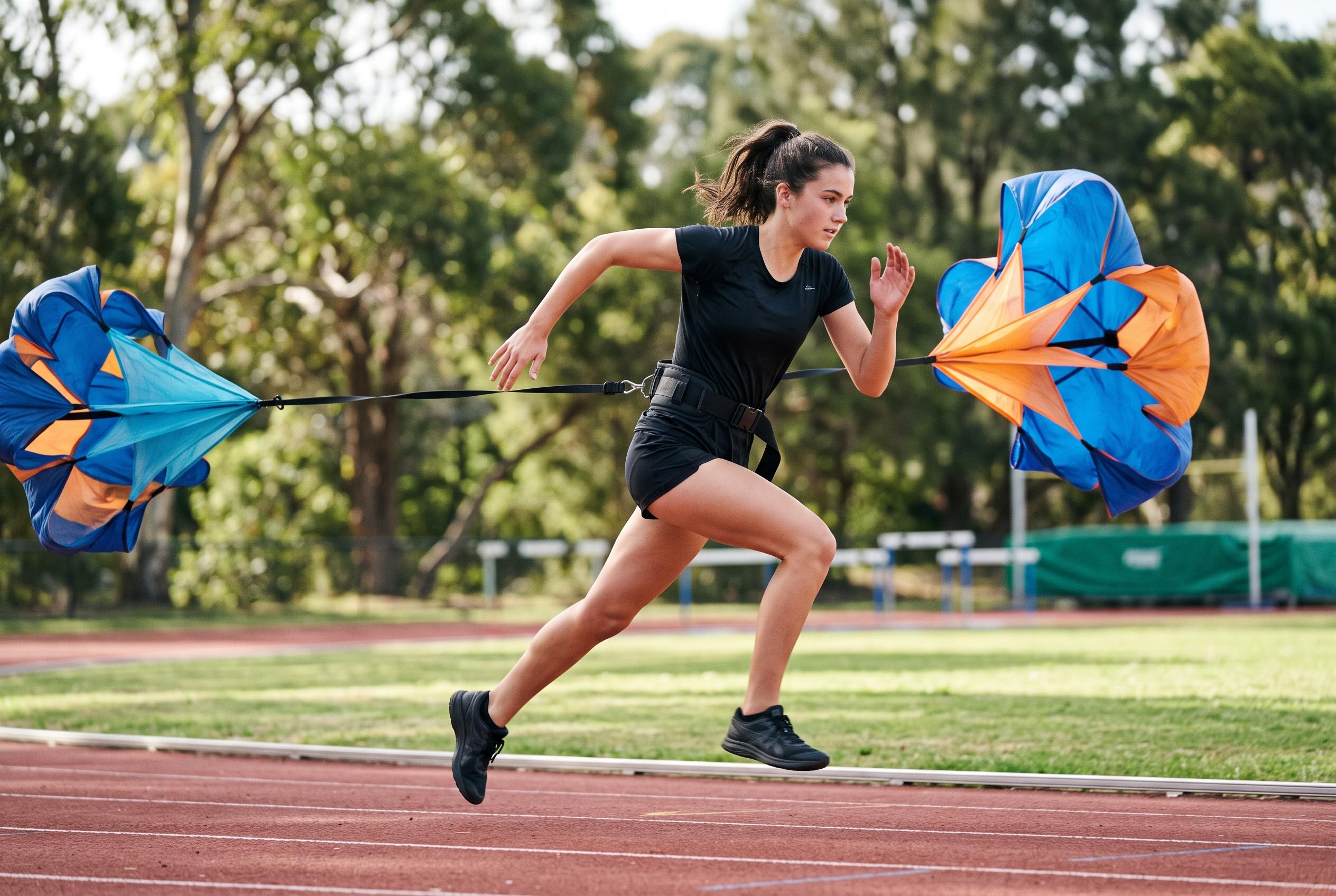

Adjustable belts, lighter resistance and a secure fit can help young athletes build acceleration and power without sacrificing sprint technique.
Running parachutes are a simple way for young athletes to add resistance to sprint work without bringing a lot of equipment to the field. Used well, they can help with acceleration, posture and running power, while still keeping the focus on technique rather than heavy loading. The best options for children and teenagers are usually those with adjustable belts, manageable canopy sizes and enough durability to handle regular use across football, soccer and track sessions.
The main thing to understand is that parachute resistance is not fixed. According to training guides on speed parachutes, drag increases as the runner moves faster, which is why these tools are most useful for short bursts rather than long, steady runs. That also means fit matters as much as size: a chute that sits securely and opens cleanly behind the athlete is more important than one that simply looks large on paper. Coaches and parents should treat these devices as one part of a broader programme that still includes warm-ups, strength work and good sprint mechanics.
For younger or less experienced athletes, lighter resistance is usually the safer starting point. A number of the options reviewed here sit in the 48-inch to 56-inch range, which is broad enough to challenge speed while still being practical for youth training. Guides on sprint parachutes also note that resistance should be matched to the athlete’s body size, sport and training goal, rather than chosen purely by canopy diameter. That is especially relevant for children, where too much drag can disrupt posture, overextend the stride or make acceleration mechanics less efficient.
Among the more versatile choices, the JAWKU Speed Parachute stands out for its adjustable belt and movement-friendly design, while the Bfsmile and KUYOU models offer larger canopies and clearer resistance ranges for athletes who are ready for more demanding work. The SKLZ chute is a useful middle-ground option for families or teams that want a straightforward setup and a defined resistance level. By contrast, models such as the LucaSng and the kid-oriented 48-inch trainer are better suited to basic drills, portability and lighter use, especially where ease of packing and simple handling matter most.
Some of the more demanding choices, including the KUYOU and the Powerchute-style trainers, may be better for older children, stronger youth athletes or supervised team sessions. Practical buying advice from training guides also points to belt design, material strength and single-versus-dual chute construction as important differences. Dual-chute systems can create more resistance, but that is not always an advantage for smaller athletes, who may need a lighter setup to preserve form and confidence.
For families trying to choose between them, the safest approach is to start with the athlete’s size, then consider the sport and training environment. Open spaces are essential, as wind and limited room can change how the chute behaves. A good youth speed chute should be easy to secure, simple to release and durable enough for repeated use. Above all, it should support faster, cleaner sprinting, not turn every drill into a struggle.
Disclaimer: This content is for informational purposes only and is not intended to be a substitute for professional medical judgment, advice, diagnosis, or treatment.



