

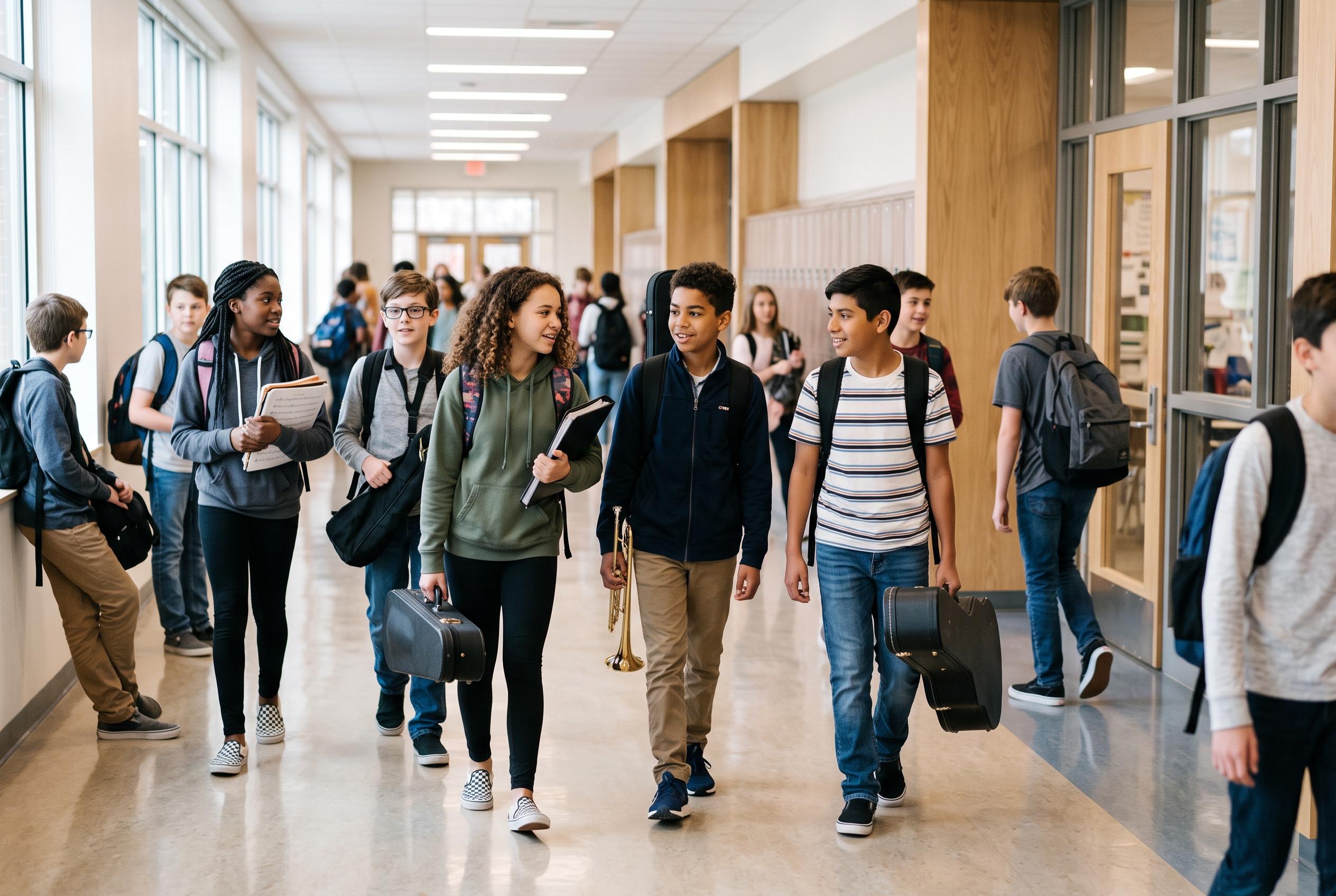

Rhode Island research has found a strong association between sustained arts participation and improved school attendance, with the clearest link among pupils who studied music consistently.
At the Cape Symphony Conservatory, the start of a new year has brought a message that reaches well beyond rehearsals, lessons and performances: sustained arts participation may also help students keep showing up. The organisation says music education gives young people confidence, discipline and a sense of belonging, and that idea has gained fresh support from Rhode Island research linking consistent arts study with lower rates of chronic absenteeism.
In September, Governor Dan McKee, state education commissioner Angélica Infante-Green and Rhode Island State Council on the Arts executive director Todd Trebour announced findings from a study commissioned by RISCA and carried out by Quadrant Research. Using student data from 2018 to 2025, the researchers reported a strong association between continued arts education and improved attendance among public school students across kindergarten through Year 12, with the clearest pattern appearing among pupils who stuck with arts classes for four consecutive years in high school.
The numbers were particularly striking for music. According to the research, high school seniors who took music every year were far less likely to be chronically absent than their classmates, and the association strengthened when students had music from Years 6 through 12. Other summaries of the study put the chronic absenteeism rate at 25.4% for students with four straight years of music, compared with 37.3% for students without that sustained involvement. The gap was smaller when all arts subjects were considered together, suggesting music may have an especially strong connection to attendance.
Researchers and state officials have been careful not to overstate the case. The study identifies a correlation, not a cause-and-effect relationship, and one of its authors warned against treating arts classes as a simple cure for absenteeism. Even so, the findings come at a time when attendance remains a major concern in Rhode Island. A February report from the Rhode Island Public Expenditure Council said chronic absenteeism fell from its post-pandemic peak, but still affected 22.1% of students in the 2024-25 school year, with some districts recording rates above 40%.
That wider context helps explain why the arts findings have attracted attention. The Rhode Island Department of Education’s Attendance Matters RI campaign defines chronic absenteeism as missing 10% or more of school days and warns that it is linked to lower achievement, disengagement and a greater risk of dropping out. For Cape Symphony Conservatory, the lesson is more immediate and personal. Whether a child is taking private lessons, singing in a chorus, performing with the Cape Symphony Youth Orchestra or joining an early-years programme, the organisation argues that returning week after week can build more than skill; it can build identity, relationships and a reason to be there.
Disclaimer: This content is for informational purposes only and is not intended to be a substitute for professional medical judgment, advice, diagnosis, or treatment.



