

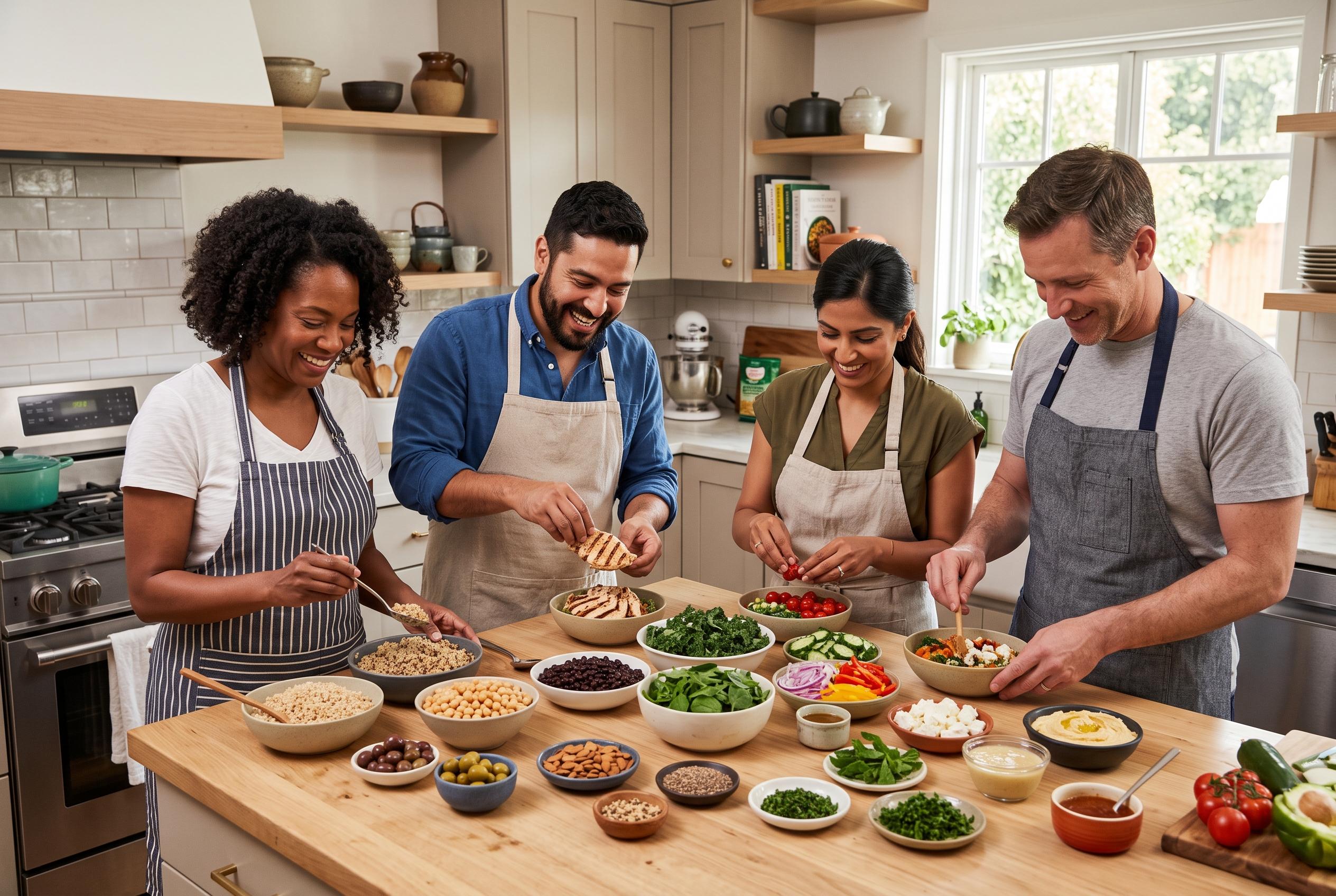

A flexible mix of grains, beans, vegetables and protein offers a filling, dietitian-approved alternative to buying lunch out, while dressings and toppings help keep weekday meals varied.
A simple grain bowl has become a practical answer to the high cost of buying lunch out, especially for people who want something filling without spending heavily. The recipe described by Rachel Hosie is built around meal prep, using a mix of grains, beans, vegetables and protein to create a lunch that is both adaptable and budget-friendly. She says the approach fits her 80/20 way of eating, in which most meals are nutrient-dense and smaller indulgences are left for the rest of the time.
The appeal lies in the format as much as the ingredients. Hosie’s formula starts with a base of quinoa, brown rice or buckwheat, then adds legumes such as chickpeas or lentils, a protein source like chicken or tofu, raw and roasted vegetables, leafy greens, seeds, nuts and a dressing. Because the method is flexible, she says it is difficult to get wrong, and the ingredients can be changed from week to week depending on what is available or what she feels like eating.
To keep the bowls interesting, Hosie rotates dressings and protein sources. One of her regular choices is a tahini dressing made with lemon juice, Greek yoghurt, garlic granules, seasoning, water and olive oil. She also uses a satay-style sauce built from peanut butter, soy sauce, ginger, garlic, sesame oil and lime juice. On the protein side, she leans on both plant and animal sources, and dietitian Nichola Ludlam-Raine suggests oily fish such as salmon or tinned mackerel for omega-3 fats, which support heart and brain health. She also notes that people eating mostly plant-based should pay attention to iodine, which can come from dairy yoghurt or occasional white fish.
The nutritional logic behind the bowl is close to the Mediterranean diet, which Mayo Clinic describes as rich in vegetables, fruits, whole grains, beans, nuts and healthy fats such as olive oil. Harvard Health says research has linked that eating pattern with lower cardiovascular risk, while Johns Hopkins Medicine says it can support heart health and lower the risk of early death when paired with exercise and a healthy weight. Ludlam-Raine told Hosie that the bowl is “essentially a Mediterranean-style pattern of eating in bowl form”, a comparison that helps explain why it is so satisfying and easy to sustain.
For Hosie, the bigger benefit is consistency. She makes enough for several meals at once, stores the portions in the refrigerator and relies on the routine during the working week. That, Ludlam-Raine said, is what makes the method effective: it turns the healthy choice into the easiest choice. In practice, the result is a lunch that is affordable, balanced and adaptable enough to avoid the fatigue that can come from eating the same thing too often.
Disclaimer: This content is for informational purposes only and is not intended to be a substitute for professional medical judgment, advice, diagnosis, or treatment.



