

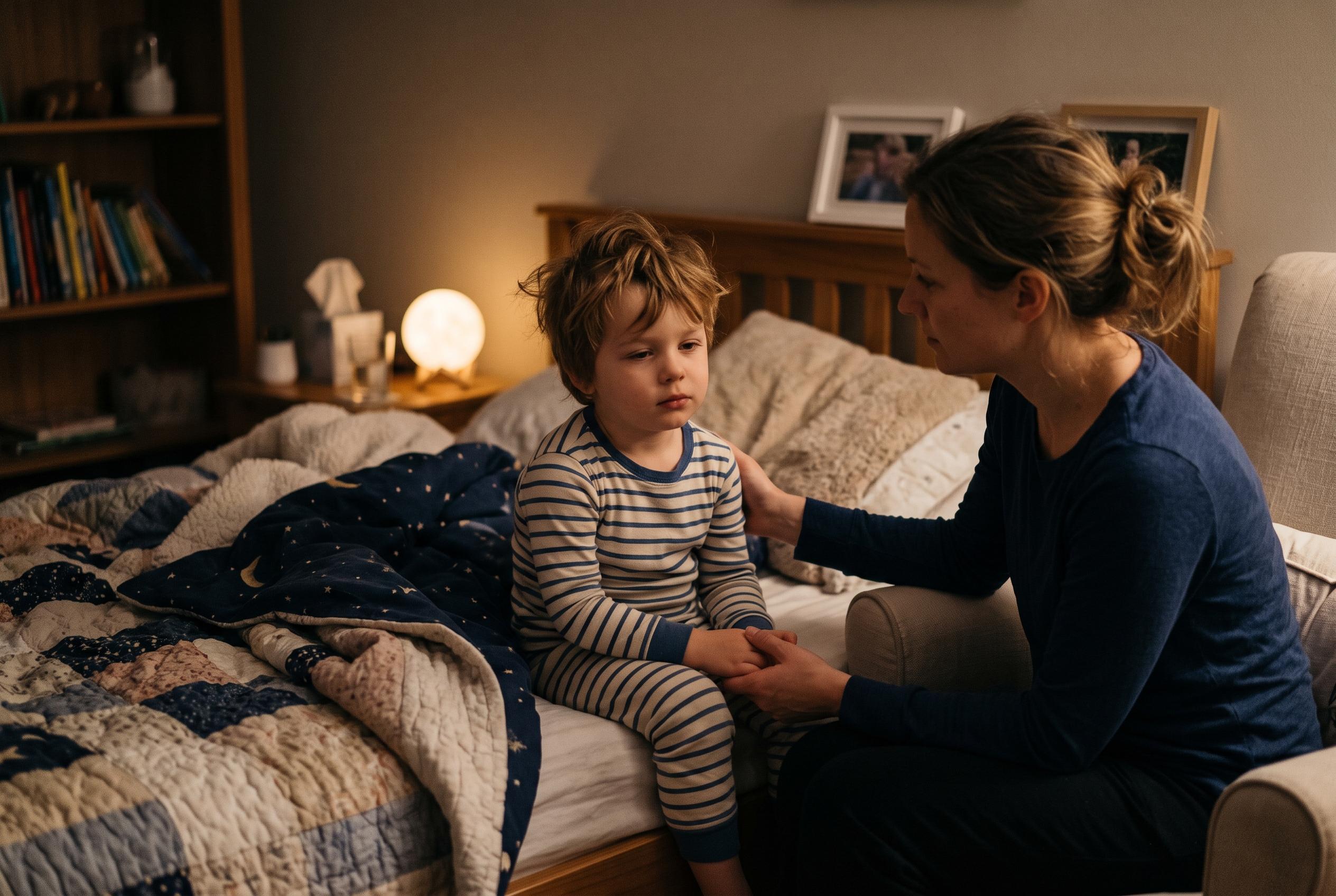

Experts say frequent night waking is often part of early development, but persistent disruption, breathing problems and reliance on sleep aids may require closer attention.
Many young children wake during the night, and in most cases it is part of normal development rather than a sign that something is wrong. According to Elena Chulkova, a candidate of medical sciences and an associate professor at a medical faculty, repeated night waking can be expected up to the age of three, when the nervous system is still adjusting to rapid gains in movement, language and independence.
Chulkova said sleep disruption often appears at familiar stages of early childhood: around four months, when sleep patterns are reorganised; at about six months, when babies are picking up new motor skills and starting solid food; between eight and ten months, when separation anxiety often peaks; around one year, when first steps and first words arrive; and between 18 months and two years, when children become more self-aware and may develop night fears. That view is consistent with paediatric sleep guidance from Nationwide Children’s Hospital and the MSD Manual, which both note that brief night waking is common in infancy and early childhood.
Experts say the key issue is not whether a child wakes, but whether the child can settle again without much help. Nationwide Children’s Hospital says many babies are capable of sleeping through the night by six months, but a substantial number still wake regularly. The problem becomes more significant when sleep depends on a parent’s intervention, because children may struggle to return to sleep on their own. Consistent routines and predictable bedtime habits are often recommended to reduce that dependence.
Not every overnight disturbance is simply a child who has woken up and cannot resettle. Johns Hopkins Medicine and HealthyChildren.org, a site from the American Academy of Pediatrics, say nightmares and night terrors are different from ordinary waking. Nightmares usually happen later in the night, when dreaming is more intense, while night terrors tend to occur in the first half of sleep, often in toddlers and preschoolers. During a night terror, a child may appear frightened but is not fully awake, and experts advise parents to keep the child safe and calm rather than trying to force a full awakening.
Chulkova also warned that persistent night waking deserves closer attention if it lasts more than four to six weeks, especially when it is accompanied by snoring or pauses in breathing. In those cases, specialists may consider sleep apnoea, a disorder in which breathing repeatedly stops and starts during sleep. That distinction matters, because while many childhood sleep interruptions are harmless and temporary, breathing-related symptoms can signal a problem that needs medical review.
The broader context is a growing appetite for sleep aids. Russian media outlet Vechernyaya Moskva reported that melatonin sales in Russia reached more than eight million packs in 2025, worth 4.7 billion roubles. The article said the supplement is available without a prescription, making it easy to buy without seeing a doctor. That has renewed debate over whether tablets should be used regularly to manage sleep, and what the long-term consequences may be.
Disclaimer: This content is for informational purposes only and is not intended to be a substitute for professional medical judgment, advice, diagnosis, or treatment.



