

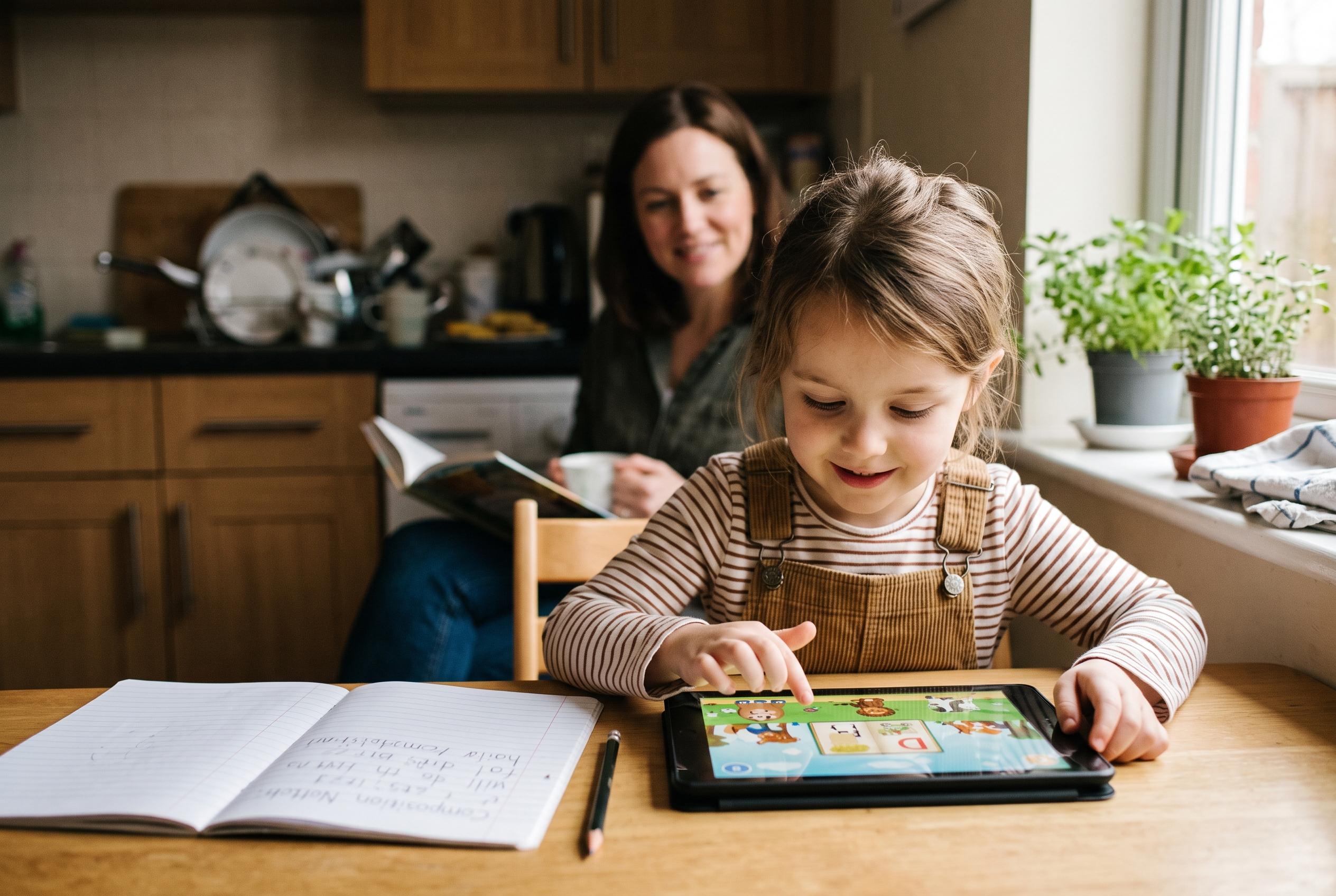

The best phonics apps do more than teach the alphabet, helping children blend sounds, spell words and apply patterns when they meet unfamiliar text.
A child can recite the alphabet perfectly and still stall on a simple word like “cat”. That gap matters. Reading depends on more than naming letters: children have to link letters to sounds, blend those sounds into words, and then keep applying the pattern when the word changes. The phonics apps highlighted here are useful because they focus on that process in different ways, from full learning programmes to narrower practice with digraphs, first words or sound-to-print matching.
Not every phonics app is built to do the same job. Some provide a structured sequence that takes a beginner from basic sounds to decodable books. Others are better as short, targeted practice for a child who already knows some letter sounds but still needs repetition. The strongest choices give children a clear path through sound–letter relationships, ask them to blend and spell, and then let them read words or books that use the patterns they have learned. A phonics-focused app can support reading, but it is not a substitute for all instruction.
For families looking for a full programme, Reading Eggs’ Fast Phonics stands out. According to Reading Eggs, it is a standalone phonics course for children aged five to 10, built around 20 sequenced levels, or “Mountain Peaks”, with more than 20 activities in each level. The company says the programme uses a systematic, synthetic approach, moving children through letter sounds, blending, spelling and fully decodable books. It is also described as suitable for emergent readers, older children with gaps in reading knowledge, and English language learners.
Phonics Hero takes a similar structured approach, though with a stronger emphasis on repeated reading and spelling practice. The programme covers 26 levels and guides children through sounds, words, sentences and spelling patterns. Reading.com is designed for adults and children to work through together, which may suit parents who want a guided lesson rather than a child working alone. Hooked on Phonics adds a book-linked element, pairing app lessons with printed materials in some plans, while Duolingo ABC offers short, free sessions that make it easier to fit phonics into a busy day.
Free options can be genuinely useful, provided parents choose them with care. Khan Academy Kids includes phonics among a broader mix of early-learning activities, while Starfall’s Learn to Read app focuses more narrowly on early decoding, beginning with letters and moving into short-vowel words and common patterns. Teach Your Monster to Read turns the same content into a game-like journey, which can help children who need more repetition without feeling as if they are doing drills. Each of these can reinforce real reading skills, but the child still has to connect the activity to print and actual words.
Some apps are better for a specific stage of learning. Nessy Hairy Phonics 1 is aimed at children who already know basic sounds and are ready for digraphs such as “sh”, “ch”, “th” and “ng”. Bob Books Reading Magic #1 keeps the reading task small, making it a sensible bridge for children who are beginning to sound out very short words. GraphoGame American English takes an adaptive approach, adjusting practice as a child responds, which may suit children who benefit from lots of repetition and immediate feedback. ABCmouse also includes phonics within a broader curriculum, but families need to follow the reading path deliberately if decoding is the main goal.
The key lesson is that phonics apps work best when they match the child’s current stage. A younger beginner may need help simply hearing and saying sounds, while an older child may need support with blending, digraphs or vowel patterns. Fast Phonics, Phonics Hero and Reading.com are stronger choices for a more complete path through phonics. Duolingo ABC and Khan Academy Kids are sensible starting points for families who want free access. But whichever app a parent chooses, the real test is whether the child can take what they have learned and read a new word on the page.
Disclaimer: This content is for informational purposes only and is not intended to be a substitute for professional medical judgment, advice, diagnosis, or treatment.



