

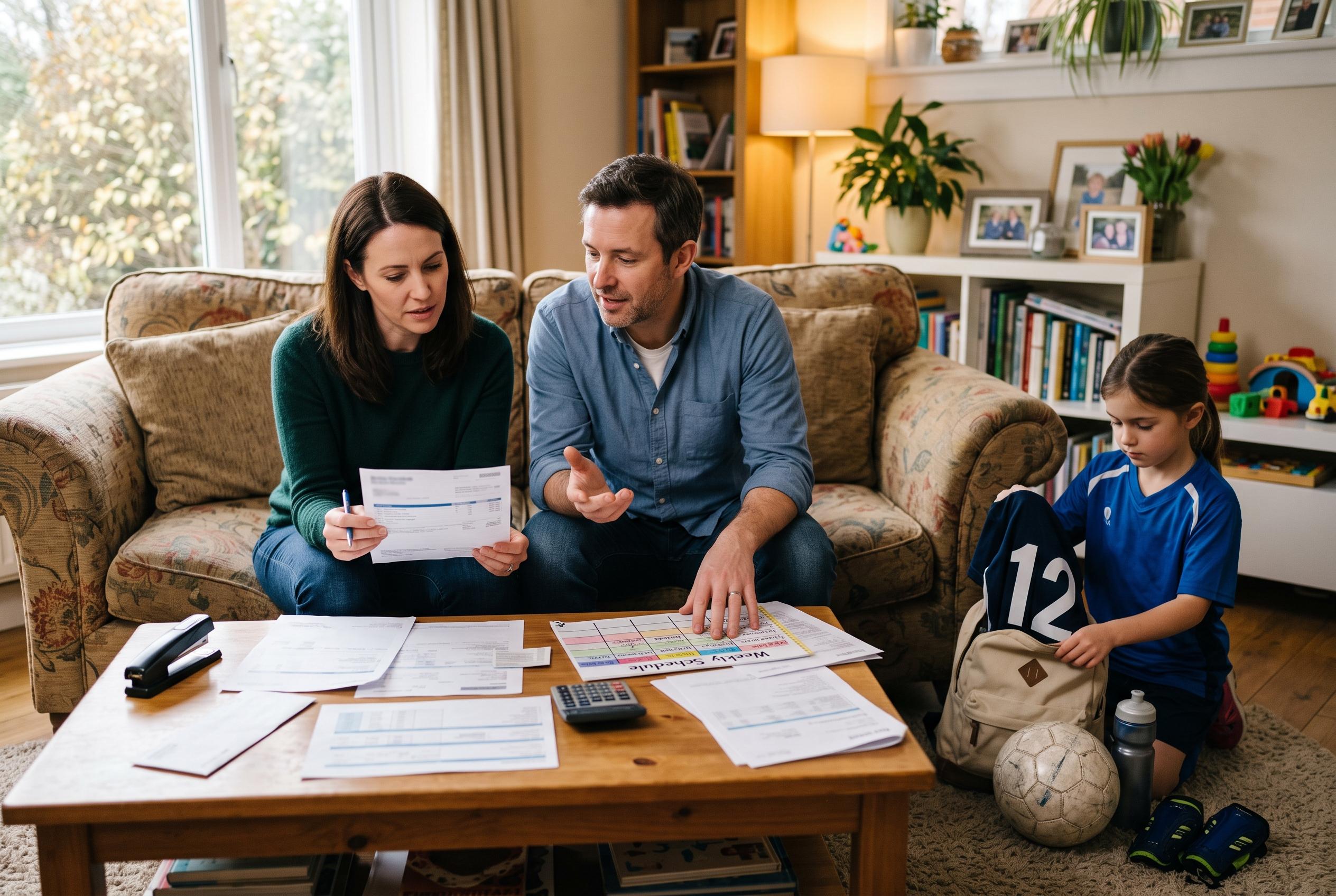

Uniforms, equipment, travel and event fees can push children’s activities far beyond their advertised price. Here’s how families can budget realistically and keep costs sustainable.
Families often discover that the price of a child’s activities goes well beyond the sign-up form. A soccer team, piano lesson or dance class may look manageable at first glance, but the real bill can rise quickly once uniforms, instruments, travel and event fees are added. Financial writers at Fox Business and ChooseFI both note that the sticker price rarely reflects the full commitment, and that parents should treat extracurriculars as part of the household budget rather than an optional extra.
One useful first step is to work out the complete annual cost before committing. An activity that charges monthly fees can seem affordable until the numbers are added up across a school year, especially if there are recurring charges for coaching, competitions, recitals or transport. Calculator tools such as those offered by Calcbee are built around that reality, helping families add registration costs, equipment, lessons and travel into a single estimate. That kind of planning makes it easier to compare activities on a like-for-like basis and avoid unwelcome surprises later.
Budgeting for children’s activities also means setting boundaries that fit the wider family finances. Parents should first account for essentials such as housing, food, utilities, debt payments and savings, then decide what remains for optional spending. LendingTree’s study on children’s extracurriculars found that many parents are already making a sizeable annual commitment, underscoring how easily these expenses can grow. The goal is not to strip away enriching experiences, but to make sure they do not crowd out other priorities or push the household into strain.
Experts also recommend involving children in the decision-making process. Letting them choose a smaller number of activities they genuinely enjoy can be more valuable than filling every free afternoon with lessons and practices. Consumer Credit advises parents to focus on one or two interests at a time, while trial sessions can help determine whether a child is truly engaged before money is spent on uniforms or specialised equipment. That approach also creates a natural opening to talk about value, trade-offs and the difference between wants and needs.
There are also practical ways to reduce costs without lowering the quality of the experience. Community programmes, school clubs, public libraries and local recreation centres often provide lower-cost alternatives to private lessons or travel teams. ChooseFI and Calcbee both point to second-hand gear, sibling discounts, used equipment and community-based programmes as useful ways to stretch a family budget. Parents can also save by carpooling, borrowing equipment at first, or choosing recreational leagues over higher-priced competitive options when that better suits the child’s age and interest.
Ultimately, the most effective extracurricular budget is one that can be reviewed and adjusted as children grow and schedules change. Families that revisit spending at the end of each season are better placed to decide which activities are worth continuing, which ones should pause and where a new opportunity might fit. The Teach Mama guide argues that this kind of flexibility helps families keep activities enjoyable and sustainable, which may be the real measure of success.
Disclaimer: This content is for informational purposes only and is not intended to be a substitute for professional medical judgment, advice, diagnosis, or treatment.



