

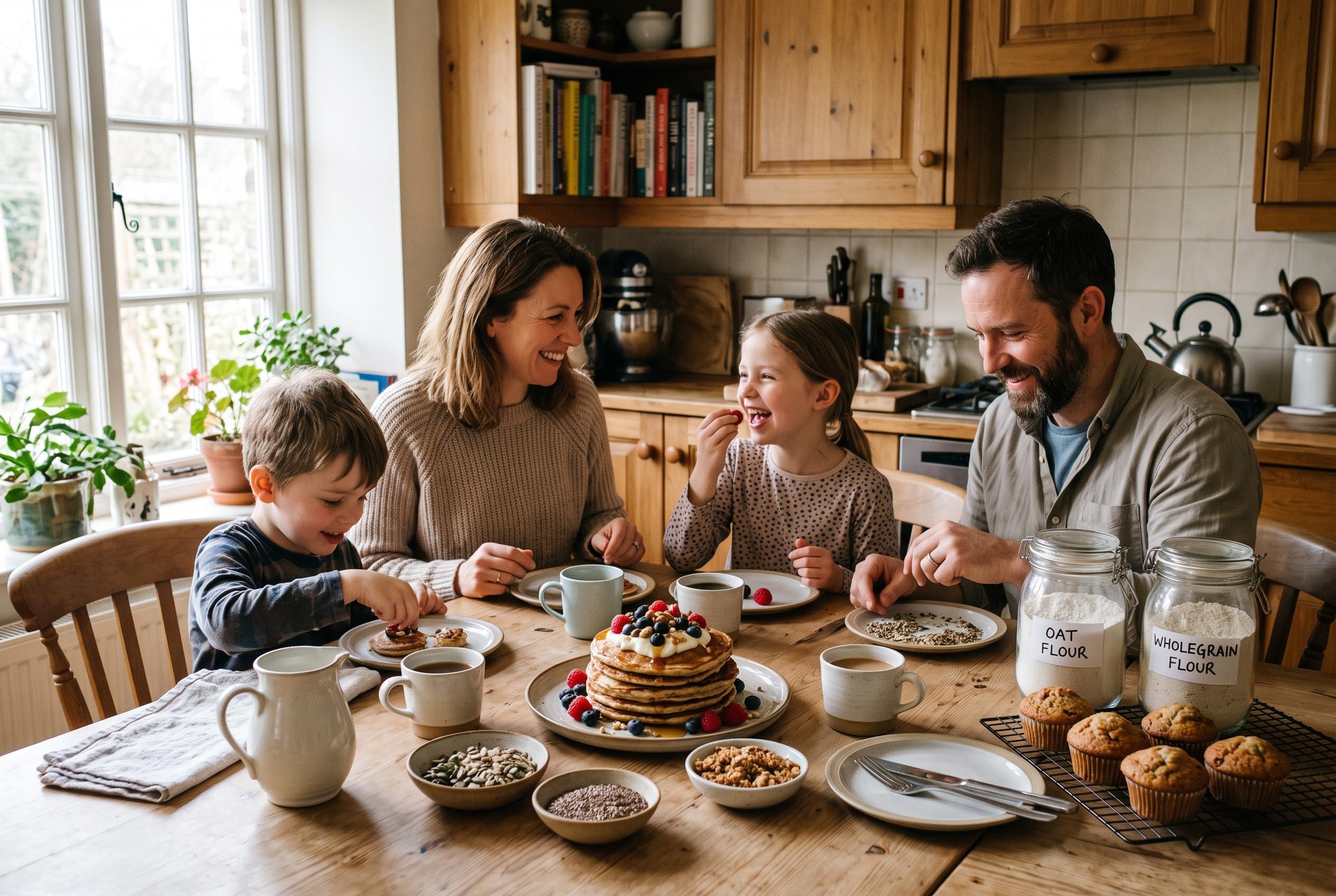

Swapping in oat or wholegrain flour, adding a little ground seed and choosing fruit or yoghurt toppings can make pancakes more filling and nutritious without sacrificing simplicity.
Pancakes do not have to be treated as an indulgence by default. The batter can be built from eggs, milk and flour in a way that makes a balanced breakfast, and the final nutritional value depends far more on the type of flour, the amount of sugar and the toppings than on the pancake itself. A few small changes can make the meal more filling without turning it into a complicated health project.
One of the simplest improvements is to reduce the share of refined white flour and bring in wholegrain or oat flour instead. Harvard Health says wholegrains are linked with better cardiovascular health and blood sugar control, while a large meta-analysis of randomised trials found that replacing refined grains with wholegrains improved several cardiometabolic markers, including LDL cholesterol and HbA1c. In practice, that does not mean white flour must be banned. It does mean that even a partial swap can improve the overall quality of the batter.
Oat flour is especially practical because it can be made at home by blending oats. It brings in beta-glucans, a form of soluble fibre that has been well studied for its effect on cholesterol, and fibre more generally can help with fullness. Almond flour is another option, but it is usually more expensive and behaves differently in the pan because it does not contain gluten. For most families, oats offer a cheaper and easier route to a more nourishing breakfast.
Seeds can also raise the nutritional value of pancakes, but there is no need to overload the batter. Harvard notes that chia seeds are rich in fibre, protein and omega-3 fats, while flaxseed offers similar benefits and is often used for its nutty flavour and plant-based omega-3 content. The Cleveland Clinic and the American Heart Association both point out that chia and flax are easy to add to baked goods and breakfast dishes. Ground flaxseed is especially convenient because it blends smoothly into batter and contributes fibre, healthy fats and lignans, a group of plant compounds.
Sugar is the other place where pancakes often become more dessert than breakfast. It is not essential in the batter if the toppings are naturally sweet. Sliced banana, berry purée or cooked fruit can provide enough sweetness on their own. Xylitol and other sugar alcohols may lower the blood sugar impact of a recipe, but they are not a free pass: in larger amounts, they can cause bloating, gas and looseness of the bowels, so reducing sugar rather than replacing it outright is often the more practical choice.
The topping matters just as much as the base. Greek yoghurt with berries, banana or stewed apple adds protein and makes the meal more satisfying than chocolate spread or syrup alone. Fruit warmed briefly with a little water can become a quick sauce without much added sugar, and apples or pears cooked with cinnamon work well too. If nut butter is the preference, a small amount of a simple, unsweetened version can add healthy fats and protein, but the portion should stay modest because it remains calorie-dense. In other words, pancakes can be part of a balanced breakfast, provided the batter and the filling are chosen with a little more care.
Disclaimer: This content is for informational purposes only and is not intended to be a substitute for professional medical judgment, advice, diagnosis, or treatment.



