

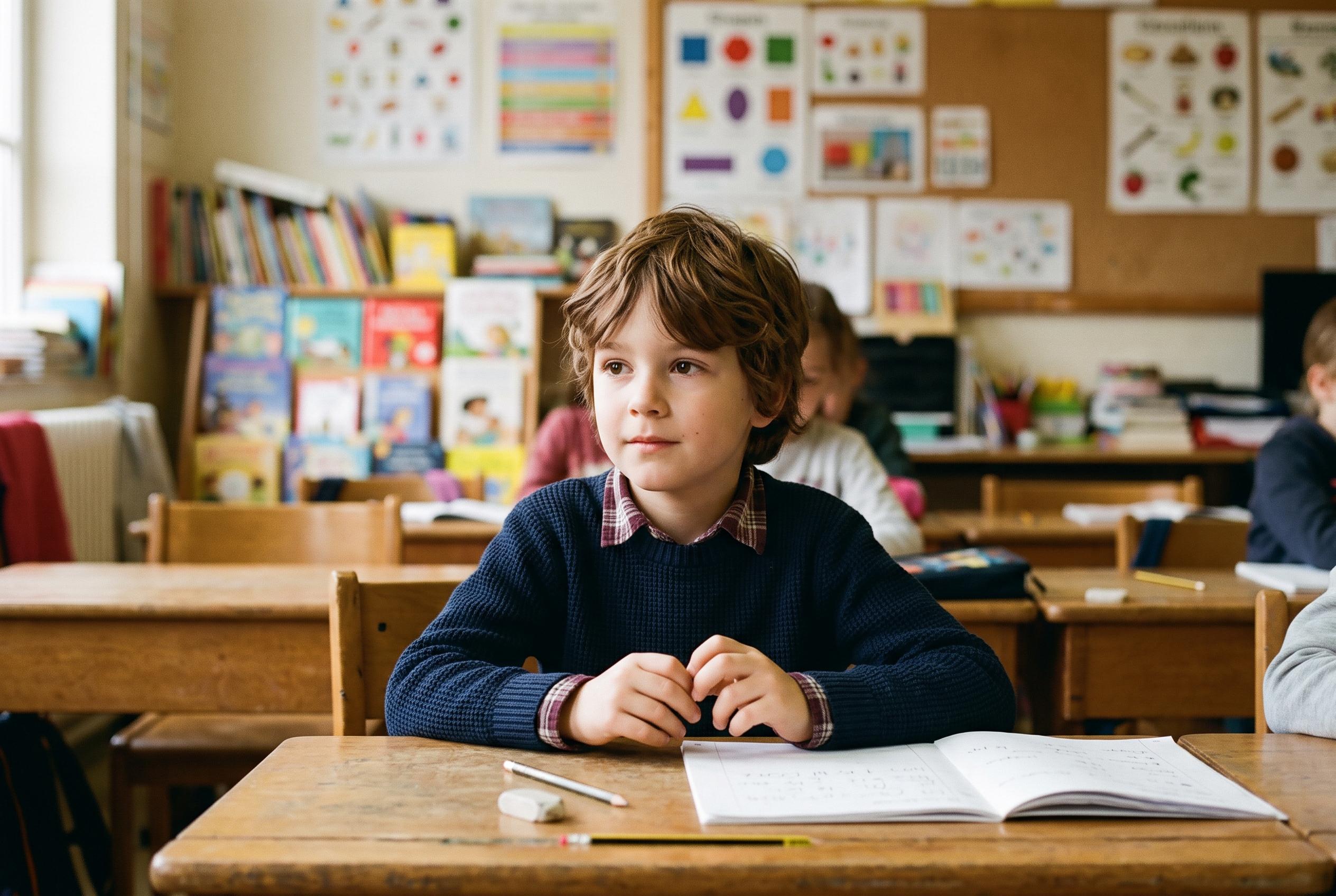

A child’s repeated “I don’t know” may signal fear of being wrong, low confidence or difficulty processing a question , and experts say a calmer response from adults can help.
When a child shrugs and says “I don’t know” to a question they likely can answer, the reaction is not always laziness, inattention or stubbornness. Often, it is a sign of uncertainty, low confidence or a fear of making a mistake. That can show up in everyday moments at home, from simple sums to choosing what to eat or wear. Psychologist Elena Ardelean, speaking to Totul Despre Mame, said she increasingly sees children who wait for an adult to confirm their answer before they speak for themselves. Studies indexed in PubMed also suggest that a child’s tendency to withhold an answer can reflect both cognitive factors and the way adults frame the question.
Ardelean said these patterns can emerge quite early, often between the ages of four and six, when children begin to absorb social rules more clearly, and they may become more obvious after they start school, when performance is assessed more formally. Research on preschool children indicates that some do not use “I don’t know” simply because they are unsure; in some cases, they may not yet understand that guessing is an option. Other work has found that children’s verbal ability, the time they are given to respond and their sense of self all influence whether they will admit uncertainty.
That matters because a child who repeatedly avoids answering may be learning that being wrong is dangerous, embarrassing or disappointing. In families where children are praised mainly for being clever, a mistake can start to feel like proof that they are not as capable as others believe. Language-processing difficulties can also play a part: some children may need more time to understand the question, organise their thoughts and find the words they want. In those cases, “I don’t know” may sometimes function as a shield, buying time or protecting them from pressure.
The practical response, according to the experts cited in the article, is to make room for incomplete answers and to treat mistakes as part of learning rather than as failures. Adults can help by asking open, low-pressure questions, allowing extra time, and reacting calmly when a child is wrong. Over time, that kind of response can teach children that they do not need a perfect answer to be valued, and that uncertainty is not something to hide.
Disclaimer: This content is for informational purposes only and is not intended to be a substitute for professional medical judgment, advice, diagnosis, or treatment.



