

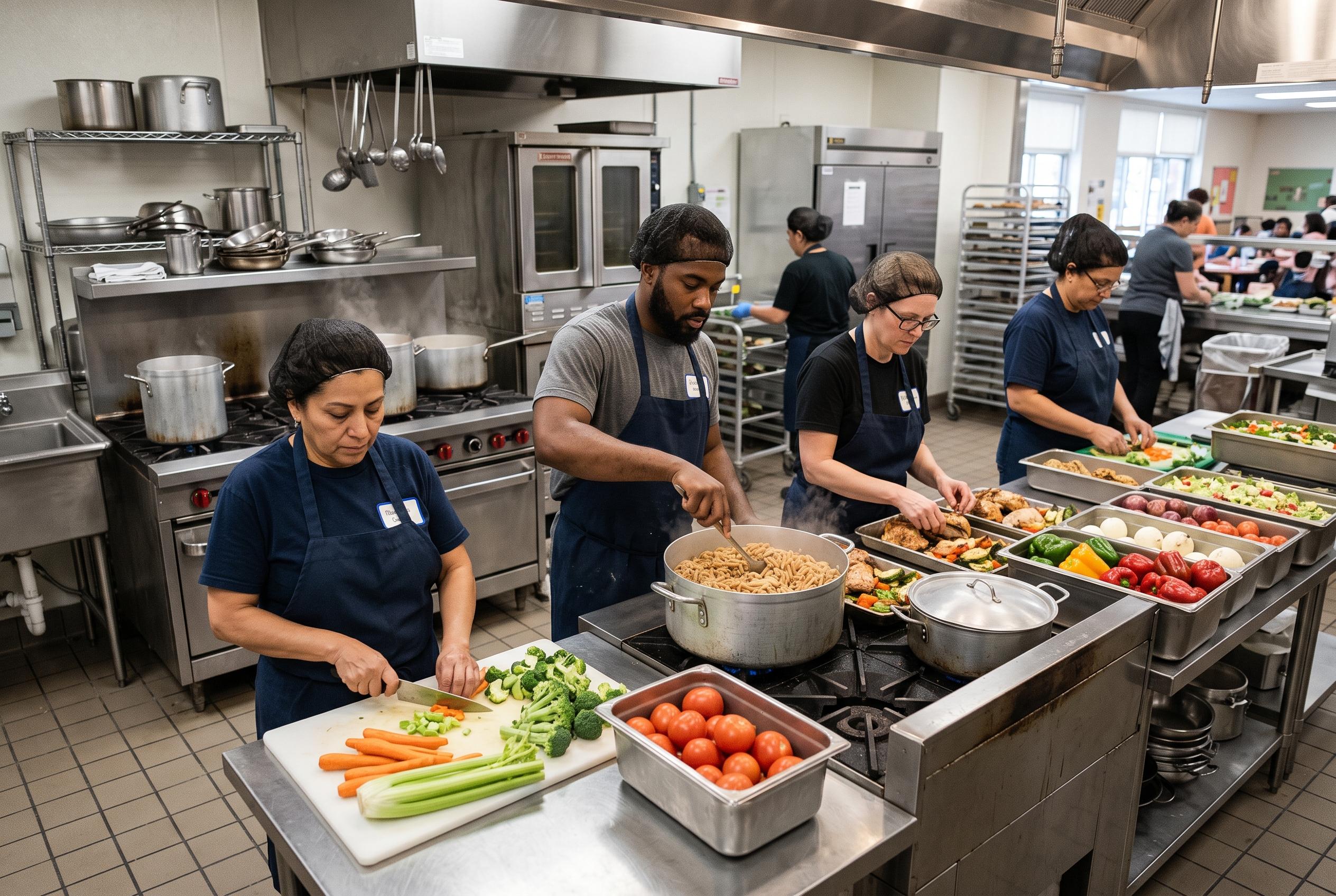

A Stanford Medicine study warns that staffing shortages, limited kitchens, higher ingredient costs and fragile supply chains could complicate California’s plan to remove ultra-processed foods from public school menus.
California’s push to remove ultra-processed foods from public school menus could improve children’s diets, but Stanford Medicine researchers say the policy may be far harder to deliver than to write.
The study, which is due to appear in Public Health Nutrition, found that school food service directors expect the biggest obstacles to be money, staffing, procurement and kitchen capacity. Anisha Patel, the senior author and a professor of paediatrics at Stanford Medicine, said the reform is straightforward in principle but likely complicated in practice for districts that already operate on tight margins.
The law at the centre of the debate, known as the Real Food, Healthy Kids Act, will begin phasing out certain ultra-processed foods in California public schools from July 2029, with full removal of covered items required by July 2035. Stanford researchers said the measure reflects a wider public health push, as federal dietary guidance has also encouraged Americans to eat fewer highly processed foods. The U.S. Department of Health and Human Services has separately announced a $32.5 million initiative to help districts test healthier school meal models.
To understand how the change may work on the ground, the Stanford team interviewed food service directors from 20 districts in California’s San Joaquin Valley, a largely agricultural region where many families rely on school meals. The directors described a familiar set of pressures. Less processed ingredients usually cost more, are harder to source and often require more time to prepare. Many districts also depend on low-cost commodity foods that are processed elsewhere before being served to students, which can make menus more reliant on packaged items than administrators would like.
Amanda Harvey, nutrition services director for Fresno Unified School District, told the researchers that even small ingredient changes can create supply problems. She said her district ran into trouble sourcing pickles made without a particular dye, an example of how reformulating menus can bring unexpected costs and shortages. Harvey also said some schools do not have kitchens equipped for scratch cooking, meaning substantial upgrades may be needed before districts can prepare more food on site.
Staffing is another major hurdle. Many school kitchens rely on part-time workers who are trained to heat and serve meals rather than cook from basic ingredients, and more labour-intensive meal preparation would likely require more hours, higher wages and additional benefits. In some schools, the physical plant itself is the limiting factor. Harvey said her district explored making sandwiches from scratch in elementary schools, only to be told by local health officials that the kitchens would need new sinks, drains and hoods before they could be approved for that work.
The study also suggests that the success of any overhaul may depend partly on whether students accept the changes. Some food service directors said fresh menu items were popular, especially when schools involved families and pupils in the process. Harvey said Fresno Unified has worked with chefs to develop scratch-made dishes and that giving children more choices reduced complaints from both parents and students.
The researchers said districts that have made progress often did so with temporary grants, chef-led leadership or strong family engagement, but those approaches are difficult to sustain without stable funding. Andrea Pedroza-Tobias, the study’s lead author and now an assistant professor in residence at the University of California, Irvine, said the policy will need more financial backing if it is to succeed at scale. Patel added that the upfront expense could pay off over time if healthier meals help reduce later costs linked to obesity, Type 2 diabetes and cardiovascular disease.
Disclaimer: This content is for informational purposes only and is not intended to be a substitute for professional medical judgment, advice, diagnosis, or treatment.



