

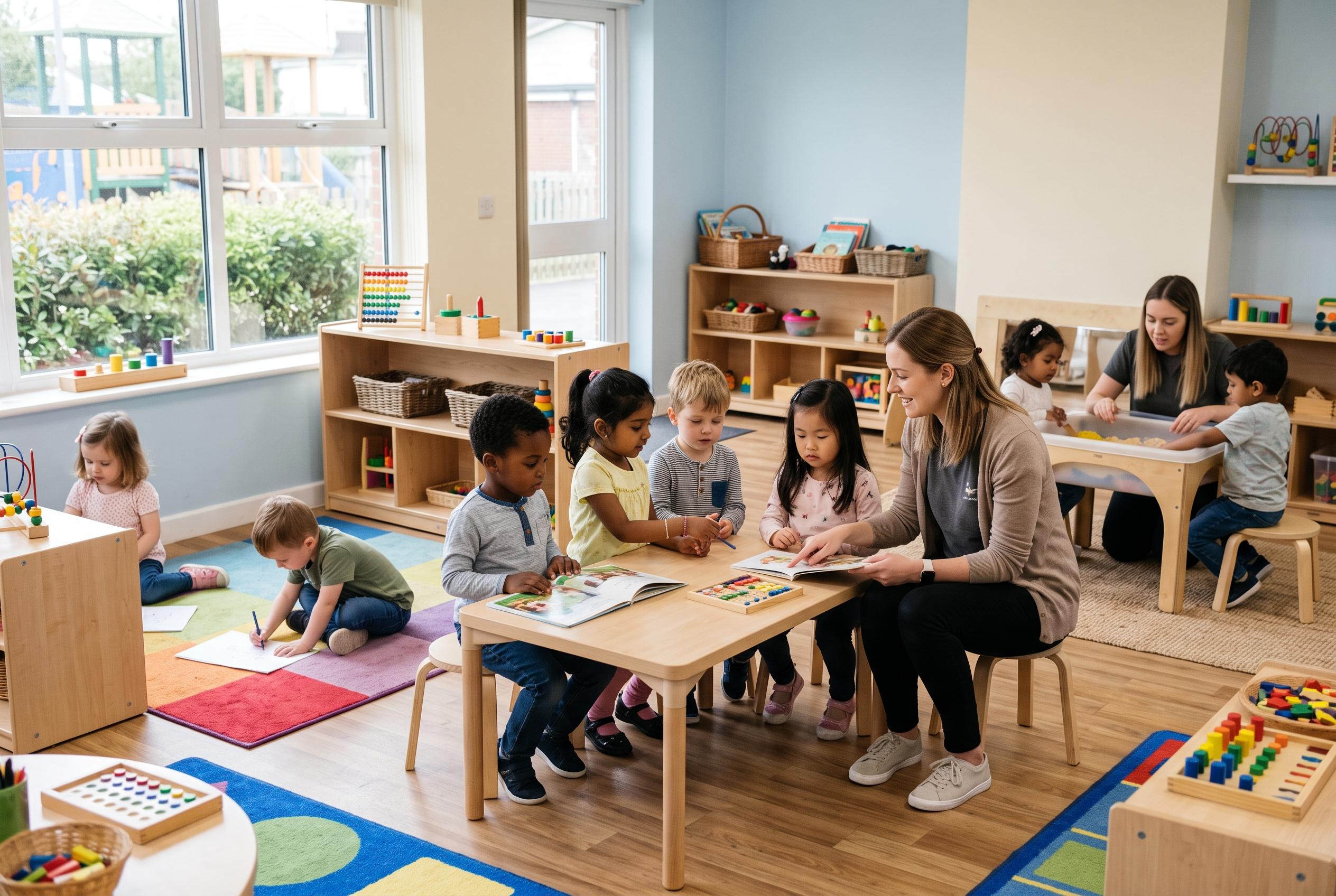

A draft law would introduce nationwide developmental assessments and direct extra nursery staff towards children and centres most in need, but states say Berlin’s €9.25bn offer may not be enough.
Germany’s plans to strengthen early childhood education are heading into parliament, with a draft law that would require every child to be assessed by the age of four and could channel more staff time into nurseries and kindergartens that need it most. According to Tagesschau and the federal government, the centrepiece of the proposal is a nationwide framework for identifying language, motor, social-emotional and numerical development early enough for support to begin before children enter primary school.
The draft, known as the Startchancen- und Qualitätsentwicklungsgesetz, was approved by the federal cabinet on 2 September and is now being debated in the Bundestag for the first time. The government says the aim is to reduce the extent to which a child’s prospects depend on family background and parental education, and instead to focus on individual strengths and needs. Education Minister Karin Prien, of the Christian Democratic Union, has argued that Germany still fails too many children by spotting difficulties too late and offering help only after problems have already become entrenched.
Under the proposal, children identified as needing support would receive an additional 30 minutes a week of attention from specialist staff. Nurseries with a high proportion of children facing particular challenges could be given up to 1.5 extra posts for language development and social work. The government says at least 10 per cent of childcare centres in each state should benefit, and that the approach should also make the transition to primary school smoother.
The plan is politically significant because responsibility for nurseries largely sits with Germany’s 16 states, which means the federal government needs their co-operation as well as parliamentary approval. Berlin has offered about €9.25 billion over eight years to help pay for the changes, with the law expected to be phased in from 2027 and fully operative from 2029. But several states have already signalled that they do not believe the funding pledge goes far enough, raising the prospect of further negotiation before the Bundesrat gives its verdict. In Cottbus, where staff already use picture-based exercises to spot language gaps, one specialist said she wanted “more time and more colleagues” , a reminder of how stretched many early years settings remain.
Disclaimer: This content is for informational purposes only and is not intended to be a substitute for professional medical judgment, advice, diagnosis, or treatment.



