

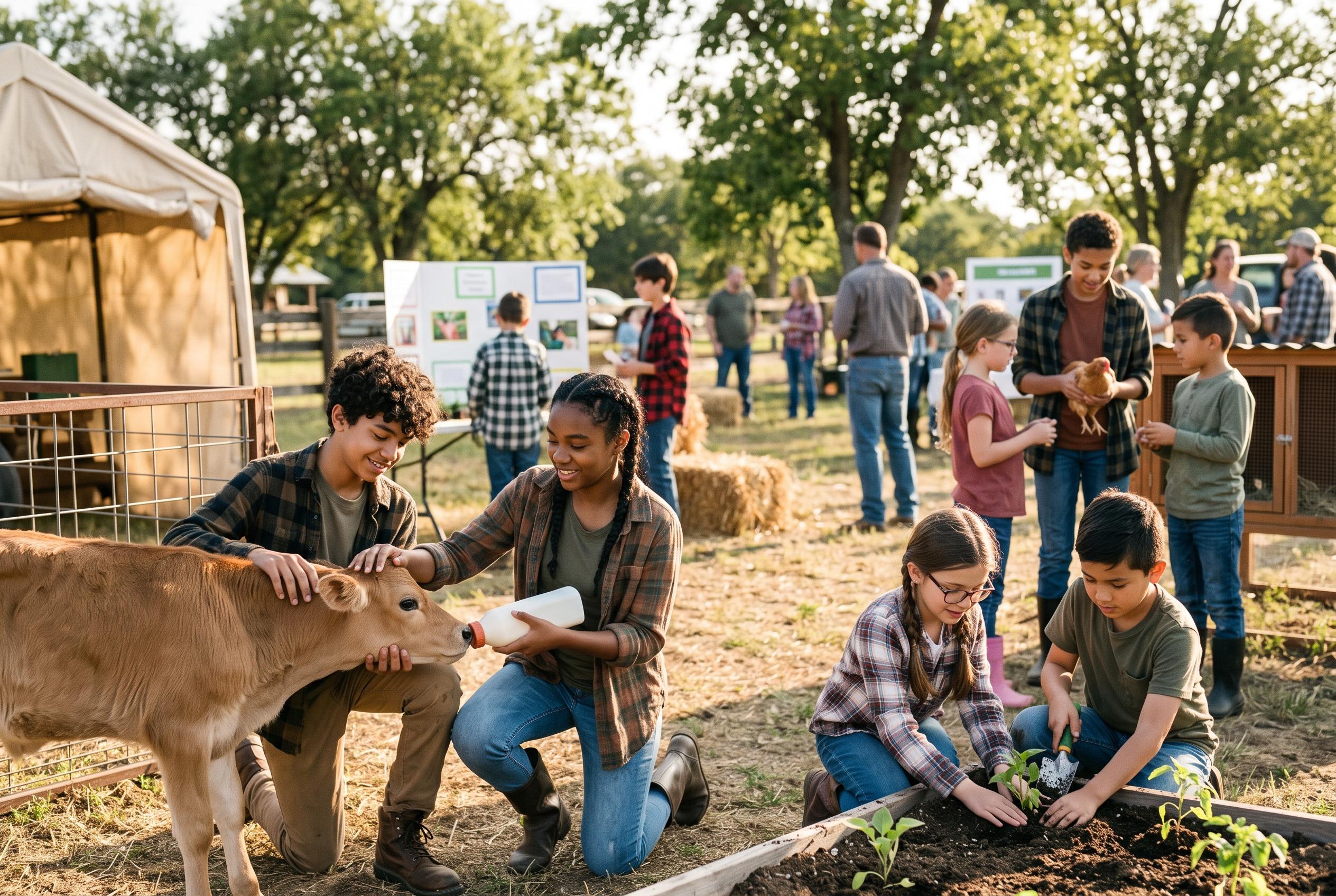

As National 4-H Week highlights projects and achievements, local members and leaders say the programme’s most lasting lessons are confidence, resilience, leadership and responsibility.
For many families, 4-H still brings to mind fairground stalls, livestock judging, sewing entries and carefully prepared cooking projects. But in Morgan County, the value of the programme reaches well beyond what is pinned to a display board or judged under exhibition lights. Local leaders say the real payoff is the steady growth in confidence, communication, responsibility and resilience that young people carry into school, work and adult life.
That wider purpose fits closely with the national 4-H approach to positive youth development, which treats young people as capable partners rather than passive participants. Research shared by 4-H and university extension programmes describes the model as one that builds on existing strengths, encourages responsible decision-making and relies on supportive adults, schools, families and communities to help young people thrive. The USDA’s National Institute of Food and Agriculture says 4-H has been delivered through the land-grant university extension system for more than 120 years and now includes projects ranging from livestock and gardening to robotics and drones.
In practice, Morgan County leaders say the learning starts with action. Young people may be asked to give a demonstration, raise an animal, sew a garment, tend a garden or complete a service project, but the assignment quickly becomes something larger than the task itself. Along the way, members have to plan, communicate, adapt when things go wrong and keep working towards a goal. Abby, a 4-H alumna in the county, says an early speaking opportunity helped set her on a path that now includes presenting at conferences while pursuing a master’s degree. Current member Arisa says 4-H strengthened her leadership and public speaking, adding: “I grew more confident, I have acquired better leadership and public speaking skills, which all boost my confidence. I can now talk in front of the crowds and lead groups of people.”
The same theme comes through in the stories of adult volunteers who have watched shy children turn into capable club officers, county council members, mentors and, in some cases, scholarship recipients or classroom teachers. Peggy, a club leader, says many newcomers arrive nervous about speaking in front of the group, but the repeated practice gradually makes the experience less intimidating. The broader youth development literature behind 4-H points to those gains as part of what it calls the “5 C’s” – competence, confidence, connection, character and caring – qualities researchers say help young people see themselves as contributors to their communities.
Setbacks, too, are part of the education. Laura, another alumna, says 4-H taught her perseverance by showing her how to review what happened, look for improvements and try again. Val, who has led clubs for more than three decades, still keeps a white ribbon from her first dairy heifer, Wendy, as a reminder of the effort behind a single fair result and the memories tied to it. During National 4-H Week, Morgan County celebrates the projects and ribbons, but the programme’s deeper message is less visible and far more lasting: youth are learning how to set goals, manage time, budget money, work with others and recover from disappointment. That is why, as local leaders see it, 4-H is ultimately about preparing young people for everything that comes next.
Disclaimer: This content is for informational purposes only and is not intended to be a substitute for professional medical judgment, advice, diagnosis, or treatment.



