

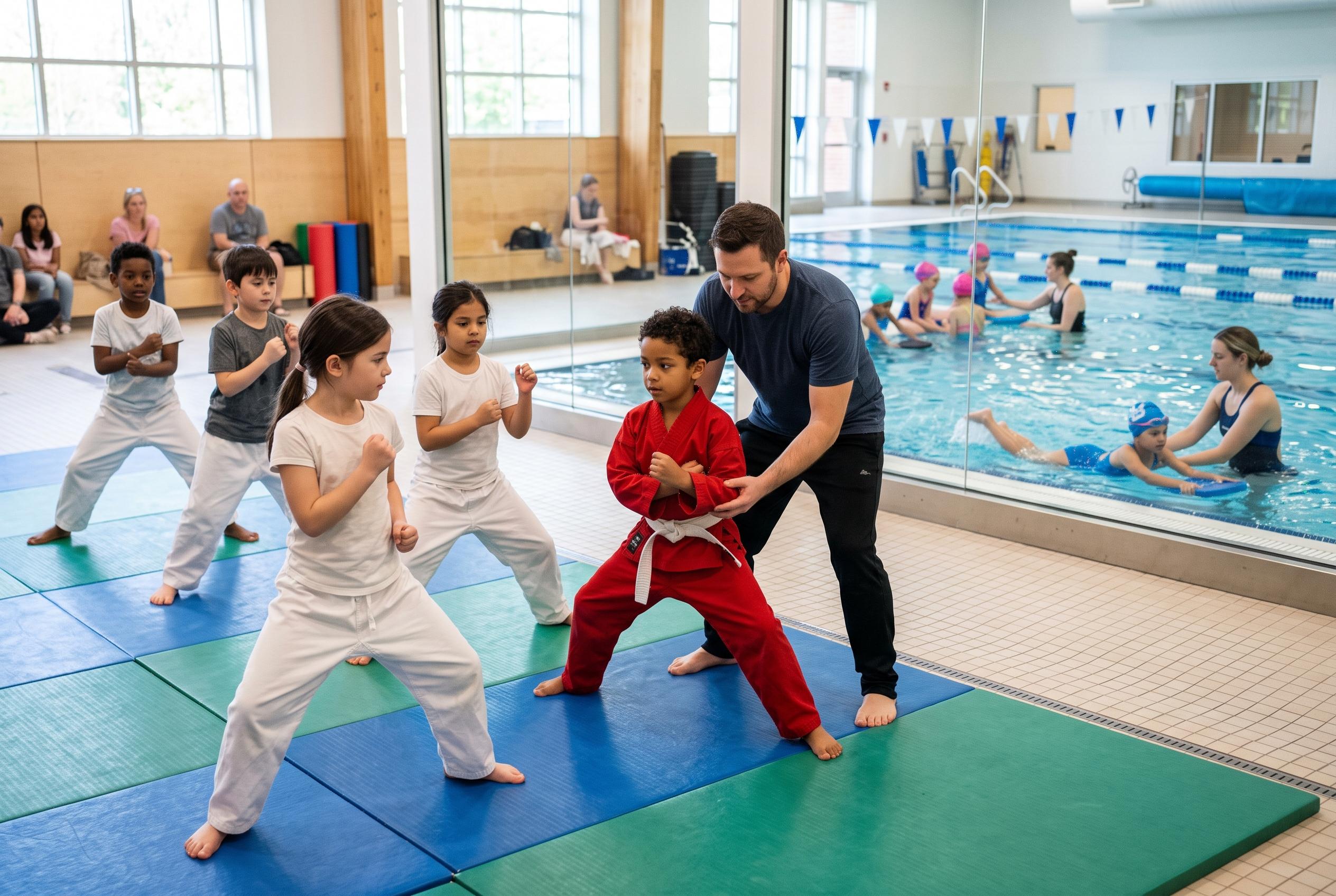

A review of 11 clinical trials suggests martial arts and aquatic programmes may improve balance, coordination and other gross motor skills in children with autism, although larger studies are needed.
More than half of children with autism spectrum disorder may experience motor difficulties, and a new review suggests that organised sport could help. According to research published in Developmental Medicine & Child Neurology, certain activity programmes appear to improve balance, coordination and other gross motor skills in children with the condition, with martial arts and aquatic training standing out as the strongest options.
The analysis looked at 11 clinical trials covering a range of sports and exercise programmes. Martial arts delivered the most consistent gains, especially in balance, overall motor ability and object control, with particularly notable results in Tai Chi Chuan and kata-based training. Aquatic sessions also showed broad benefits, including improvements in balance, movement skills and object control, while gymnastics and trampoline work were linked to better balance and bilateral coordination. Table tennis was associated with wider gross motor gains, and Australian football appeared to help with object control as well as balance and total motor scores.
Balance emerged as the motor area most likely to improve across the different sports, suggesting that programmes built around controlled movement and repeated practice may be especially useful for children who struggle with stability and coordination. The findings add to a growing body of evidence that physical activity can do more than provide recreation, potentially supporting everyday skills that matter at home, in school and on the playground.
At the same time, the authors urged caution. Many of the studies reviewed were small or methodologically weak, which limits confidence in the results and makes it difficult to say which approaches work best for which children. Sonia Khurana of Old Dominion University said that organised sports-based interventions may offer benefits beyond recreation for children with autism, but added that larger and more rigorous studies are still needed.
Disclaimer: This content is for informational purposes only and is not intended to be a substitute for professional medical judgment, advice, diagnosis, or treatment.



