

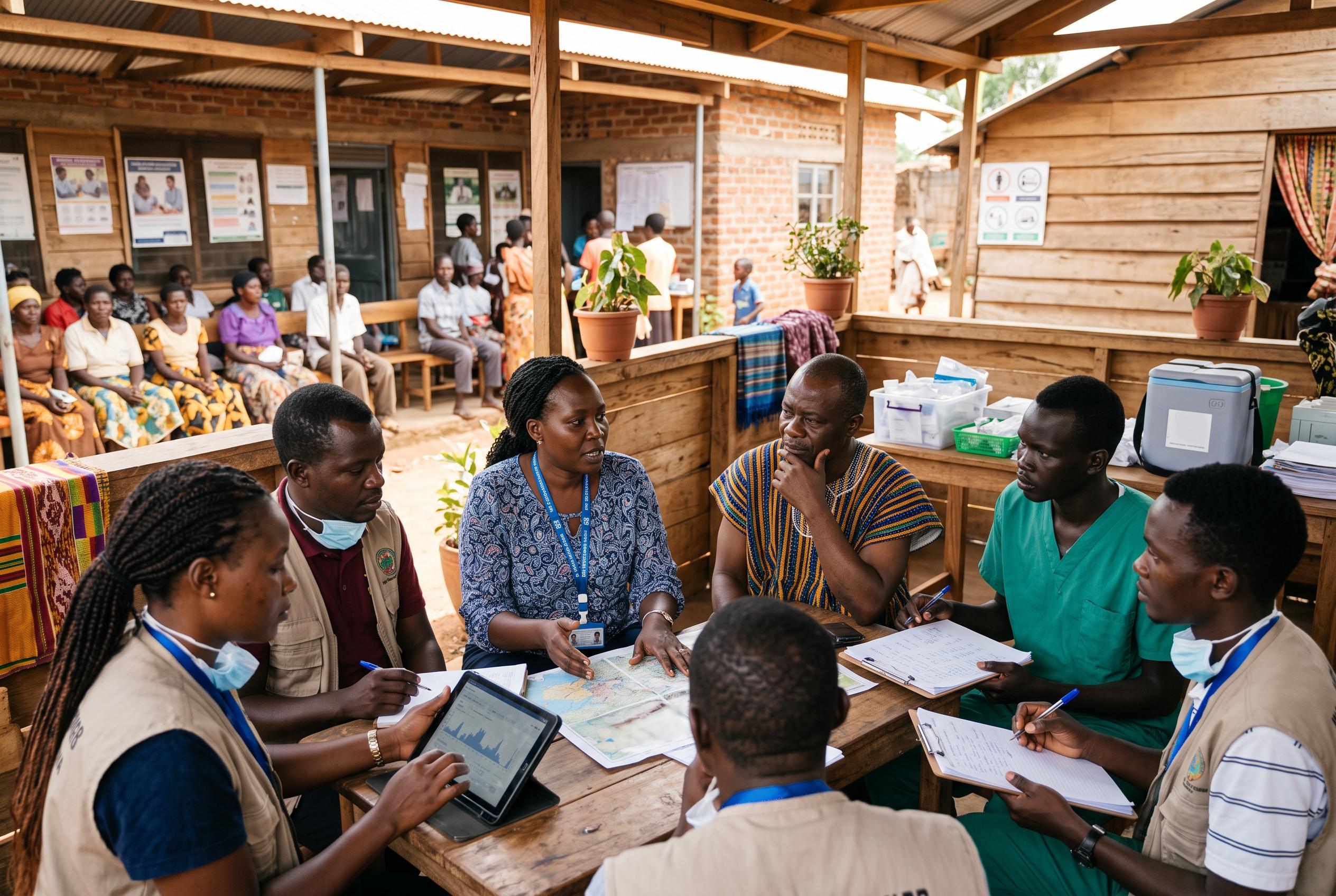

Senegal, Côte d’Ivoire, Gabon, Djibouti and The Gambia have agreed joint road maps focused on digital tracking, domestic financing and community-led vaccination after a benchmarking mission in Dakar.
Five African countries have agreed a joint package of 21 priority actions aimed at speeding up vaccination coverage and cutting the number of children who have never received a single dose, after a regional benchmarking mission in Dakar brought together health officials, technical partners and donors from 29 September to 2 October.
The mission drew delegations from Senegal, Côte d’Ivoire, Gabon, Djibouti and The Gambia, alongside organisations including the World Health Organization, UNICEF, the Institut Pasteur de Dakar and the Gates Foundation. It was organised by Galien Africa with Senegal’s Ministry of Health and Public Hygiene, building on momentum from a ministerial dinner held around Forum Galien Afrique 2025, according to the event communiqué.
Over four days, participants compared experiences, visited health facilities and worked on national road maps. In Senegal, they examined the work of the Prevention Directorate, the Immunisation Division and Dakar Centre district, with a focus on stock management, cold-chain monitoring, vaccine distribution and equipment tracking. The mission also highlighted the role of hands-on support in digital tools: after close coaching, the share of active Tracker users reportedly rose from 50% to more than 90%.
The delegation also looked at service delivery approaches designed around families’ schedules. Mobile vaccination sessions in Dakar Centre, held between 4 pm and 8 pm, were presented as one way to make immunisation more accessible for working parents and caregivers. Participants also discussed community-based initiatives such as the “Ronde des jeunes filles”, which uses peer support and trust-building to increase acceptance of the human papillomavirus vaccine.
According to the report, the discussions went beyond operational details to address how successful approaches could be scaled up in different national settings. Topics included domestic and local financing, innovative resource mobilisation, cross-sector coordination, access for mobile and border communities, and the training, motivation and funding of community health workers. UNICEF’s immunisation work in The Gambia, which stresses cold-chain support, community engagement, training for health workers and resource mobilisation, reflects many of the same priorities raised during the Dakar meeting.
The joint road maps identified four main levers for long-term change: stronger and more sustainable domestic financing, including support from local authorities, the private sector and public-private partnerships; multi-sector governance linking health, education and local government; better data systems, including digital tracking of individual children; and deeper community participation backed by better training and working conditions for front-line workers. The five delegations left with 21 agreed actions, with digital follow-up and domestic financing emerging as recurring themes. The Gates Foundation says its immunisation work in Africa is focused on reaching unimmunised children and supporting routine vaccination systems, a framing that echoes the Dakar effort to turn experience-sharing into measurable delivery.
Disclaimer: This content is for informational purposes only and is not intended to be a substitute for professional medical judgment, advice, diagnosis, or treatment.



