

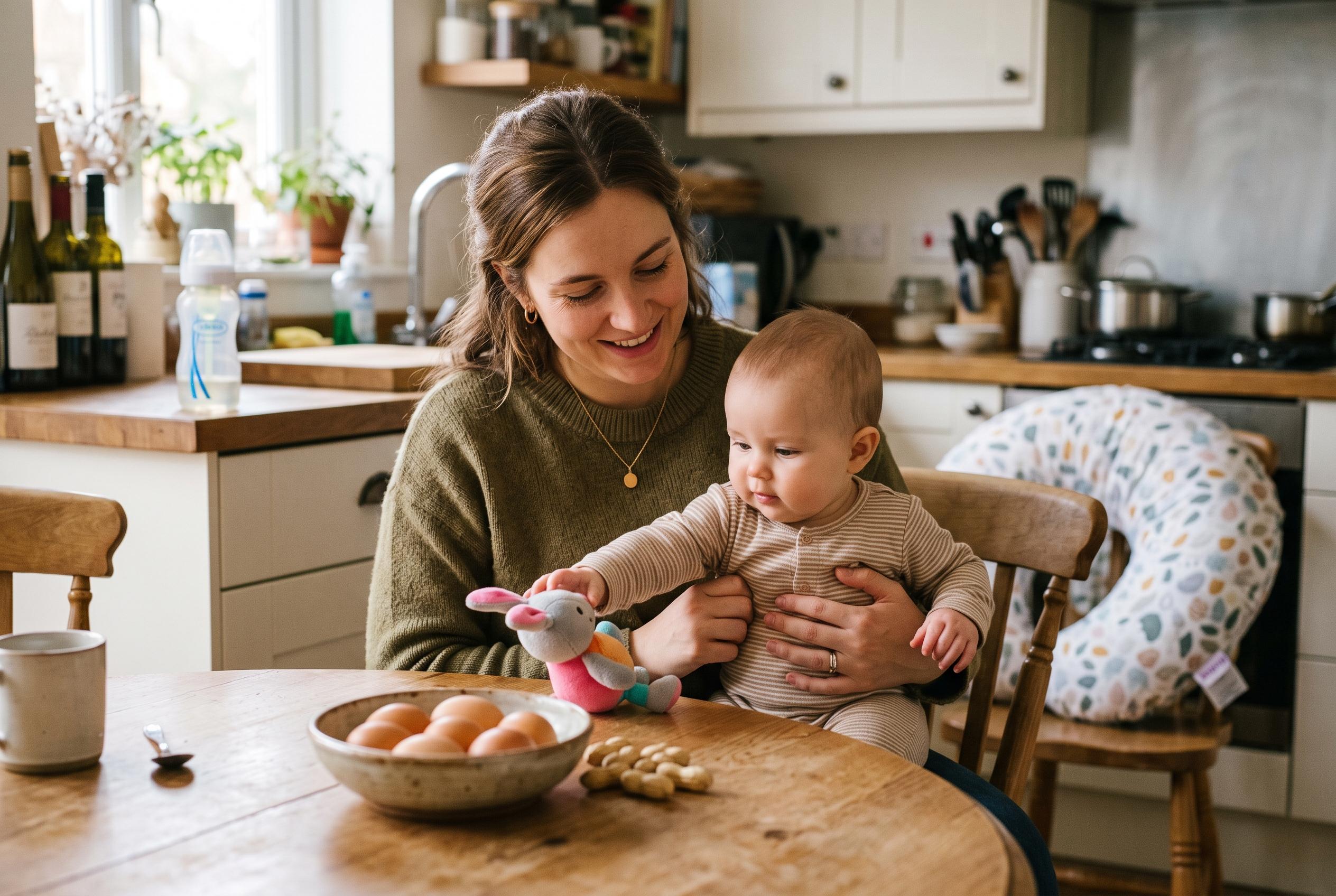

A large Australian trial found no significant reduction in egg or peanut allergies when mothers increased their intake during pregnancy and breastfeeding, shifting attention back to early feeding by infants themselves.
A large randomised trial has found that eating extra eggs and peanuts during pregnancy and while breastfeeding does not reduce the chance that a baby will develop an egg or peanut allergy in the first year of life. The finding matters because many parents have long wondered whether maternal diet can help shape a child’s immune system before solid foods are even introduced.
The Australian PrEggNut study followed 2,137 pregnant women recruited before 23 weeks’ gestation in four cities. The trial protocol, published in PubMed, shows that participants were randomly assigned either to a diet with at least six eggs and 60 peanuts a week or to a comparison diet with no more than three eggs and 30 peanuts a week, and the plan was to continue that pattern through pregnancy and for four months after birth or while breastfeeding.
According to the results published in the New England Journal of Medicine, 7.8% of children in the higher-intake group developed an IgE-mediated egg or peanut allergy by age one, compared with 8.4% in the control group. That difference was not statistically significant, and separate analyses of egg allergy and peanut allergy also failed to show a meaningful protective effect. The study likewise found no significant difference in eczema rates between the two groups.
The trial was designed around a specific scientific idea: that early exposure to allergen proteins might encourage immune tolerance. But the route of exposure matters. The evidence that has changed allergy guidance in recent years has come mainly from studies in which infants themselves were given age-appropriate amounts of allergenic foods, rather than relying on maternal diet during pregnancy or lactation. The best-known example is the LEAP study, which helped establish early peanut introduction for some infants at increased risk.
That distinction is important for parents and caregivers. The PrEggNut findings do not suggest that pregnant women should cut out eggs or peanuts if they already tolerate them, nor do they support eating unusually large amounts of either food in the hope of preventing allergies in a child. At the same time, the study cannot be applied to women who have a known egg or peanut allergy, because they were excluded from the trial.
The results are reassuring in one sense: they suggest that a deliberate push to increase maternal egg and peanut intake is unlikely to be the missing piece in allergy prevention. They also fit with the broader direction of current research, which increasingly points to the infant’s own diet, introduced in a timely and age-appropriate way, as the more important place to focus prevention efforts.
Disclaimer: This content is for informational purposes only and is not intended to be a substitute for professional medical judgment, advice, diagnosis, or treatment.



