

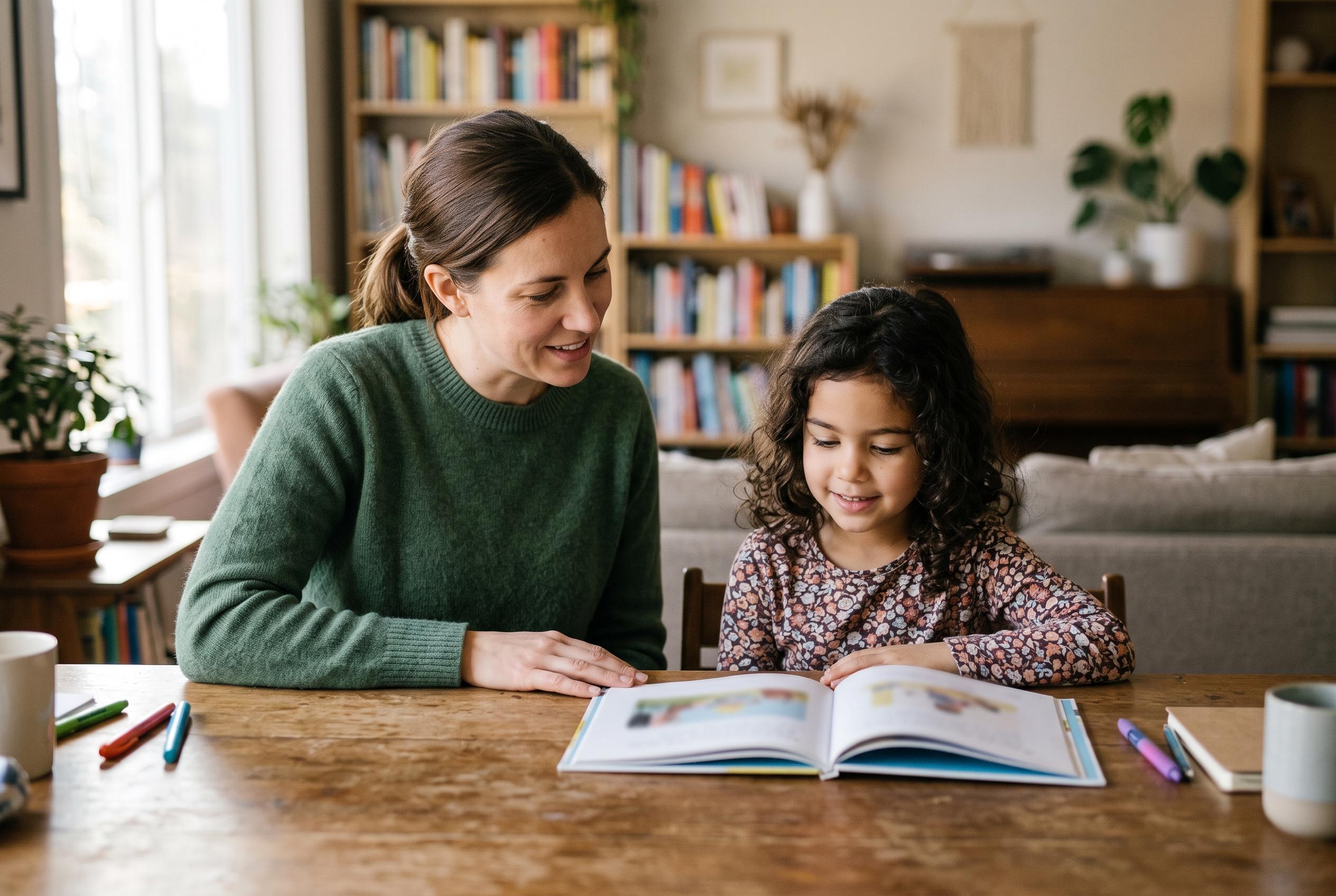

A Western Michigan University dissertation suggests that brief online training and immediate feedback can help caregivers deliver a structured reading programme effectively at home, as national literacy results remain weak.
A new dissertation from Western Michigan University adds to the case that parents can be trained to deliver structured reading lessons effectively at home, a finding that comes at a time when reading results remain stubbornly weak. The study, published in ScholarWorks at Western Michigan University, was written against a backdrop of continued national concern: the 2024 National Assessment of Educational Progress showed that about 69% of fourth graders and 70% of eighth graders scored below proficient in reading, underscoring persistent gaps in literacy skills.
The dissertation examined Teach Your Child to Read in 100 Easy Lessons, a home-based reading programme that has long been marketed as a step-by-step way for caregivers to teach early reading. According to the National Institute for Direct Instruction, the programme is intended for children as young as three and a half, takes about 20 minutes a day, and runs for 100 lessons. The updated edition includes a revised Practice Guide, refreshed lesson exercises and additional support materials, but the study suggests that a written guide alone may not be enough to help parents teach the lessons with fluency and precision.
Using a non-concurrent multiple-baseline design, the researcher tested an online self-instructional Learning Library aimed at improving how parents delivered the programme. All three parents in the study improved their instructional accuracy, reaching a pace of four to six correct learn units per minute, and they were able to carry that performance over into lessons taught with their children. The findings support the idea that self-instruction, especially when it includes active responding and immediate feedback, can be more effective than simply asking adults to read through written directions.
That result matters because the latest NAEP data point to a reading problem that is both broad and deep. The National Centre for Education Statistics reported that the 2024 assessment included roughly 117,400 fourth graders, 114,600 eighth graders and 24,300 twelfth graders, with average reading scores falling from 2022 for grades four and eight and from 2019 for grade 12. The National Assessment Governing Board said the 2024 average for 12th-grade reading was the lowest ever reported, suggesting that efforts to improve literacy may need to start earlier and extend beyond school walls. In that context, the dissertation offers a practical message for families: with the right training, caregivers may be able to deliver more effective reading instruction themselves.
Disclaimer: This content is for informational purposes only and is not intended to be a substitute for professional medical judgment, advice, diagnosis, or treatment.



