

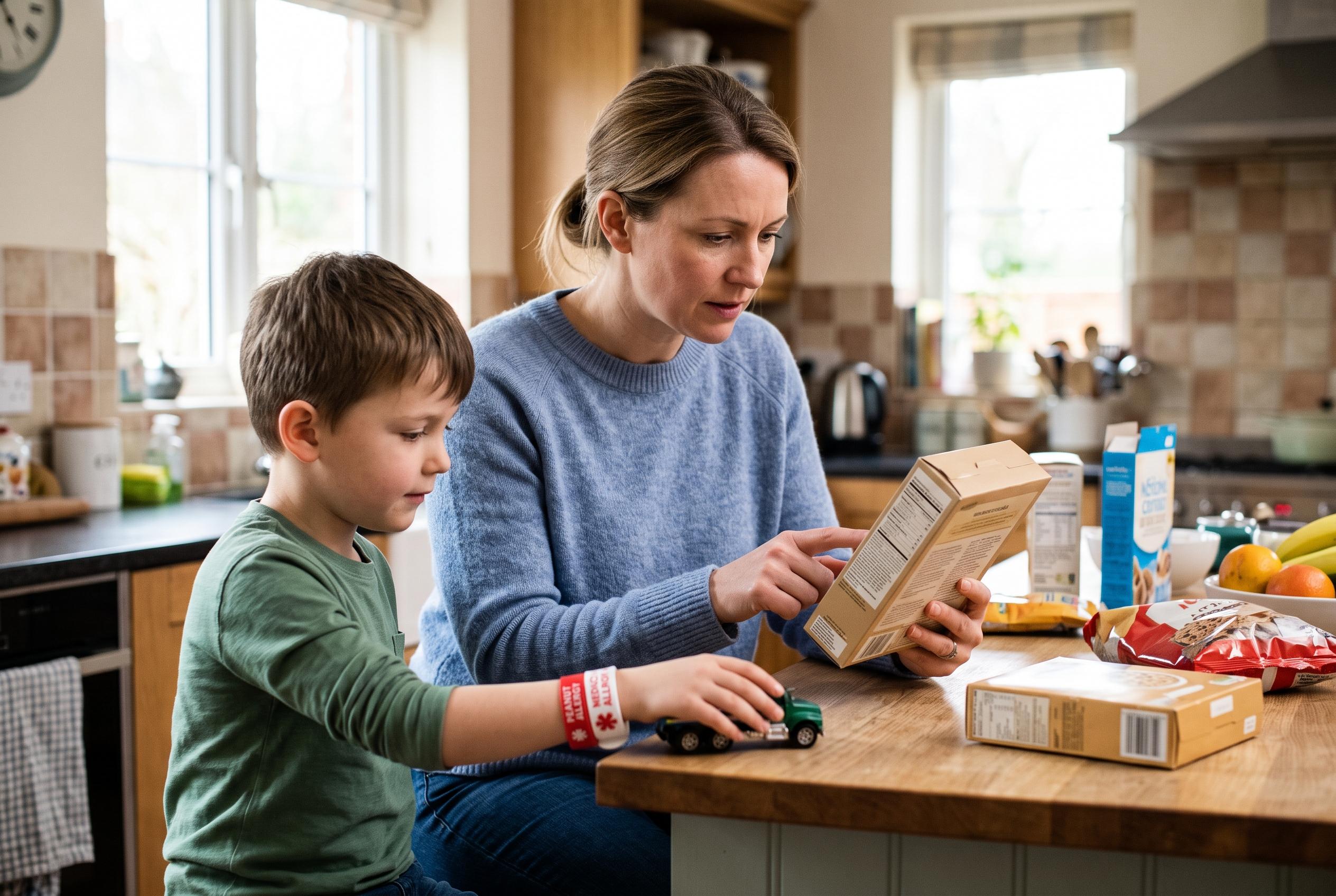

Parents should check ingredients, allergen statements and ‘may contain’ warnings every time, as recipes, suppliers and manufacturing processes can change without notice.
If you are caring for a child with a peanut allergy, food labels are not background information. They are a frontline safety tool. Cleveland Clinic allergist Jaclyn Bjelac says parents should get into the habit of reading the whole package every time, including the ingredients list and any allergen or cross-contact warning. That caution matters because manufacturers can change recipes, suppliers or factory processes without warning, so a product that was safe last month may not be safe today.
The first place to check is the ingredients list. Under UK labelling rules, peanuts are among the allergens that must be clearly declared on prepacked food, and ingredients must be listed in descending order by weight. Government guidance also says allergens should be highlighted within that list, making them easier to spot. But Bjelac warns against guessing based on the type of food or the appearance of the front of the packet. Peanut ingredients can show up in baked goods, confectionery, granola bars, meat substitutes, trail mixes and sauces, sometimes under names consumers may not recognise at first glance.
Parents also need to look for a separate allergen statement, often marked “contains”. In the UK, allergen labelling rules require foods to make the presence of key allergens obvious, and peanuts must be identified when they are included as an ingredient. That matters because peanut and tree-nut warnings are not interchangeable. A product that says it contains tree nuts is not automatically unsafe for a child with a peanut allergy, although some children are allergic to both. Bjelac says families should follow the guidance of their child’s allergist on which nuts, if any, need to be avoided.
The trickiest part is precautionary allergen labelling, often shortened to PAL. UK government guidance says these warnings are used when a risk of cross-contact cannot be controlled, and labels may say things such as “may contain peanuts” or indicate that a product was made on shared equipment. The NHS similarly advises families to treat such warnings seriously, because foods that do not intentionally contain peanuts can still pick up traces during manufacturing or preparation. Bjelac says those foods may still be unsafe for people with peanut allergies, so parents should discuss how to handle them with a specialist rather than making assumptions.
Cleveland Clinic also stresses that children should gradually learn how to manage the process themselves. That starts with simple explanations when they are young, then moves to practising how to find the ingredients list, identify the word “peanut”, spot the “contains” statement and recognise cross-contact warnings. Older children can also be taught not to swap food, to speak up in restaurants and to ask what is in food served at other people’s homes. The goal, Bjelac says, is to keep children safe without making them feel isolated. In practical terms, that means turning label reading into a habit, not a one-off check.
Disclaimer: This content is for informational purposes only and is not intended to be a substitute for professional medical judgment, advice, diagnosis, or treatment.



