

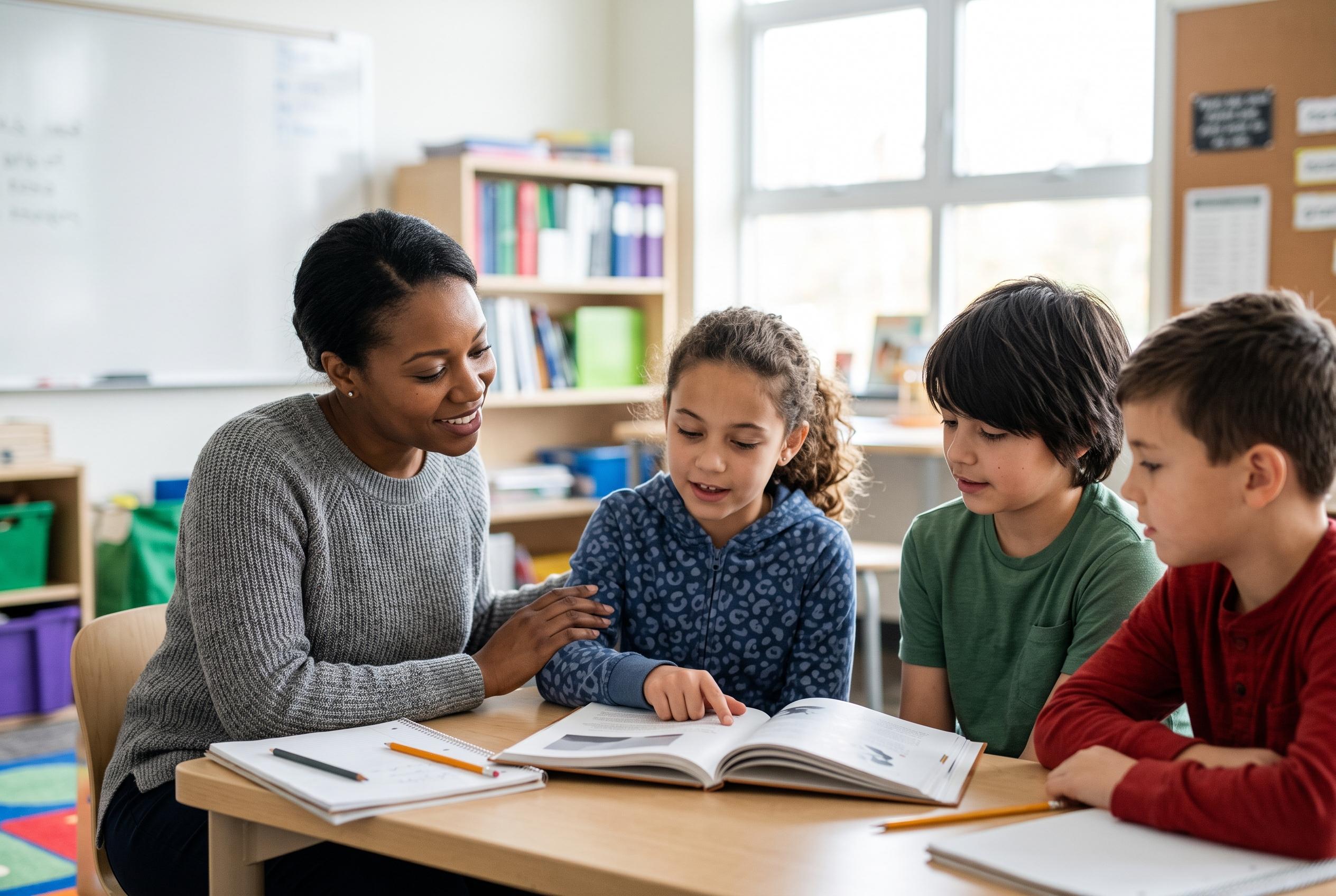

Recent research highlights that the effectiveness of small-group tutoring extends beyond academic gains, emphasising the crucial role of stable human relationships in fostering persistent and meaningful learning among children.
Small-group tutoring may be winning attention because it is one of the few school reforms that combines academic help with something harder to measure: a stable human relationship. The latest discussion was prompted by a New York Times exercise in which education researchers ranked 30 ideas for improving American schools, and tutoring came out on top. Researchers judged the proposals mainly by their likely effect on achievement, especially test scores, but the result also points to a deeper truth about how children learn: instruction tends to work best when it is delivered by someone who knows the child well enough to notice confusion, frustration and progress. The NBER review of experimental evidence backs that view, finding that tutoring programmes produce clear and consistent gains in learning.
That is why the appeal of tutoring goes beyond extra practice. In a small group, an adult can do what a crowded classroom often cannot: give feedback in the moment, shift explanations when something is not landing and build a rhythm of expectation and care over time. Bronfenbrenner’s ecological theory helps explain why that matters. Human development, in his account, is shaped by repeated interactions within a child’s immediate environment, especially relationships that are reciprocal rather than one-way. In other words, the learning gain is not just about content delivery; it is also about the child feeling seen, challenged and known.
The point is easier to understand if schools are thought of less like factories and more like ecosystems. Adults have long tried to strip learning down to its most measurable parts, then rebuild it as standards, lesson plans, targets and assessments. But children do not experience education as a set of isolated inputs. They move through families, schools, neighbourhoods and peer groups, and each setting shapes what they are ready to hear, practise and believe about themselves. The broader literature on Bronfenbrenner’s work, including explanations of his ecological systems model, stresses that development is influenced by those overlapping layers and by the way they interact over time.
The same logic may explain why some of the simplest interventions can be so powerful. Suneeta Kulkarni’s Granny Cloud experiments, for example, connected children remotely with older adults whose role was not to drill content but to encourage, notice and share in discovery. That sort of arrangement is deceptively plain: an adult shows interest, asks questions and stays present. Yet it captures something schools often overlook. Relationship is not a decorative extra added after instruction is complete. It is part of the mechanism through which instruction takes hold, and perhaps the very thing educators have been extracting from learning in the name of efficiency.
Seen that way, the lesson from the tutoring research is not only that small-group instruction works. It is that it works best when it preserves the human connection that helps children persist, respond and grow. That has implications well beyond one programme or one ranking of reforms. Schools still need stronger teaching, better resources and clearer standards. But the low-hanging fruit may not be some newly engineered fix. It may be the ordinary, underused power of adults and children learning with one another, repeatedly and with attention.
Disclaimer: This content is for informational purposes only and is not intended to be a substitute for professional medical judgment, advice, diagnosis, or treatment.



