

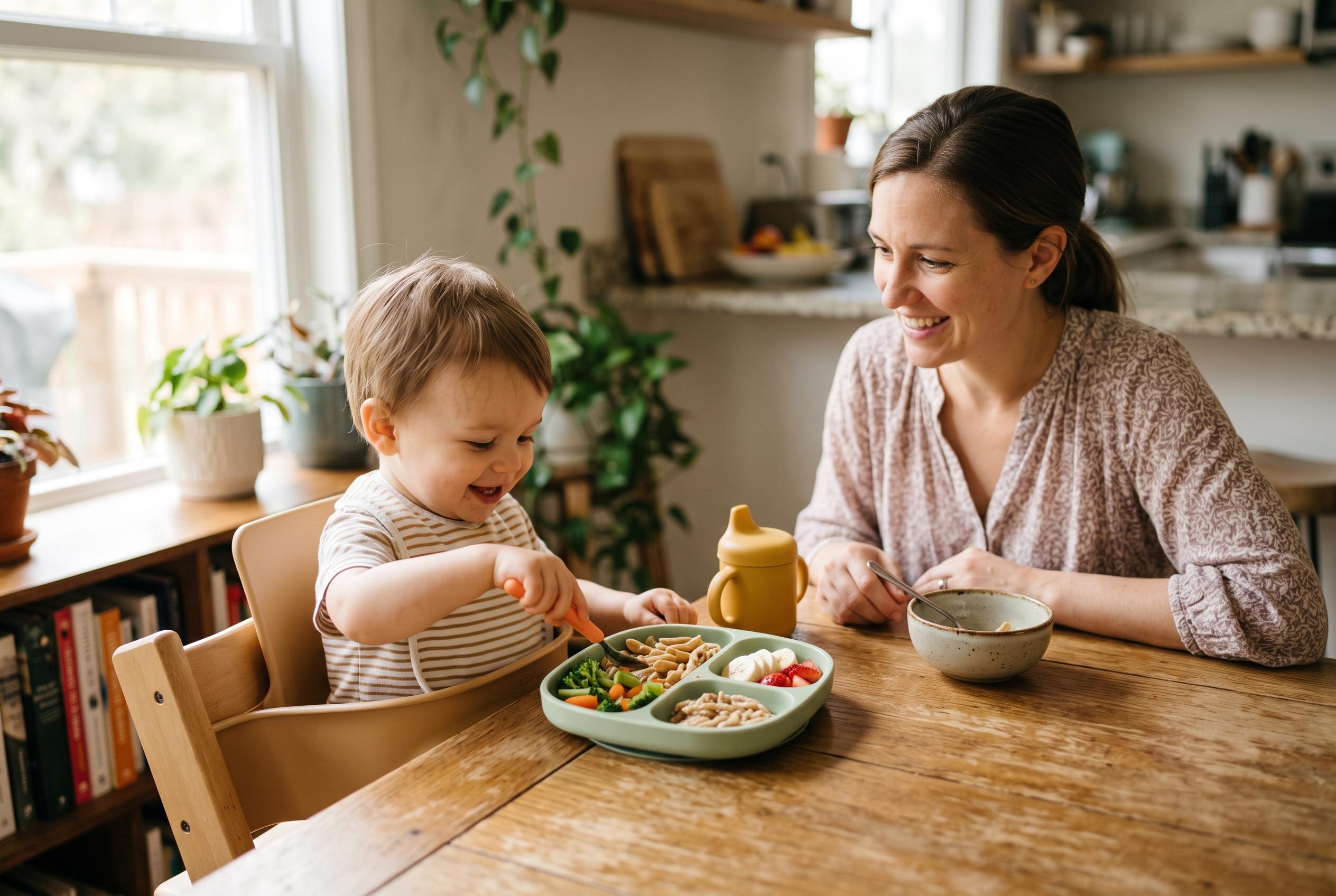

Parents often worry about serving sizes for toddlers, but recent guidance emphasizes that smaller portions, regular routines, and a stress-free mealtime environment support healthier growth and eating habits. Experts advise focusing on patterns over individual meals, recognising that small plates are appropriate as children naturally fluctuate in appetite.
Parents often worry that a toddler’s portion looks too small to count as a proper meal. Yet child nutrition guidance consistently says the opposite: for children aged one to three, a serving is usually far less than an adult would expect. HealthyChildren.org says toddler portions are typically about a quarter of an adult portion, while Johns Hopkins Medicine notes that appetite often eases after the first year because growth slows. That makes a half-eaten plate less alarming than many parents fear.
The most useful shift is to treat portion sizes as a starting point, not a finish line. Toddler meals work best when adults decide what food is offered and children decide how much to eat. Family Nibbles and similar parenting guides describe this as a simple way to reduce pressure at mealtimes, because young children often need only a small amount before deciding they are full.
What can make feeding so confusing is that a toddler-sized meal can look tiny to an adult, but overwhelming to a child if the plate is crowded. Johns Hopkins Medicine advises parents to keep mealtimes calm and avoid turning food into a battleground, while HealthyChildren.org recommends regular meals and snacks so hunger does not build to the point of frustration. A lighter first serving also leaves room for seconds if a child is still hungry.
There is no single number that fits every child between 1 and 3 years old. Age matters, but so do activity, growth, illness, teething and what a child has eaten earlier in the day. A busy 2-year-old may need more one day and less the next, and a 3-year-old will not necessarily eat more than a younger toddler at every sitting. Several feeding guides suggest rough rules of thumb, such as offering about one tablespoon of each food per year of age, but even those should be treated as guides rather than targets.
The broader picture matters more than any one meal. Toddler nutrition advice from HealthyChildren.org and WebMD both points to a daily pattern built around three meals and two to three snacks, with food drawn from grains, vegetables, fruit, dairy and protein. The exact amount varies, but the aim is steady, ordinary eating across the day rather than perfect balance at every plate.
That also helps explain why some toddlers seem to gorge one day and barely nibble the next. Johns Hopkins Medicine says a slower growth rate is one reason appetite often dips after infancy. Tiredness, changes in routine, minor illness and picky phases can all affect how much a child wants to eat. Parents are usually better served by looking at patterns over several days than by judging one uneventful lunch.
Another common worry is whether a child is eating enough if the plate comes back full. The answer is not always to serve more or insist on “just one more bite”. Food exposure still has value even when a child does not eat it. Seeing, touching and smelling new foods can all help build familiarity, which matters because cautious eaters often need repeated low-pressure exposure before they are willing to try something.
It is also worth remembering that snacks and drinks can affect how hungry a toddler feels at the table. Milk, in particular, can be filling, and a child who has had frequent snacks may arrive at dinner with little appetite. That is one reason feeding specialists recommend a consistent routine, with meals and snacks spaced sensibly through the day.
Parents should seek professional advice if their child’s eating seems persistently limited, whole food groups are being avoided, or there are concerns about growth, development or general health. General serving advice cannot account for every child’s needs. A GP, health visitor or other qualified clinician can help if eating difficulties start affecting everyday life.
What most toddlers need is not a perfectly measured plate, but a predictable rhythm. Offer regular meals, include a mix of foods over the day and start with modest amounts. If a child is still hungry, more can always be offered. And if they are not, that does not automatically mean something is wrong.
In that sense, the healthiest approach is often the least dramatic one. Toddler portions are smaller than many parents expect, appetite naturally rises and falls, and a clean plate is not the goal. Confidence comes from understanding that a small meal can still be an appropriate one.
Disclaimer: This content is for informational purposes only and is not intended to be a substitute for professional medical judgment, advice, diagnosis, or treatment.



