

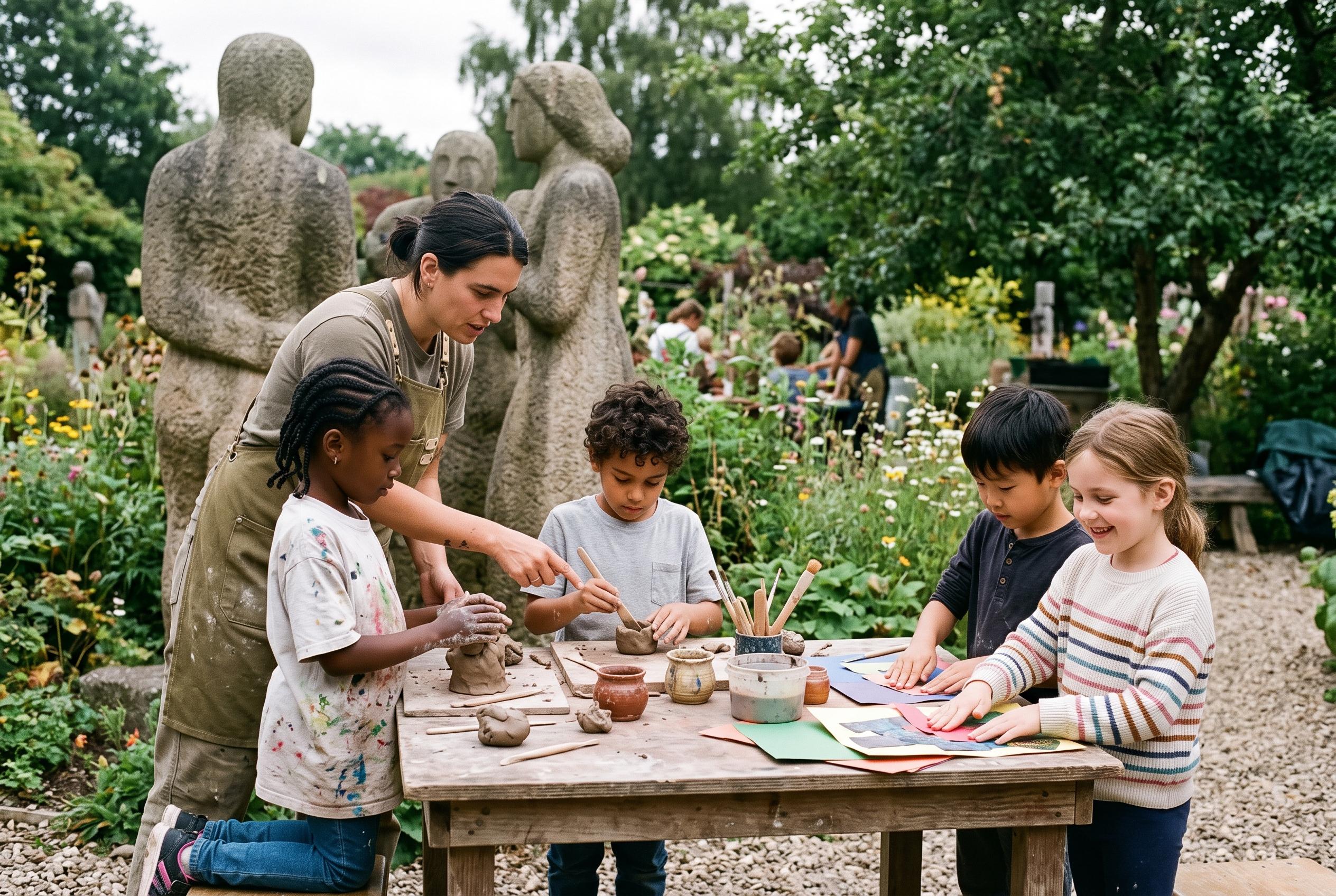

Children at Grounds For Sculpture in New Jersey participate in hands-on art activities linked to new exhibitions, highlighting the role of arts in boosting wellbeing, social skills, and community ties.
At Grounds For Sculpture in Hamilton, New Jersey, children are being invited to do more than look at art. In a hands-on programme tied to a new exhibition by artist Shantell Martin, young participants are prompted to draw from a random idea, then help turn those individual sketches into a larger mural. For eight-year-old Sebastian Dean, the activity offered a chance to experiment with an image inside an image, a playful nod to a Droste-style illusion, and to make something new. His mother, Melissa Dean, said it mattered that he had a place to develop that interest away from screens and schoolwork.
The museum’s education team says that kind of creative freedom is exactly the point. Tiffany Allen, the director of education and engagement at Grounds For Sculpture, said families value the fact that the materials are provided and the children are free to create without pressure. She said the institution works to stay visible in local schools and at back-to-school events so families know it is a place where children can explore art in a welcoming setting.
That approach fits with a wider body of research on community arts programmes. The Wallace Foundation has said youth participation in such programmes can produce long-term gains in well-being and future opportunities, while also helping groups explain their value to funders and public officials. Child Trends has likewise identified several ways the arts can help children, including stronger school participation, better self-esteem and improved social skills, with the biggest benefits often seen among children from lower-income families. The National Endowment for the Arts has also pointed to arts education as a way to help young people manage emotions, build resilience and develop compassion.
The benefits are not only individual. Arts organisations that use group projects often say collaboration helps children practise communication, teamwork and sharing ideas. At Grounds For Sculpture, that social element is part of the design, with family programmes built around hands-on artmaking, storytelling and guided exploration for children and caregivers. The museum also runs themed activities for young children and has used exhibition-linked projects to show how repeated creative engagement can strengthen fine motor skills, vocabulary and confidence.
For families like the Deans, those gains can be seen in the simple pleasure of making art together. For the museum, the monthly programmes are also a way of building a steady relationship with the community, giving children a place where creativity is treated as something to practise, not just observe. In a state with many demands on parents’ time, that kind of regular, accessible outlet can make the arts feel less like a special occasion and more like part of everyday life.
Disclaimer: This content is for informational purposes only and is not intended to be a substitute for professional medical judgment, advice, diagnosis, or treatment.



