

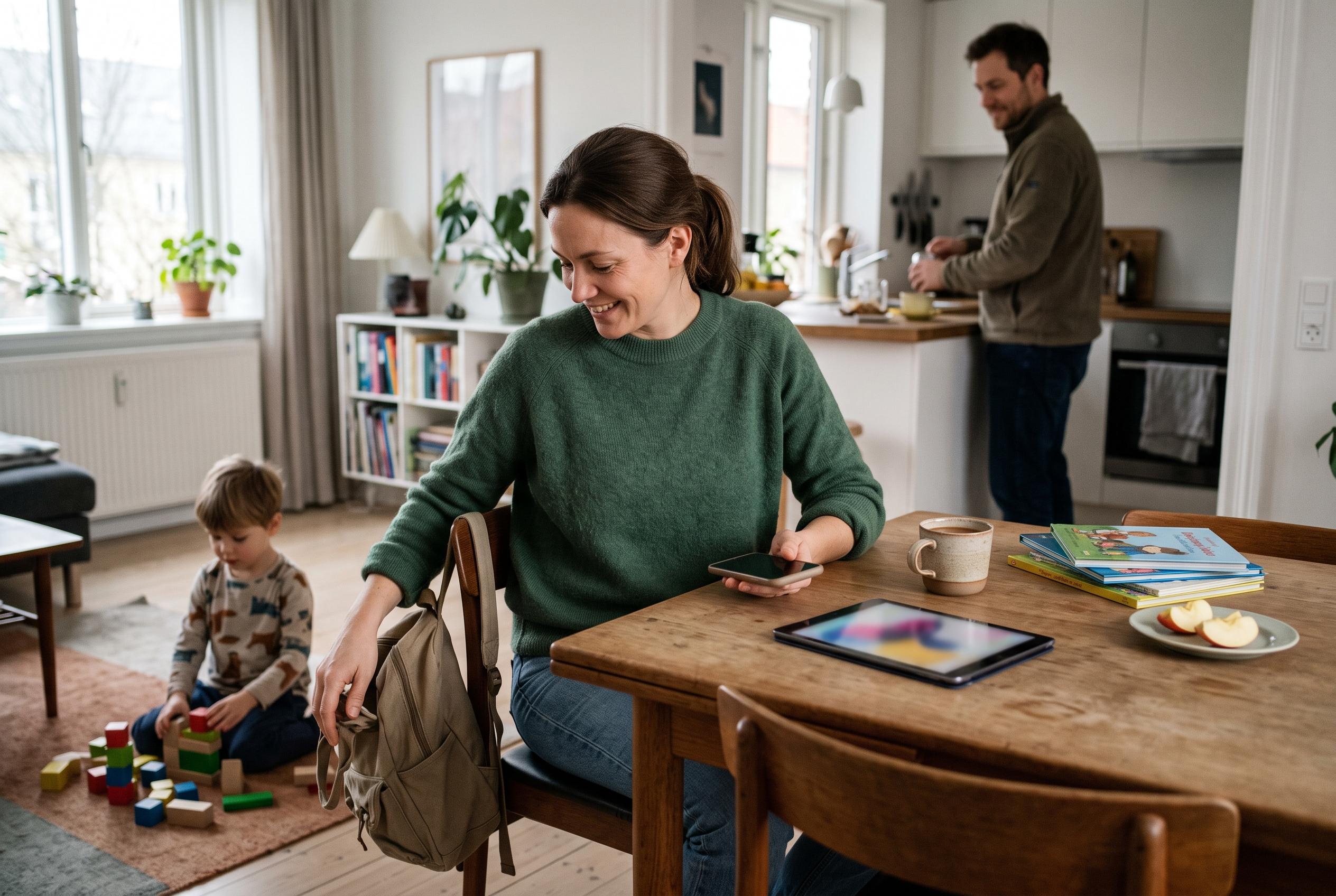

Research from China shows that while polished ‘alpha mum’ posts do not directly boost mental health, they can enhance mothers’ wellbeing when fostering confidence and social support, highlighting the nuanced impact of online motherhood content.
A new study suggests that glossy “alpha mum” posts on social media do not automatically improve mothers’ mental health, but they may help when they build confidence and a sense of support. Published in the International Journal of Mental Health Promotion, the research examined how mothers of very young children responded to online content portraying highly competent, apparently effortless motherhood.
The study surveyed 649 Chinese mothers with children aged three and under, all of whom were asked about their use of alpha mum blogs over the previous year on platforms including WeChat, Weibo and TikTok. Researchers found no direct link between viewing or interacting with this content and better emotional wellbeing. Instead, the association appeared only when social media use coincided with stronger parenting self-efficacy, meaning the belief that a parent can handle childcare challenges, and a greater feeling of social support.
That distinction matters because alpha mum content can cut both ways. Such posts often present motherhood as polished, organised and highly successful, with carefully selected text, images and video. As Psychology Today has noted in its coverage of mommy blogging, this kind of online material can foster community and reassurance, but it can also become another source of pressure if it turns into a showcase for comparison. The Guardian has made a similar point in discussing maternal mental health online, arguing that social media can either connect mothers or deepen feelings of inadequacy depending on how it is used.
The researchers said their findings fit self-determination theory, which holds that people tend to do better when they feel competent, autonomous and connected to others. In practical terms, that means the same post may be helpful for one mother if it leaves her feeling encouraged and less isolated, while it may be unhelpful for another if it reinforces an impossible standard. The effect was weaker among women who already endorsed a strict version of intensive mothering, the idea that good motherhood should be child-centred, expert-driven, time-consuming and expensive.
The study also found that age, family size and income were associated with wellbeing. Older mothers, women with fewer children and those with higher household incomes were more likely to report better mental health. The authors suggested that younger mothers, larger families and those with fewer financial resources may have less room to benefit from idealised online content, particularly when it highlights a level of control and resources they do not have.
The findings are not a verdict on social media, and the authors were careful to note the limits of the research. Because the study was cross-sectional, it cannot prove that alpha mum content causes better mental health. It also focused on China, where expectations around motherhood remain especially strong, so the results may not translate neatly to other countries. Even so, the message is clear enough: online parenting content is most useful when it helps mothers feel capable and supported, and least useful when it simply raises the bar.
Disclaimer: This content is for informational purposes only and is not intended to be a substitute for professional medical judgment, advice, diagnosis, or treatment.



