

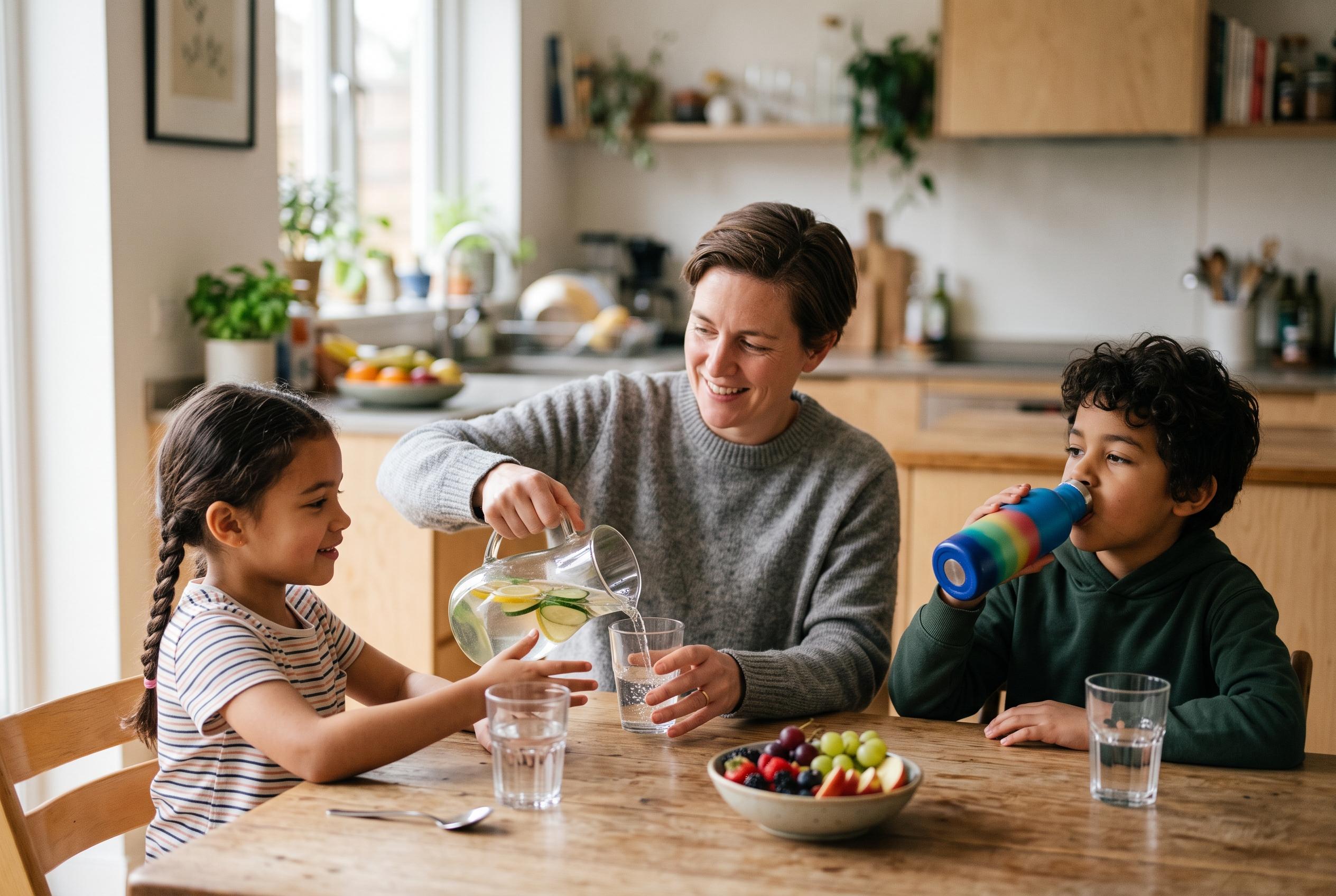

Introducing easy routines, appealing drinks, and low-pressure strategies can significantly improve children’s hydration habits, according to health experts, highlighting practical ways for parents to encourage drinking water without stress.
Helping children drink enough water often works better as a routine than as a battle. Health experts cited by HealthyChildren.org and HeadStart.gov say the most effective approach is usually simple: make water easy to see, easy to reach and tied to moments that already happen, such as waking up, mealtimes, play breaks and bedtime. That matters because children do not always notice thirst early, so waiting for them to ask can mean acting too late.
Practical changes can make a surprising difference. HeadStart.gov recommends bendy or brightly coloured straws, favourite cups or bottles, and a small water station children can use themselves. HealthyChildren.org and Kids Be Well both suggest keeping a filled bottle nearby, putting water on the table during meals and offering it before leaving home or heading outside. A low-key, repeatable setup reduces friction, which is often the real obstacle.
Taste and temperature matter too. According to HealthyChildren.org, water can be made more appealing without adding sugar by changing the temperature or using small amounts of fruit or herbs. HeadStart.gov suggests lemon, lime, orange or mint, while WebMD points to cucumber, berries, ginger and cherries as other flavouring options. For many families, ice-cold water is more acceptable than room temperature, though some children prefer the reverse.
Age matters when judging how much is enough. WebMD lists typical daily amounts of roughly 2 to 4 cups for toddlers, 5 cups for children aged 4 to 8, and 7 to 8 cups for those aged 9 to 13. HealthyChildren.org and the article’s lead guidance both stress that these are broad planning figures, not rigid targets, because fluid needs shift with heat, activity, body size and health conditions. Much of a child’s daily fluid can also come from food, so a low cup count does not automatically mean a child is behind.
What usually does not help is pressure. HealthyChildren.org and MedicineNet both warn against forcing, bargaining, punishing or turning drinking into a contest with siblings or charts. Small, regular offers tend to work better than repeated reminders, and parents are generally advised to watch for patterns over a week rather than obsessing over one meal or one day. That approach is especially useful for children who are wary of new textures, cups or routines.
Parents should also keep an eye out for warning signs. The Children’s Health infographic and the lead article both note that tiredness, headaches, irritability, dark urine and poor concentration can all signal low fluid intake. More urgent signs include very dark urine, no urine for a prolonged period, no tears when crying, a dry mouth, unusual sleepiness, vomiting or diarrhoea with refusal to drink, and a sudden, unusual increase in thirst, which may need medical review.
Disclaimer: This content is for informational purposes only and is not intended to be a substitute for professional medical judgment, advice, diagnosis, or treatment.



