

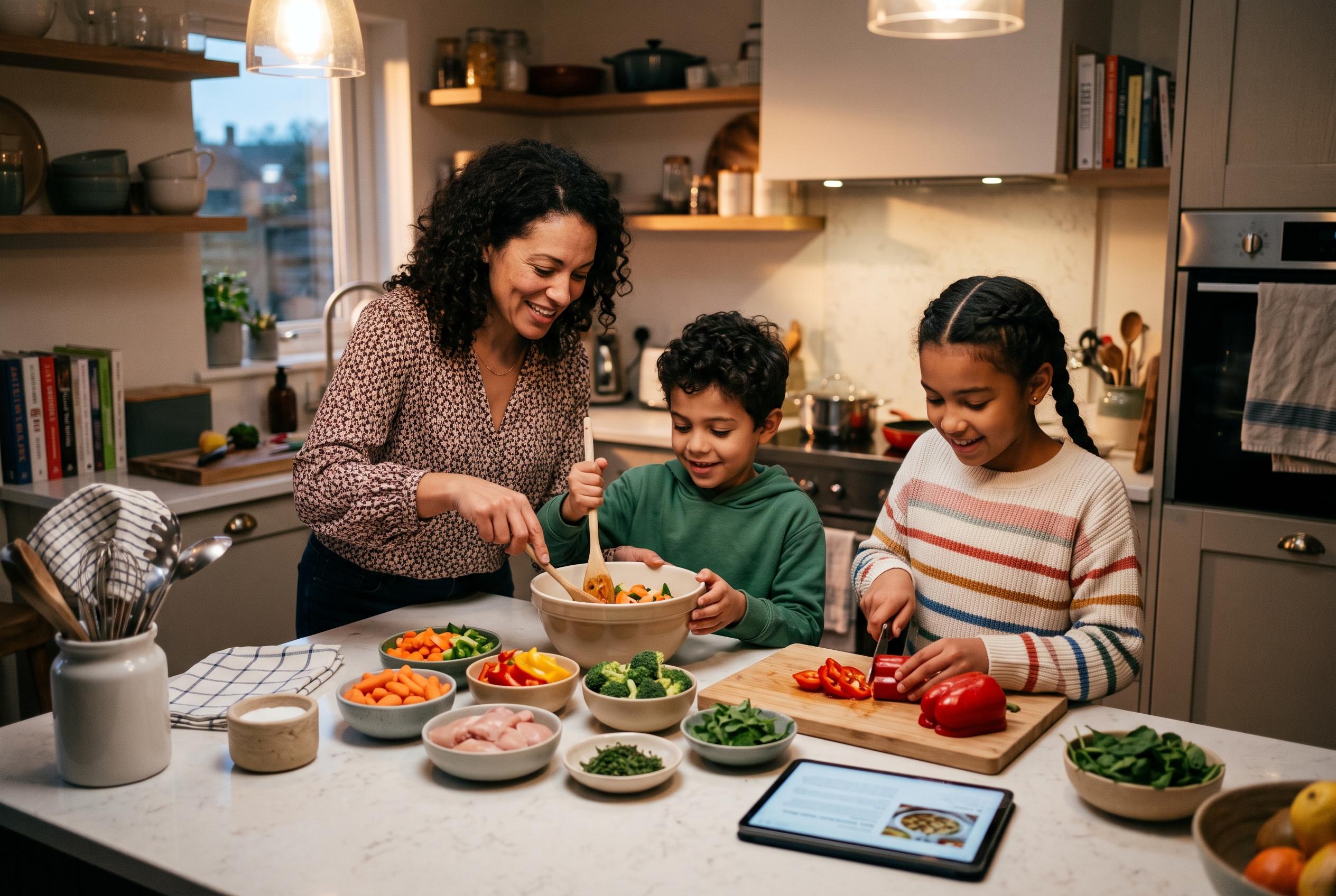

A practical approach to family dinner planning, the meal theme matrix simplifies choices, reduces decision fatigue, and adapts to busy household schedules, offering a dependable framework for hectic nights.
A family dinner plan does not have to begin with a full week of recipes or a fresh burst of inspiration every evening. One practical answer is a meal theme matrix: a short list of dinner formats that gives busy households a smaller set of choices, making it easier to decide what to cook when time, energy and appetites are all running low. The approach shifts the question from an open-ended search for ideas to a simpler choice among familiar categories, which can reduce decision fatigue and help parents keep meals moving on hectic nights.
The basic idea is to group dinners by theme rather than by exact dish. One night might be for bowls, another for build-your-own meals, another for one-pan or one-pot cooking, another for breakfast-style dinners and another for using up what is already in the kitchen. A guide from Summit Plate says family meal planning works best when it is tailored to a household’s budget, preferences and schedule, while Pantry Note and Family Healthy Guide both point to the value of repeating trusted meals in a structured rotation rather than trying to invent something new every day. In that sense, a theme matrix is less about restriction than about creating a dependable framework.
A useful way to start is with a small set of flexible categories. Bowls can mean rice, noodles, grains or greens topped with protein, vegetables and sauce. Build-your-own nights can cover tacos, sandwiches, wraps, baked potatoes or personal pizzas. Pan or pot meals can include sheet-pan dinners, soup, stir-fries, skillet dishes or pasta. Breakfast-for-dinner can range from eggs and toast to pancakes or yoghurt bowls, while a use-what-we-have night can rely on leftovers, freezer food and ingredients nearing their use-by date. The point, as several family meal-planning tools emphasise, is to keep the menu adaptable enough to fit what is already in the house, what is affordable and what people will actually eat.
Many families find it easier to think in terms of a simple dinner formula: a base, a protein, produce and a flavour element. That might be rice with beans, vegetables and salsa; pasta with chicken, greens and pesto; or potatoes with eggs, peppers and cheese. This kind of structure keeps the meal balanced without forcing every plate to look the same. It also helps if one child wants ingredients kept apart while another prefers everything mixed together. The dinner still works because the same core ingredients can be rearranged in different ways.
Timing matters just as much as ingredients. A late night with sport practice, meetings or a long commute is not the moment for a complicated recipe. A meal theme matrix works best when the easiest options are saved for the busiest evenings and the more involved dishes are reserved for nights with more breathing room. The planning tools at Dinner, Planned by ParentData and Family Meal Planning Tools both make the case for reducing friction through advance organisation, including grocery lists and meal schedules that fit the household rather than the other way round. A theme-based system follows the same logic: let the calendar shape the dinner, not the other way round.
Visibility also helps. A matrix can be pinned to the fridge, kept in a shared phone note or tucked inside a cupboard door so the whole family can see it. If children are old enough, they can choose between two pre-set themes rather than reopening the entire dinner debate. Some families may prefer a weekly rotation, while others may want a simple bank of 14 or 15 dependable meals that can be repeated and refreshed over time, a model promoted by Pantry Note and Family Healthy Guide. Either way, the aim is the same: fewer last-minute decisions and less strain at dinnertime.
Shopping becomes easier when the matrix, rather than a wish list, drives the grocery list. Tortillas can move between tacos, wraps and quick pizzas. Rice can serve as the base for bowls, fried rice or a side dish. Eggs can anchor breakfast-style meals or a leftover-clearing frittata. Frozen vegetables can go into soup, pasta, stir-fries or sheet-pan dinners. This overlap is useful because it keeps shopping practical and creates backup options when the original plan no longer suits the evening.
It also makes sense to keep a couple of emergency meals on standby for the nights when everything falls apart. Simple pasta with vegetables, bean-and-cheese quesadillas, soup and toast or a snack-plate dinner can all save the evening without requiring much thought. That is not a sign that the system has failed. It is part of the system.
For families starting from scratch, a straightforward version might look like this: Monday for bowls, Tuesday for build-your-own, Wednesday for pan or pot meals, Thursday for breakfast-for-dinner and Friday for a use-what-we-have or family-choice night. The matrix can then be adjusted each month by removing meals nobody wants, adding one new reliable option and moving the quickest dinner to the most demanding night. In the end, the best plan is not the most ambitious one. It is the one that still works when everyone is tired and dinner needs to happen now.
Disclaimer: This content is for informational purposes only and is not intended to be a substitute for professional medical judgment, advice, diagnosis, or treatment.



