

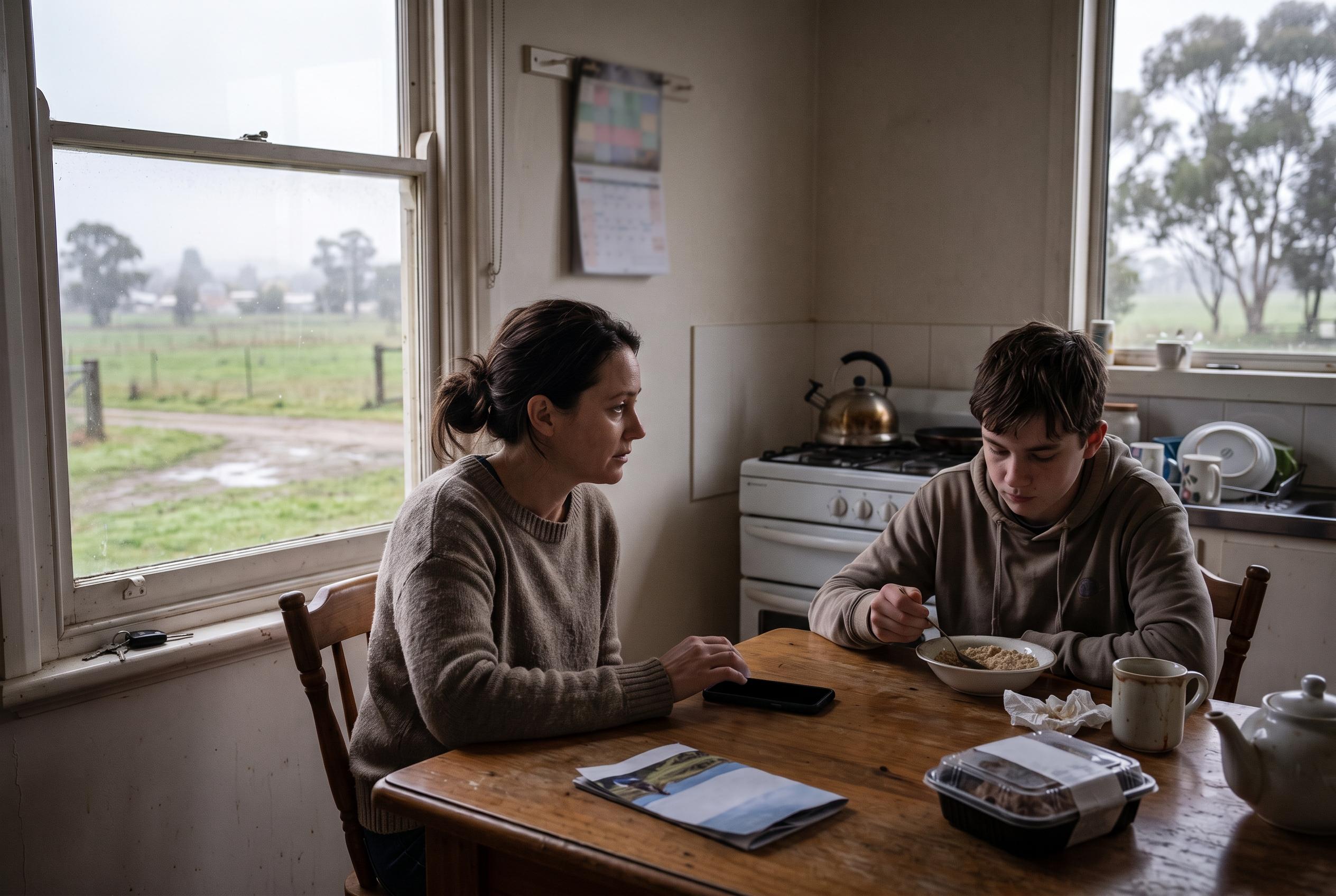

Despite an increase in diagnoses during the pandemic, access to specialist eating disorder services in regional Victoria remains limited, with rural residents facing significant barriers including distance, cost, and workforce shortages.
For nearly a decade, Jessie lived with an eating disorder while trying to keep it hidden from the small regional Victorian community around her. The shame, stigma and lack of nearby specialist help meant she delayed seeking support until after moving to Melbourne, where she finally felt able to ask for treatment and was later diagnosed with atypical anorexia, a form of the illness that can look similar to anorexia nervosa even when a person remains in a higher weight range after major weight loss.
Her experience reflects a wider problem in regional and rural Victoria, where access to specialist eating disorder care remains patchy. Eating Disorders Victoria’s 2026 report found that the sharp rise in diagnoses seen during the pandemic had not eased, with more than 40 eating disorder-related emergency presentations each week between March and May, roughly matching levels seen at the height of COVID-19. The report estimated that only three in 10 Victorians could access treatment.
Health experts say that distance, cost and the fear of being recognised can all make it harder for people outside Melbourne to come forward. A 2020 Butterfly Foundation survey found that 94 per cent of regional Australians with an eating disorder said where they lived was a barrier to getting help. The Royal Australian and New Zealand College of Psychiatrists’ Carol Silberberg said there were very few specialist services outside the city, leaving many people to travel long distances for care or go without it.
Victorian health guidance says community-based treatment is generally preferred to hospital admission, with outpatient and family-based approaches central to recovery. That model depends on having a broad team available, including doctors, psychologists, dietitians and peer workers, which can be difficult to assemble in country areas. Specialist outreach and telehealth services, including programmes designed for rural and remote communities, have tried to close that gap by linking patients with clinicians while also working with local GPs and other providers.
Clinicians and advocacy groups argue that the workforce is too thin to meet demand and that more funding is needed to expand regional services. Silberberg said more psychiatrists needed training and that hospitals and community providers required greater support to deliver the state’s eating disorder strategy in practice. Jessie’s case shows how moving to a city can open the door to care, but she says recovery remains a long process, especially after years of living with habits shaped by secrecy and delay.
Disclaimer: This content is for informational purposes only and is not intended to be a substitute for professional medical judgment, advice, diagnosis, or treatment.



