

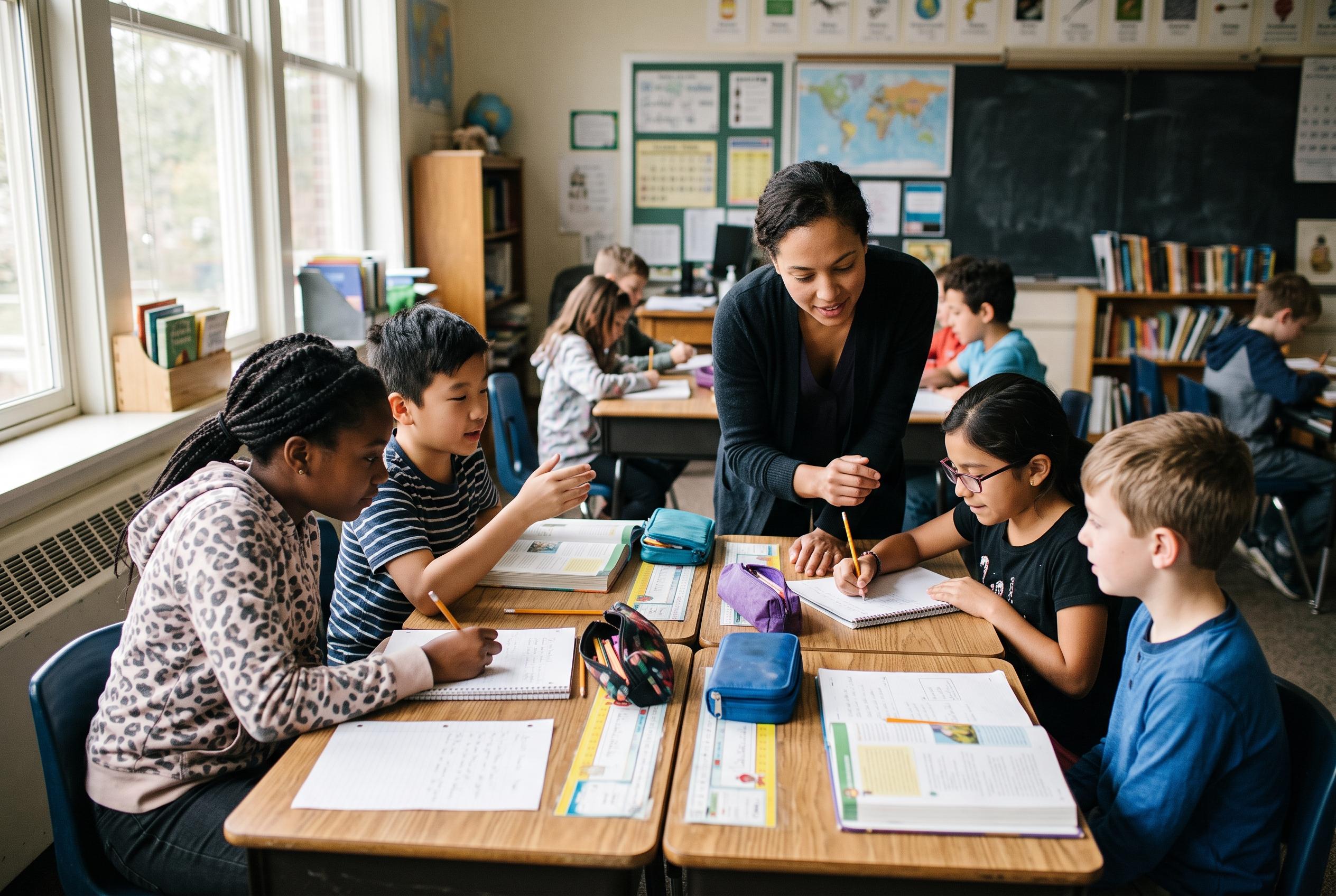

Mixed classrooms are often promoted as a straightforward fix for educational inequality, but recent research highlights the complex effects of diversity and the importance of targeted teaching practices to maximise benefits and minimise unintended harms.
Mixed classrooms are often presented as a straightforward remedy for inequality, but the evidence is more complicated. The central idea is appealing: if pupils from different social, academic and ethnic backgrounds learn together, they may benefit from one another and avoid the disadvantages that can come with separation. Yet the research discussed by Emanuele Fedeli suggests that diversity alone does not guarantee better results, and in some circumstances it can even produce unintended harms if schools do not actively manage how pupils compare themselves with their classmates.
Studies of peer effects show why the question is so difficult to answer. Research based on U.S. data has found that students who feel more socially or economically different from classmates of the same gender often report lower happiness, weaker social acceptance and poorer academic performance, especially in settings with little diversity. Other work has found that classroom composition can influence both achievement and behaviour in ways that differ by background, with some pupils becoming more engaged while others are left feeling less confident. The broad lesson is that peer effects are real, but they do not operate in a simple one-directional way.
Evidence from schools and colleges also shows that the consequences of diversity can vary sharply by group. Some studies have found that white students may earn better grades in classes with more students of colour, while students of colour may do worse when their classes contain more non-white peers, particularly if they entered with lower test scores. Other research has shown that peers’ academic level can lift performance, but that the size of the effect depends on how classrooms are organised and how achievement is measured. In other words, diversity can help, but the gains are neither uniform nor automatic.
Fedeli’s conclusion is not that schools should abandon mixed classrooms. Rather, the argument is that diversity works best when teachers and policymakers recognise the pressure that comes from social comparison and build safeguards against it. Practices that focus less on ranking and competition, and more on individual progress and development, may help pupils benefit from a broader mix of classmates without feeling pushed into hidden hierarchies. The challenge for schools is not simply to mix students, but to make sure that mixing them actually expands opportunity.
Disclaimer: This content is for informational purposes only and is not intended to be a substitute for professional medical judgment, advice, diagnosis, or treatment.



