


Bangladesh faces its worst measles epidemic in decades, with nearly 1,000 child deaths and a massive vaccination campaign underway amidst concerns over long-term immunisation lapses.
Bangladesh is grappling with one of its most severe measles outbreaks in decades, with the number of child deaths reported by the health ministry edging close to 1,000 and hospitals under intense pressure as new patients continue to arrive in large numbers. The crisis has unfolded rapidly since mid-March and is now being treated by international health officials as a national emergency driven by deep immunity gaps and an urgent need to restore routine childhood vaccination. According to the World Health Organization, the outbreak has affected mostly children under five, the group least able to withstand the disease’s complications.
By mid-April, the World Health Organization said Bangladesh had recorded 18,219 suspected cases, 2,897 laboratory-confirmed cases and 164 suspected deaths, with 30 deaths confirmed in the laboratory. The agency said the disease had spread across 58 districts and that around four-fifths of cases were in children under five. It assessed the national risk as high, warning that the large number of susceptible children was allowing transmission to continue.
Health officials and WHO advisers have tied the outbreak to a breakdown in protection that had been building for several years. The organisation has pointed to interruptions in vaccine supply in 2024 and 2025, weak coverage of routine immunisation and the absence of nationwide supplementary vaccination campaigns since 2020. In an analysis published in April, researchers said the resurgence reflected accumulated immunity gaps rather than any failure of the vaccine itself, with many infections concentrated in children who had never received a dose or had received only partial protection.
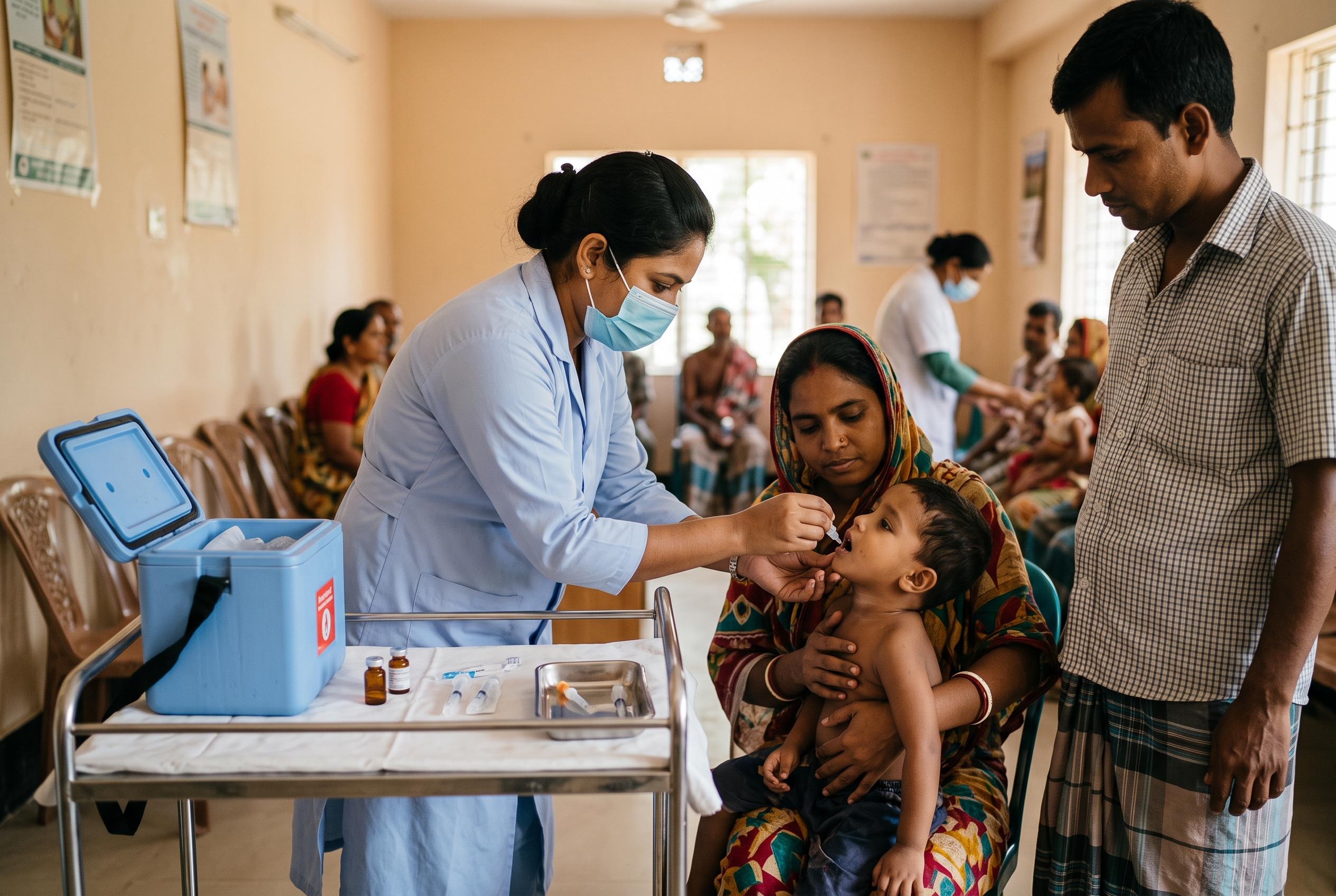
In response, the Bangladeshi authorities began an emergency measles-rubella vaccination campaign on 5 April, initially targeting children aged six months to five years regardless of previous vaccination status. By 18 April, more than 1.49 million children had been vaccinated in 30 upazilas and four city corporations, and the drive was later expanded nationwide. The World Health Organization said it has been helping with planning, logistics and coordination, while stressing that fast case detection and high-quality vaccination are needed to halt transmission.
The campaign has since extended into the Rohingya refugee camps in Cox’s Bazar, where measles poses particular danger because children live in crowded conditions and face added health risks. The World Health Organization said more than 166,000 children in the camps were vaccinated in a large-scale operation that began on 26 April, reaching a 93.7% coverage rate among the target group. Even so, the agency has warned that emergency campaigns can only contain the immediate surge; long-term control depends on rebuilding routine immunisation so that future gaps do not leave another generation exposed.
Disclaimer: This content is for informational purposes only and is not intended to be a substitute for professional medical judgment, advice, diagnosis, or treatment.



